
Ackee
Fruit
Also known as: Ackee, Ankye (Blighia sapida); Jamaica's national fruit
About this crop
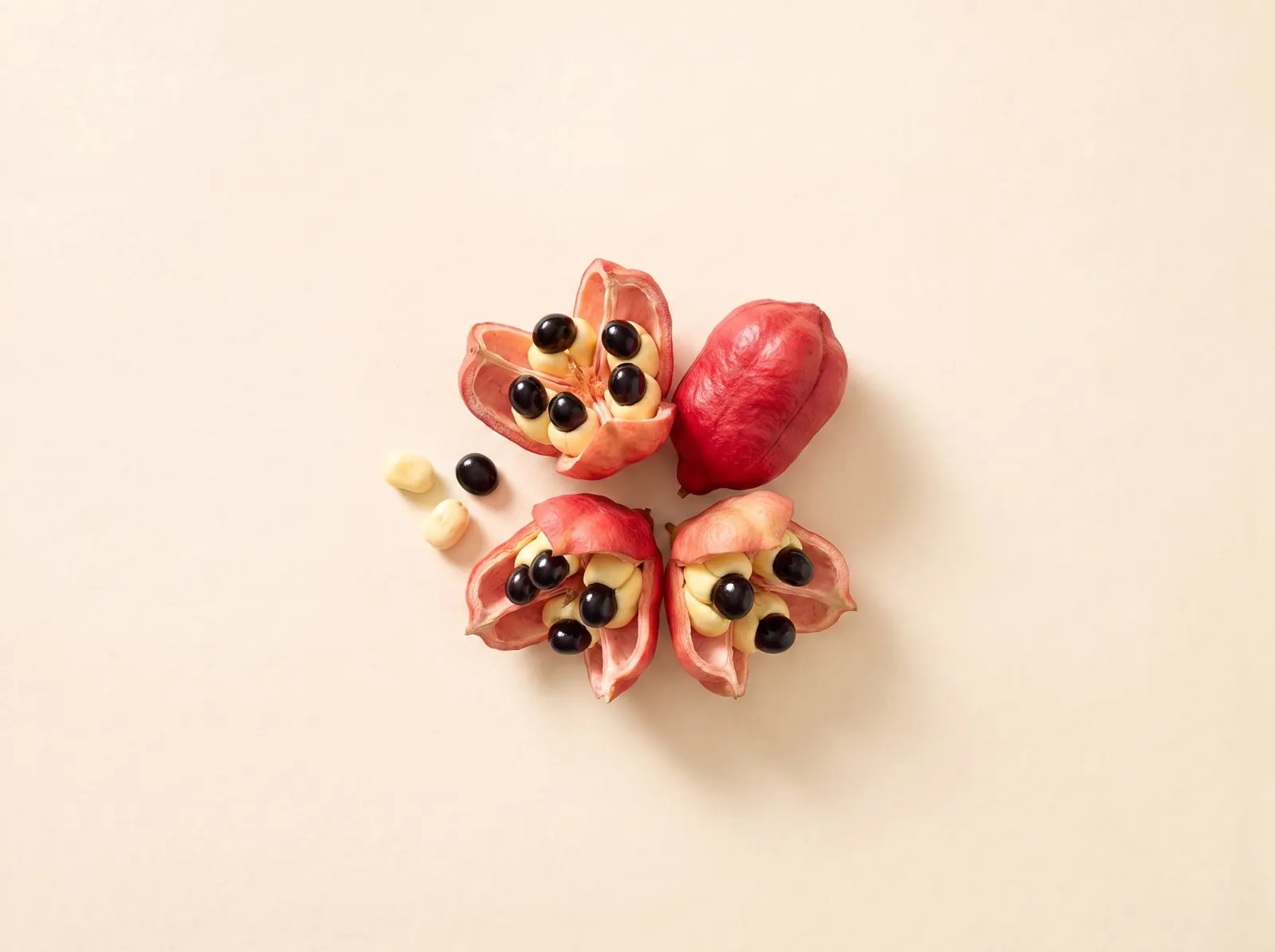
West African in origin (Blighia sapida) and Jamaica's national fruit, ackee has a soft, creamy, scrambled-egg-like texture when cooked. Import-Only Note (NYC and RI context): ackee is frost-impossible and cannot be grown in the Northeast; fresh import is restricted, so it is sourced canned or wholesale.
Safety
Eat only the flesh (arils) of ackee fruit that has ripened and split open naturally on the tree. Never eat unripe or unopened ackee, and never eat the seeds or the pod (rind) of any ackee, even when ripe. These parts contain hypoglycin A, which can cause severe vomiting and dangerously low blood sugar. Cooking does not make unripe ackee safe. In the US, buy canned or frozen ackee from manufacturers on the FDA ackee Green List, and do not prepare raw ackee yourself unless you have been trained.
Applies to: Ackee (Blighia sapida), for everyone.
Health information for this food is under review. Reviewed claims will include their sources and limits.
Traditional uses
The arils provide a satisfying, protein-pairing base. Always source from a trusted, properly ripened supplier.
How to prepare
The signature dish is Jamaican ackee and saltfish, sauteed with onion, tomato, scotch bonnet, and thyme. The cooked aril is delicate and folded in gently at the end.
Recipe ideas
Share how you use AckeeAckee and saltfish; ackee with callaloo.