
Bitter Melon
Vegetable
Also known as: English: Bitter Melon, Bitter Gourd. Spanish: Cundeamor. French: Margose. Khmer: Mreah. Hindi: Karela. Chinese: Ku gua. Haitian Creole: Asosi, Seraz.
About this crop
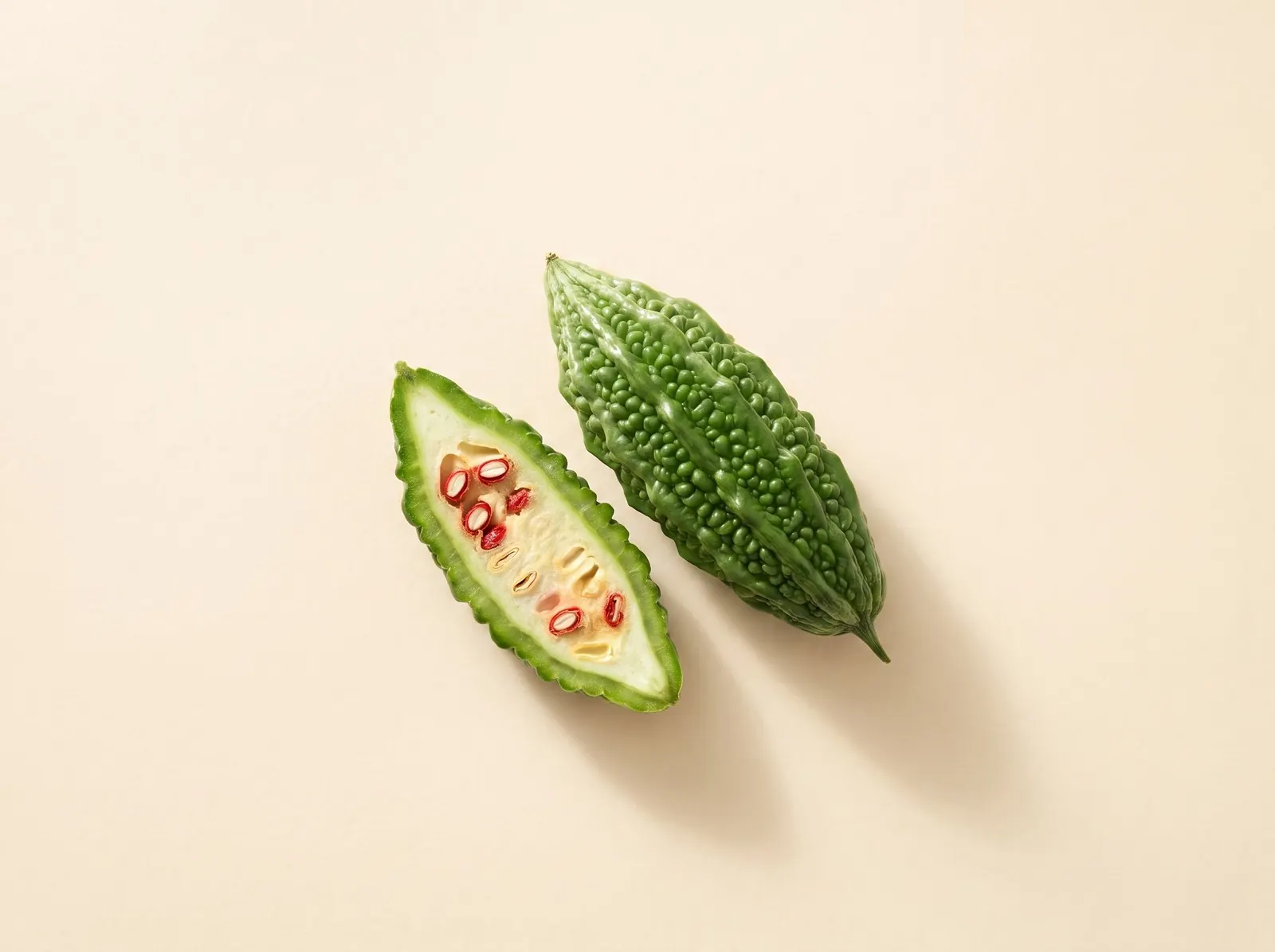
Bitter melon is a tropical vine that produces one of the most distinctive fruits in the culinary world: a bumpy, ridged gourd with a pronounced bitter flavor that is an acquired taste and a beloved staple across Asia, the Caribbean, and parts of Africa. The fruit ranges from pale green to deep emerald, with a hollow center filled with seeds wrapped in red pulp when ripe. It grows readily in warm, humid conditions and can produce abundantly in Rhode Island summer gardens.
Health information for this food is under review. Reviewed claims will include their sources and limits.
Traditional uses
In Cambodian homes, bitter melon soup is served during the hot season. The Khmer belief is that bitter foods balance the body's internal heat. In the Caribbean, cerasse (the local name for wild bitter melon) is brewed as a tea that Jamaican and Haitian families use. The thread connecting these traditions is a shared understanding that bitterness is not a flaw.
How to prepare
The key to preparing bitter melon is managing its bitterness. Slice the fruit in half lengthwise, scoop out the seeds and pith, then cut into thin half-moons. To reduce bitterness, salt the slices and let them sit for fifteen to twenty minutes, then rinse. In Cambodian cooking, bitter melon is stuffed with seasoned pork and simmered in broth. In Indian kitchens, thin slices are fried crispy with onions and spices until the bitterness mellows. In Jamaica and Trinidad, the fruit is known as cerasse and is typically brewed as a tea.
Recipe ideas
Share how you use Bitter Melon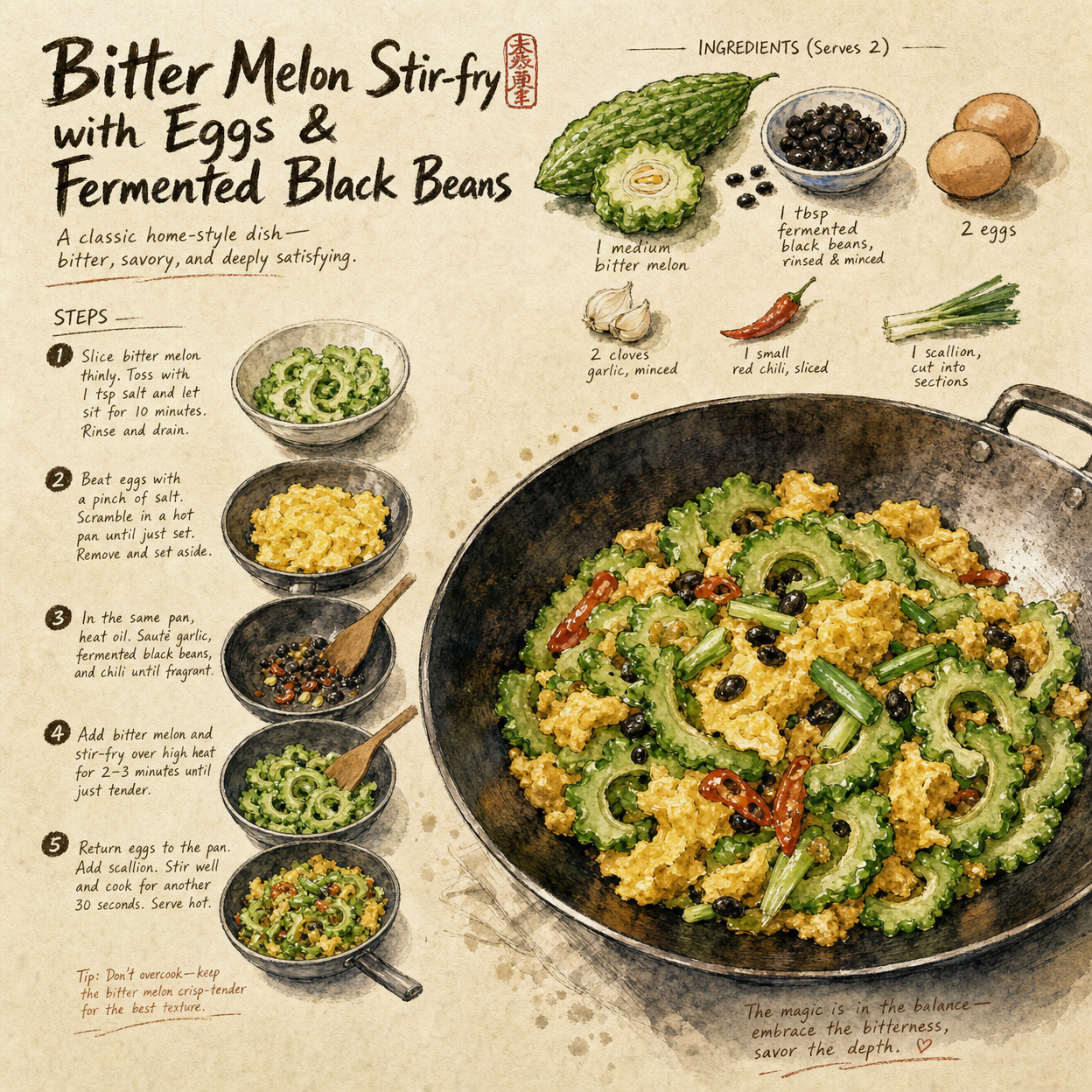
Cambodian Stuffed Bitter Melon Soup (mreah chrook, with ground pork and glass noodles). Indian Karela Sabzi (crispy fried slices with onion, cumin, and turmeric). Jamaican Cerasse Tea (dried vines steeped for a bitter tea). Chinese Stir-Fried Bitter Melon with Black Bean Sauce (ku gua chao douchi).