
Bok Choy
Leafy Green
Also known as: English: Bok Choy, Pak Choi. Spanish: Bok choy, Col china. French: Chou de Chine. Portuguese: Acelga chinesa. Khmer: Spey sor. Chinese (Mandarin): Xiǎobáicài. Tagalog: Pechay.
About this crop
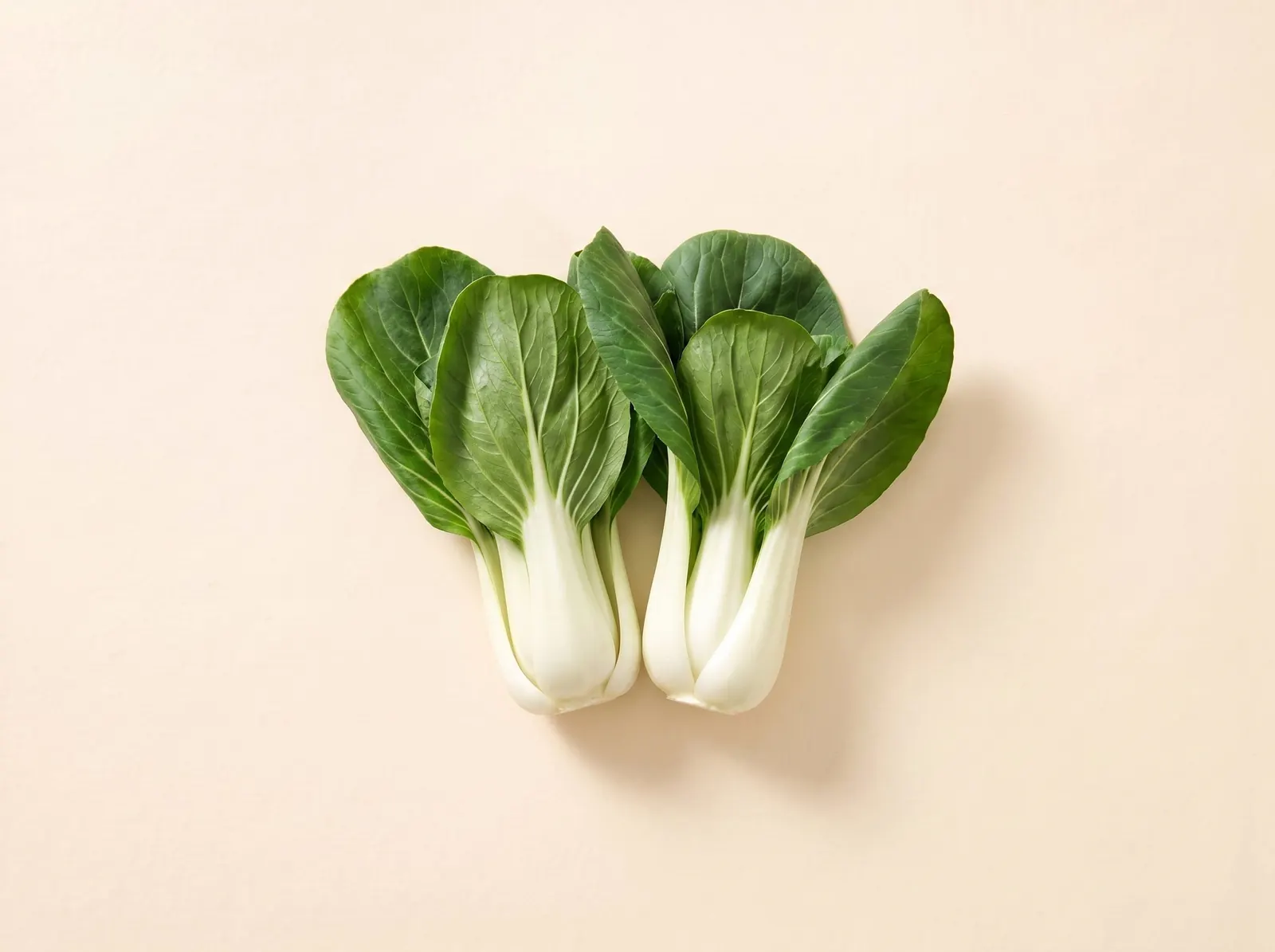
Bok choy is a beautiful, non-heading cabbage characterized by its smooth, dark green leaves and thick, crisp, pale green or white stalks. It grows upright in a tight cluster, resembling a sturdy celery plant with wide, spoon-shaped leaves. The texture is a study in contrasts: the leaves are tender and slightly mustardy, while the stems remain incredibly juicy and crunchy even after cooking.
Health information for this food is under review. Reviewed claims will include their sources and limits.
Traditional uses
In Chinese and broader East Asian traditions, bok choy is a daily staple, valued for its crisp texture and mild, sweet flavor. It is most commonly stir-fried very quickly over high heat with garlic and ginger, or blanched briefly and dressed with oyster sauce. It serves as a fresh, crunchy counterpoint to rich, savory meat dishes and complex noodle soups.
While bok choy is deeply rooted in Asian cuisines, it shares a botanical lineage with the collard greens of the American South and the couve of Portugal. All belong to the Brassica family, a group of resilient greens that have sustained working people across the globe. Where a Portuguese cook might shred couve for a slow-simmered soup, a Chinese cook flashes bok choy in a hot wok.
This shared family of greens bridges the culinary traditions of Elmwood, South Providence, and East Providence. Though the cooking methods differ, quick and hot versus slow and low, the fundamental reliance on these sturdy, life-sustaining leaves connects the tables of diverse communities across Rhode Island.
How to prepare
To prepare bok choy, trim the very bottom of the root so the leaves separate. Wash them thoroughly, as dirt often hides at the base of the stems. For baby bok choy, you can leave them whole or simply slice them in half lengthwise. For larger heads, it is best to separate the leafy greens from the thicker white stems, as the stems take slightly longer to cook.
For a simple, perfect Chinese stir-fry, heat oil in a wok or large skillet until very hot. Add minced garlic and ginger, then immediately add the bok choy stems. Toss for a minute, then add the leafy tops and a splash of water or broth. Cover for one minute to steam, then uncover, toss with a little soy sauce and sesame oil, and serve immediately while the stems are still crisp.
Bok choy is also excellent in soups. Simply drop the prepared leaves and stems into a simmering noodle soup or clear broth during the last two minutes of cooking. They will turn bright green and tender while retaining their satisfying crunch.
Recipe ideas
Share how you use Bok Choy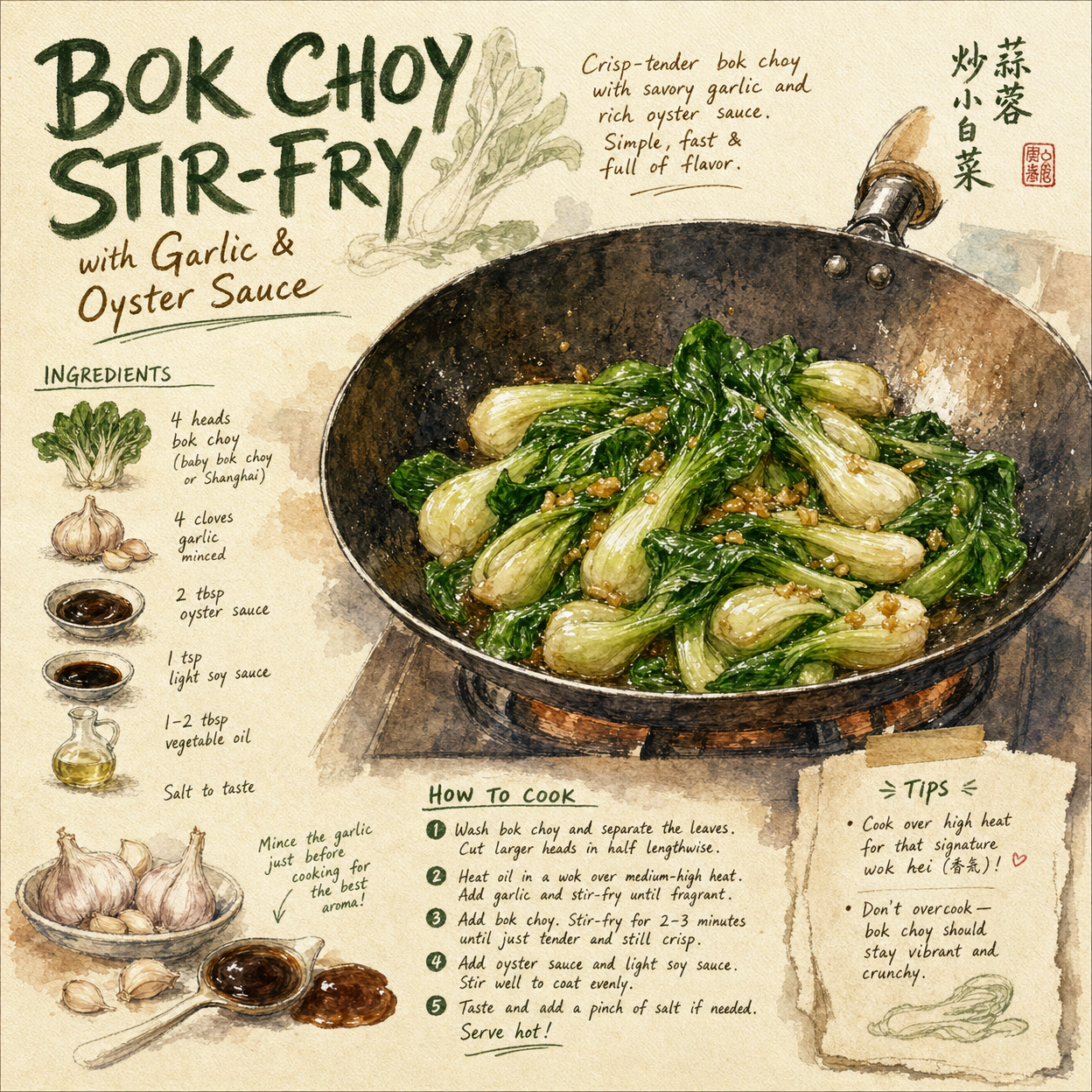
Garlic Stir-fried Bok Choy (Chinese Classic): Baby bok choy flashed in a hot wok with copious amounts of garlic, finished with a drizzle of sesame oil.
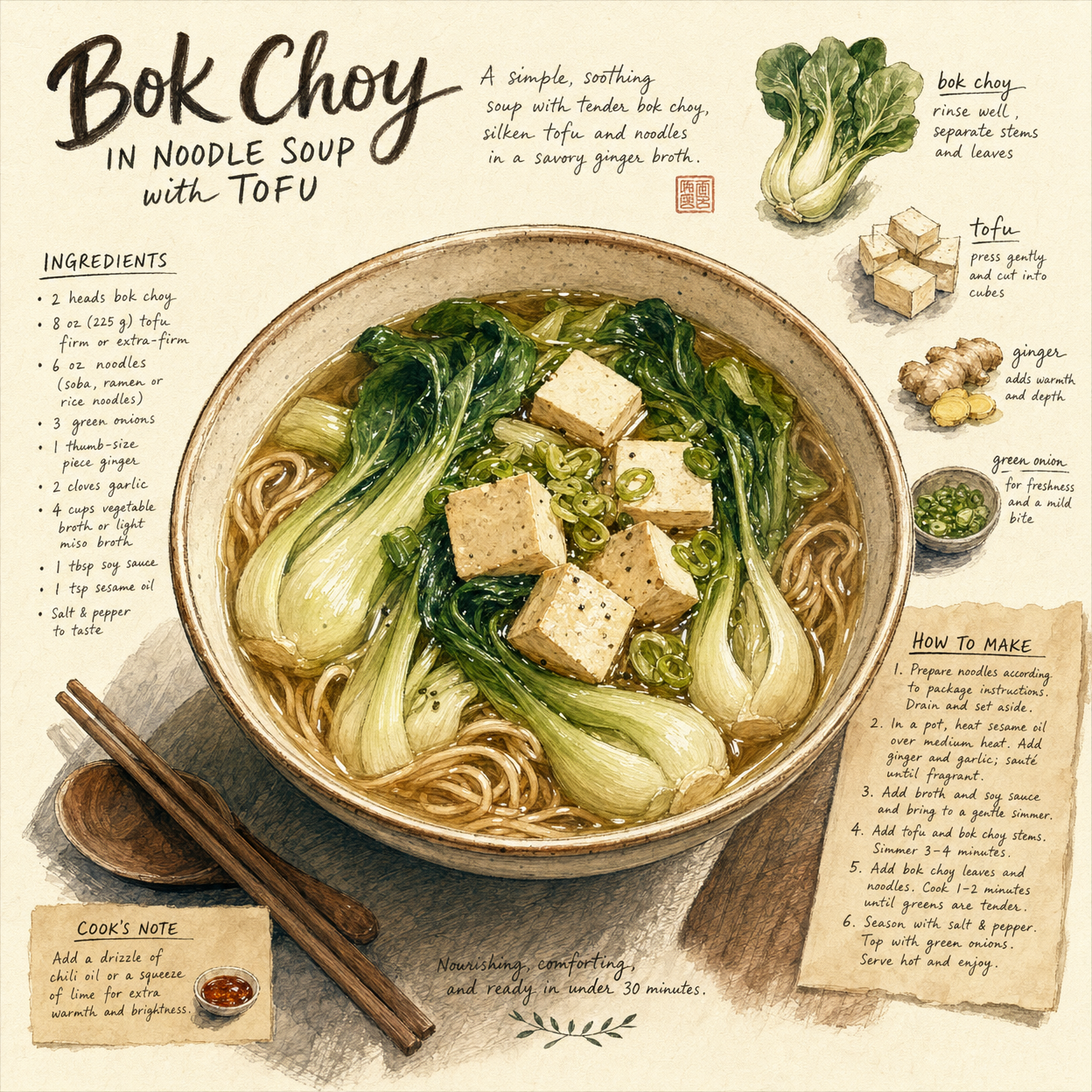
Bok Choy Noodle Soup (Pan-Asian): A comforting bowl of chicken or vegetable broth with noodles, topped with lightly blanched bok choy and scallions.
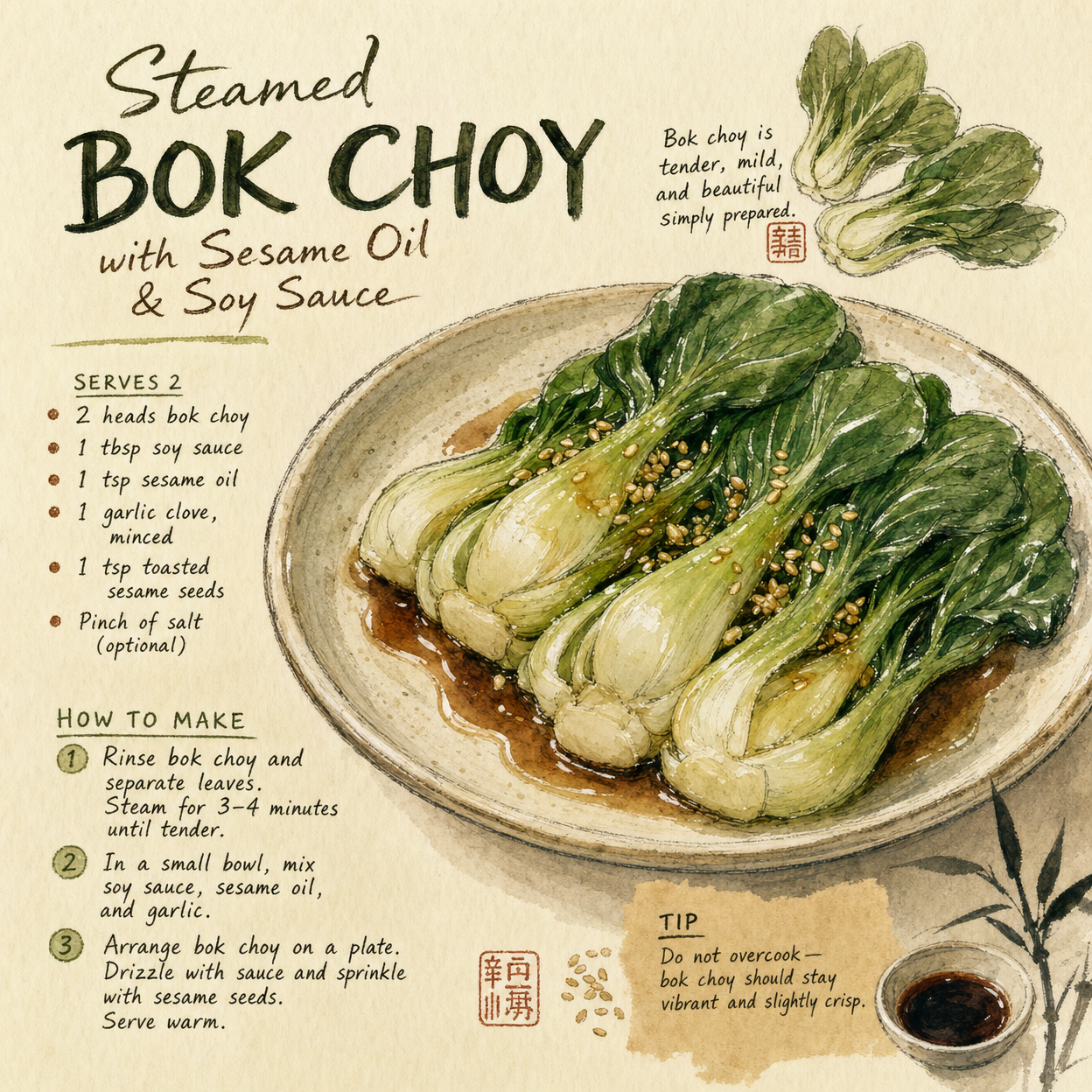
Pechay Guisado (Filipino Sauté): Bok choy sautéed with garlic, onions, tomatoes, and sometimes a bit of pork or shrimp, served over steamed rice.