
Bottle Gourd
Vegetable
Also known as: English: Bottle Gourd, Calabash, Opo Squash. Hindi: Lauki, Doodhi. Spanish: Calabaza de peregrino. French: Calebasse. Portuguese: Cabaça. Tagalog: Upo. Chinese (Mandarin): Húlú.
About this crop
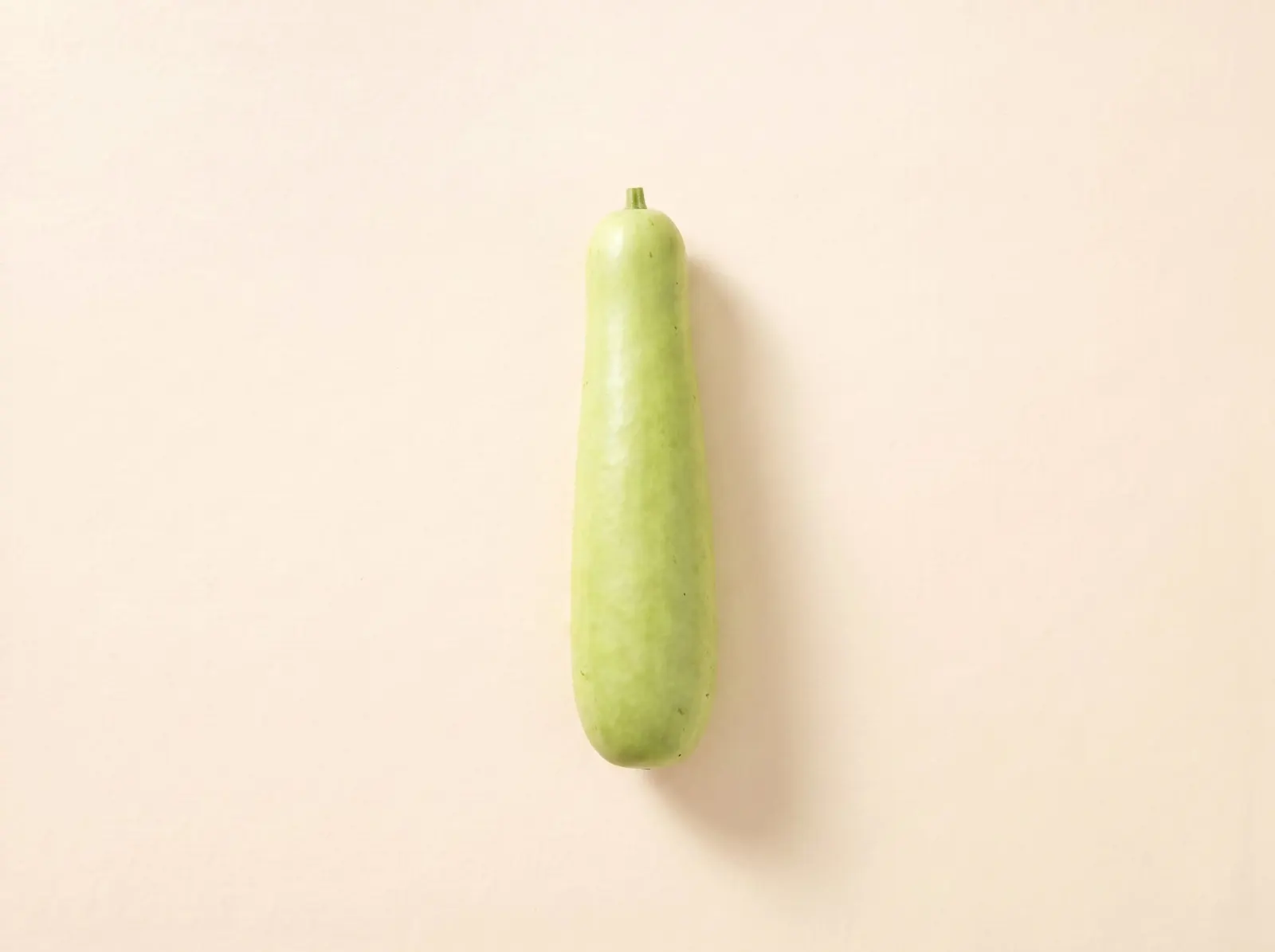
Bottle gourd is a long, pale green vine fruit with smooth skin and white, mild-flavored flesh. Used widely across South Asia, Southeast Asia, Africa, and the Caribbean, it is a cooking vegetable similar in role to summer squash but with a more subtle flavor. The dried mature shells are also used as water containers, musical instruments, and ladles across many traditional cultures.
Safety
Before cooking or juicing a bottle gourd (lauki, dudhi, calabash), taste a tiny piece of the raw flesh and spit it out. If it is bitter, throw the whole gourd away; do not cook, eat or juice it. Bitter bottle gourds contain cucurbitacins, natural toxins that have caused severe vomiting, bleeding in the stomach and, rarely, death, mostly after drinking raw juice. If anyone feels unwell after eating or drinking bitter gourd, get medical care right away.
Applies to: Bottle gourd (Lagenaria siceraria) that tastes bitter, for everyone; the highest documented risk is raw juice.
Health information for this food is under review. Reviewed claims will include their sources and limits.
Traditional uses
Indian families serve lauki regularly through summer for its gentle properties. In the Philippines, upo features in chicken soup tinola alongside ginger and chili leaves. In West Africa and the Caribbean, the dried gourd shells have ceremonial and practical uses beyond food. The crop is one of humanity's oldest cultivated plants, with archaeological evidence dating back over ten thousand years, predating even agriculture in some regions.
How to prepare
Peel the thin green skin and remove any developed seeds in the center. Cut into cubes for curries or grate for fritters and stuffed flatbreads. For an Indian Lauki Sabzi, sauté with cumin, turmeric, and tomato until tender. For a soup, simmer chunks with lentils and aromatics until soft. The flesh cooks quickly and absorbs surrounding flavors well.
Recipe ideas
Share how you use Bottle GourdIndian Lauki Kofta (gourd dumplings in tomato gravy). Filipino Tinola (chicken soup with bottle gourd). Lauki Chana Dal (gourd with split chickpeas). Stuffed Lauki paratha.