
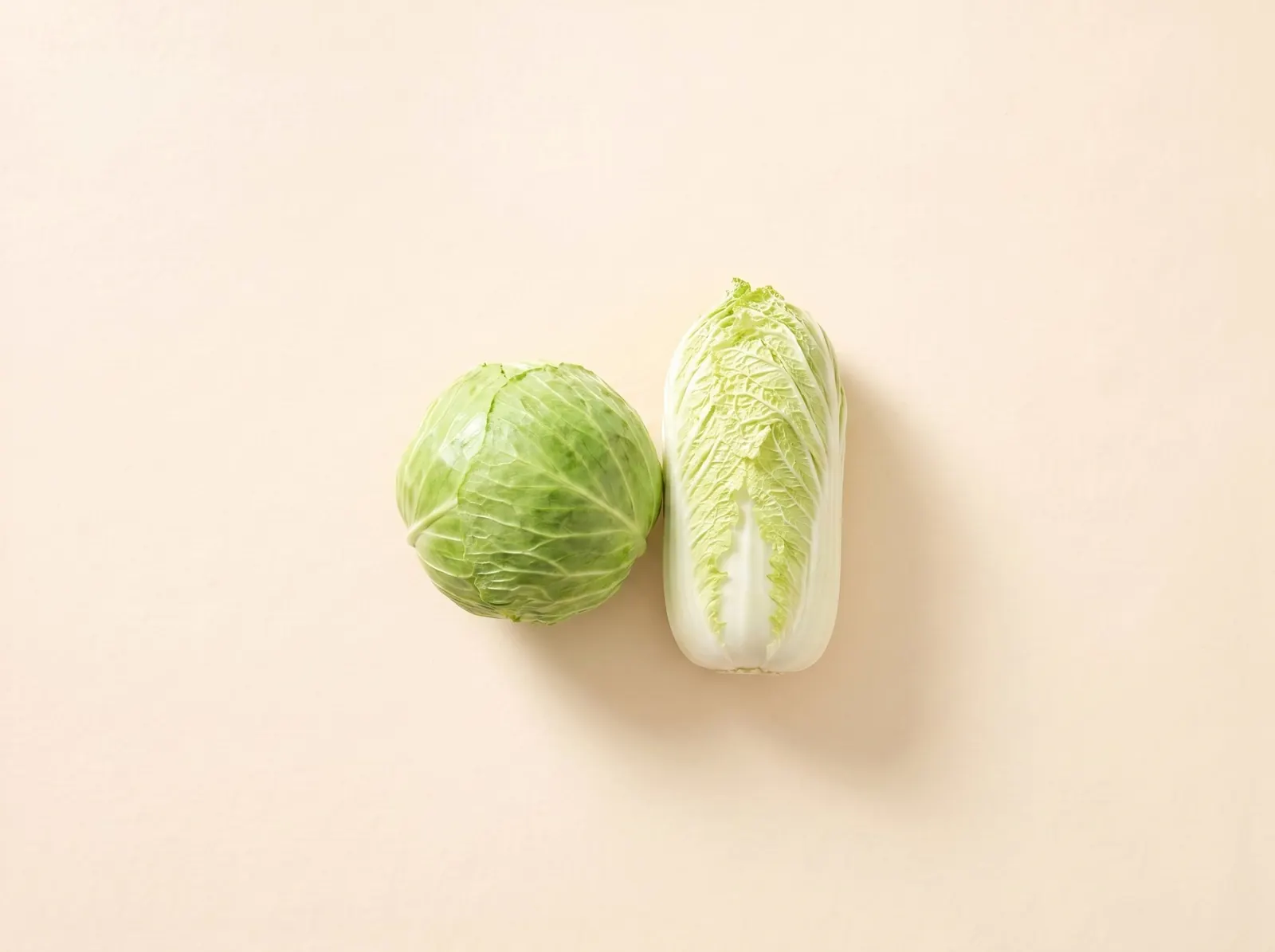
Cabbage and Napa Cabbage
Leafy Green
Also known as: Repolho (Portuguese), Repollo (Spanish), Baechu (napa, Korean), Kapusta (Russian/Polish), suan cai / pao cai (Chinese fermented)
About this crop
A dense head of tightly packed leaves, crisp raw and silky cooked, and the single most important vegetable for fermenting. Green and red cabbage are Brassica oleracea (kin to collards and kale); napa is the looser Brassica rapa. A hardy, dependable cool-season crop.
Safety
Sauerkraut and kimchi are usually high in salt. USDA data list about 470 mg of sodium in half a cup of canned sauerkraut and about 370 mg in half a cup of kimchi. Store-bought and homemade batches vary widely, so check the label, and keep portions small if you are watching your salt intake.
Applies to: Anyone limiting sodium, for example on a clinician-advised low-salt diet.
Health information for this food is under review. Reviewed claims will include their sources and limits.
Traditional uses
Napa is the body of Korean baechu kimchi; green cabbage becomes German and Eastern European sauerkraut and anchors borscht; Chinese suan cai and pao cai; Salvadoran curtido over pupusas; a vegetable in Cape Verdean cachupa. Worldwide fermentation tradition.
How to prepare
Ferment into kimchi, sauerkraut, curtido, suan cai; shred raw into slaw; simmer into soups and stews; fold into dumplings and stir-fries.
Recipe ideas
Share how you use Cabbage and Napa CabbageBaechu kimchi; sauerkraut; curtido; cabbage in cachupa; cabbage borscht