
Chayote
Vegetable
Also known as: English: Chayote, Christophine, Mirliton. Spanish: Chayote, Guisquil, Tayota. French: Christophine. Portuguese: Chuchu. Haitian Creole: Militon. Hindi: Chow chow.
About this crop
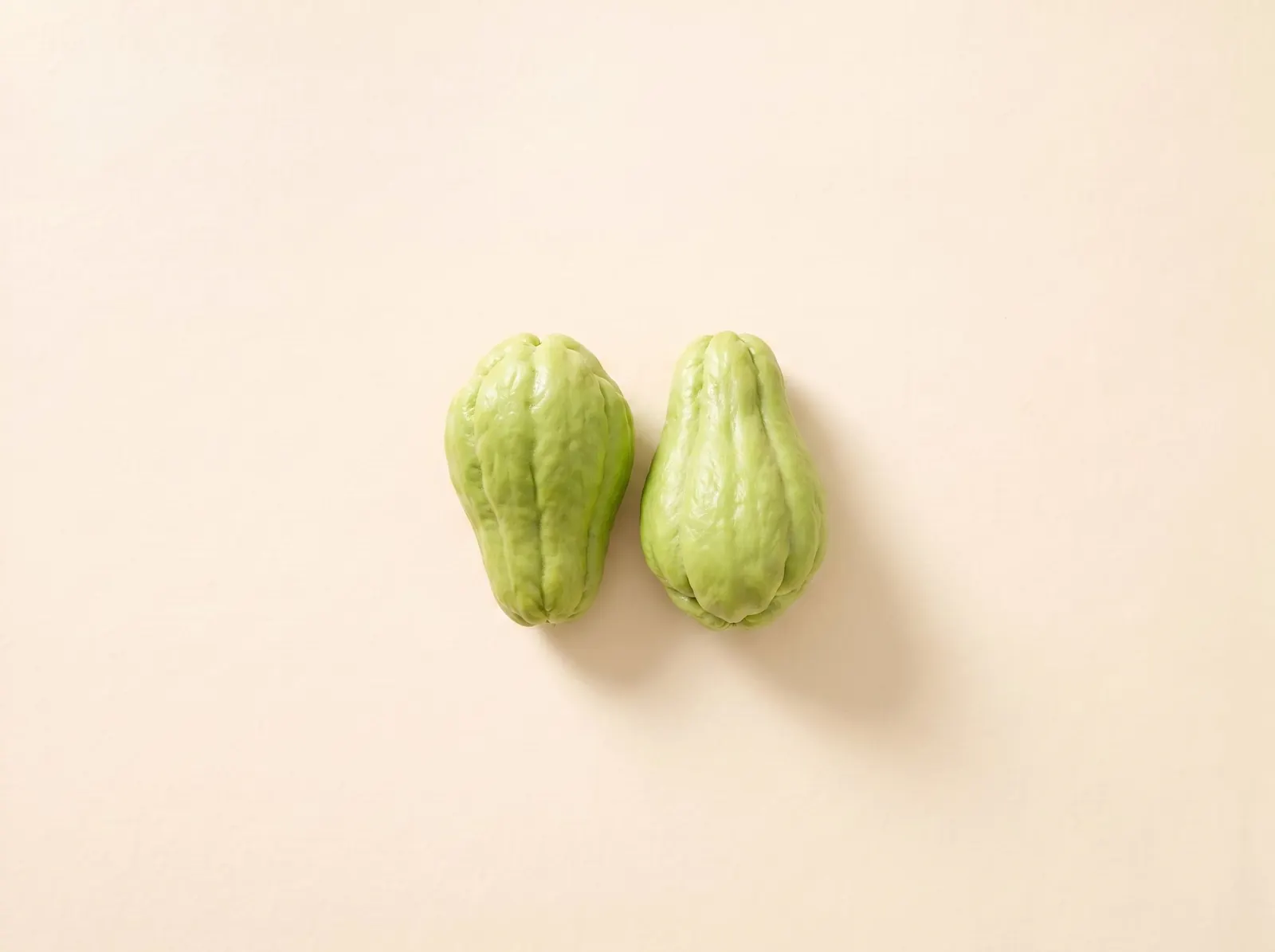
Chayote is a pale green, pear-shaped squash with deep ridges and a crisp, watery texture reminiscent of a cross between an apple and a cucumber. It grows on vigorous, climbing vines that can blanket entire fences. Unlike most winter squashes, chayote is eaten whole, skin, flesh, and the single soft seed inside, and its mild flavor makes it an incredible canvas for bold spices.
Health information for this food is under review. Reviewed claims will include their sources and limits.
Traditional uses
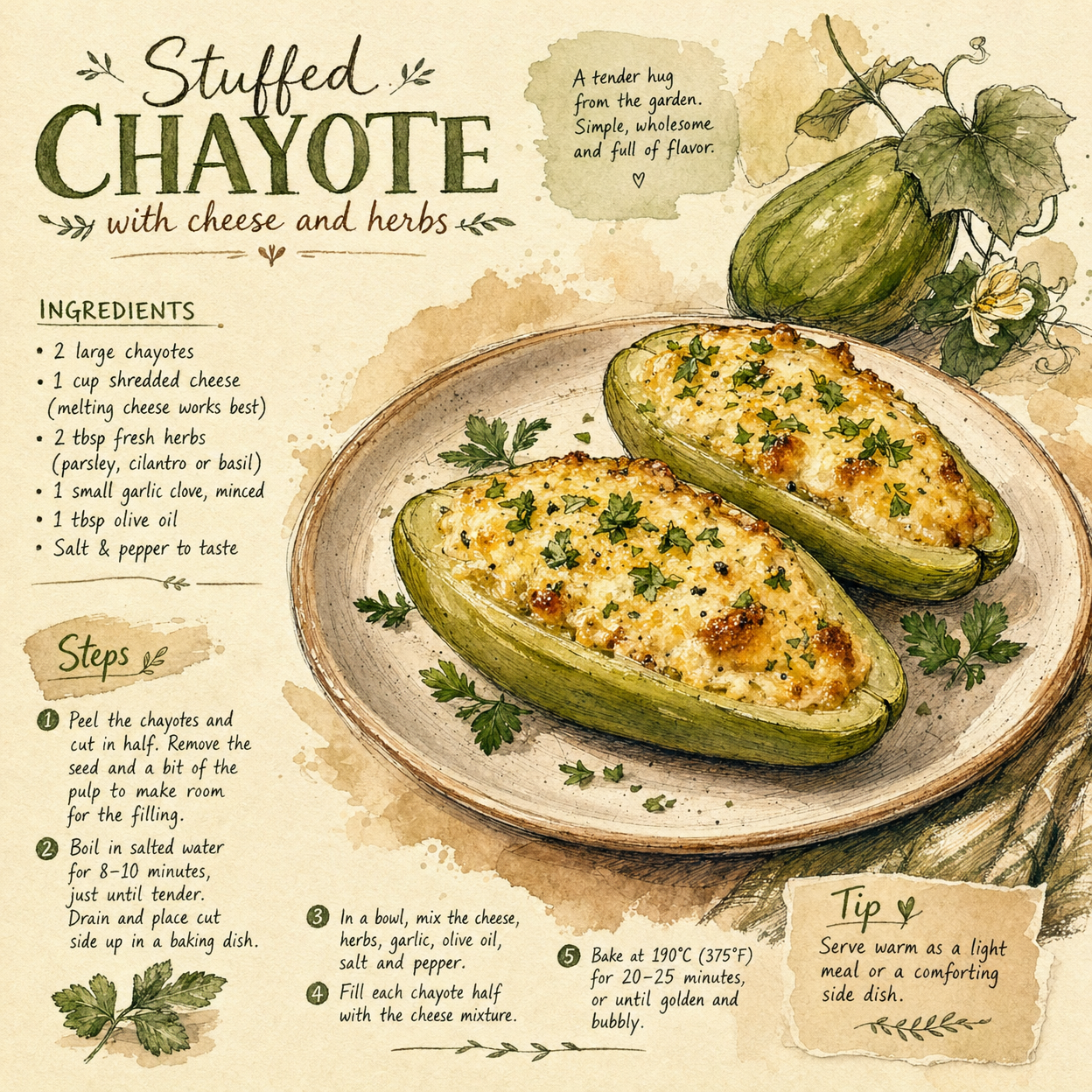
In Guatemalan and Central American traditions, chayote (known as guisquil) is a daily staple. It is frequently boiled in hearty chicken or beef soups, where it absorbs the rich broth while maintaining its structure. It is also stuffed with cheese or meat and baked, or simply sautéed with onions and tomatoes.
In the Caribbean, particularly in Dominican (tayota) and Haitian (militon) kitchens, it serves a similar role. It is often stewed with codfish or salted meats, providing a cooling, hydrating contrast to the intense, salty flavors. In Louisiana Creole traditions, the exact same squash is stuffed with shrimp and ham for holiday feasts.
This living squash connects the Guatemalan families of Olneyville with the Dominican and Haitian families of Broad Street. It is a shared, hydrating vegetable that provides bulk and comfort to the complex, slow-simmered stews that define these diverse culinary traditions.
How to prepare
Chayote can be eaten raw or cooked. The skin is edible, especially on younger, smoother squashes, but older, deeply wrinkled ones are often peeled. Be aware that raw chayote secretes a sticky sap when peeled that can temporarily dry out your hands, so some cooks prefer to peel it under running water or wear gloves.
For a simple Central American preparation, cut the chayote in half, remove the soft seed (or leave it, as it is delicious), and slice the flesh into wedges. Sauté the wedges with onions, garlic, and tomatoes until tender, finishing with a sprinkle of fresh cilantro.
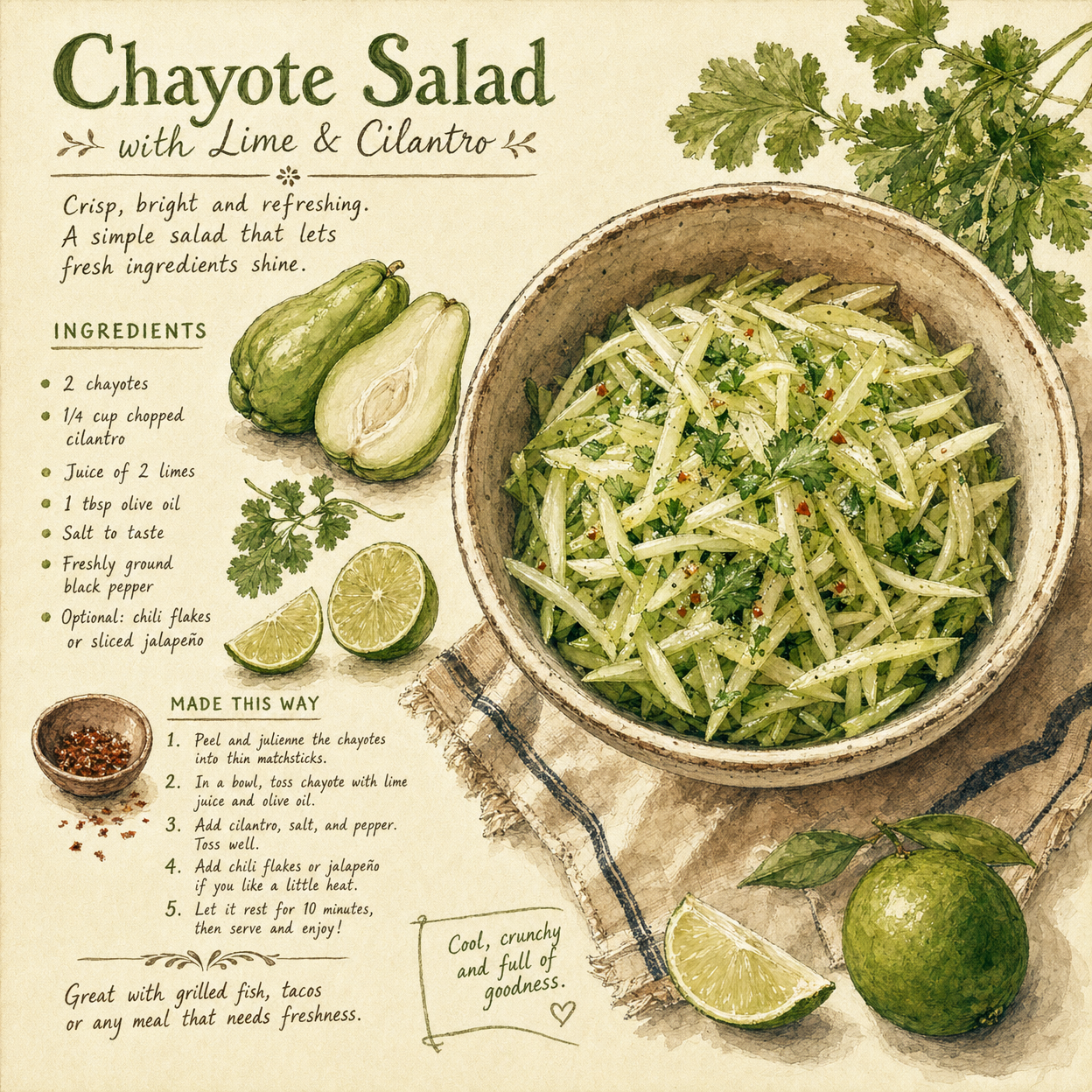
In a Caribbean stew, cut the chayote into large chunks and add it to a simmering pot of salted cod or beef during the last twenty minutes of cooking. It will soak up the savory broth while retaining a pleasant, slight crunch.
Recipe ideas
Share how you use Chayote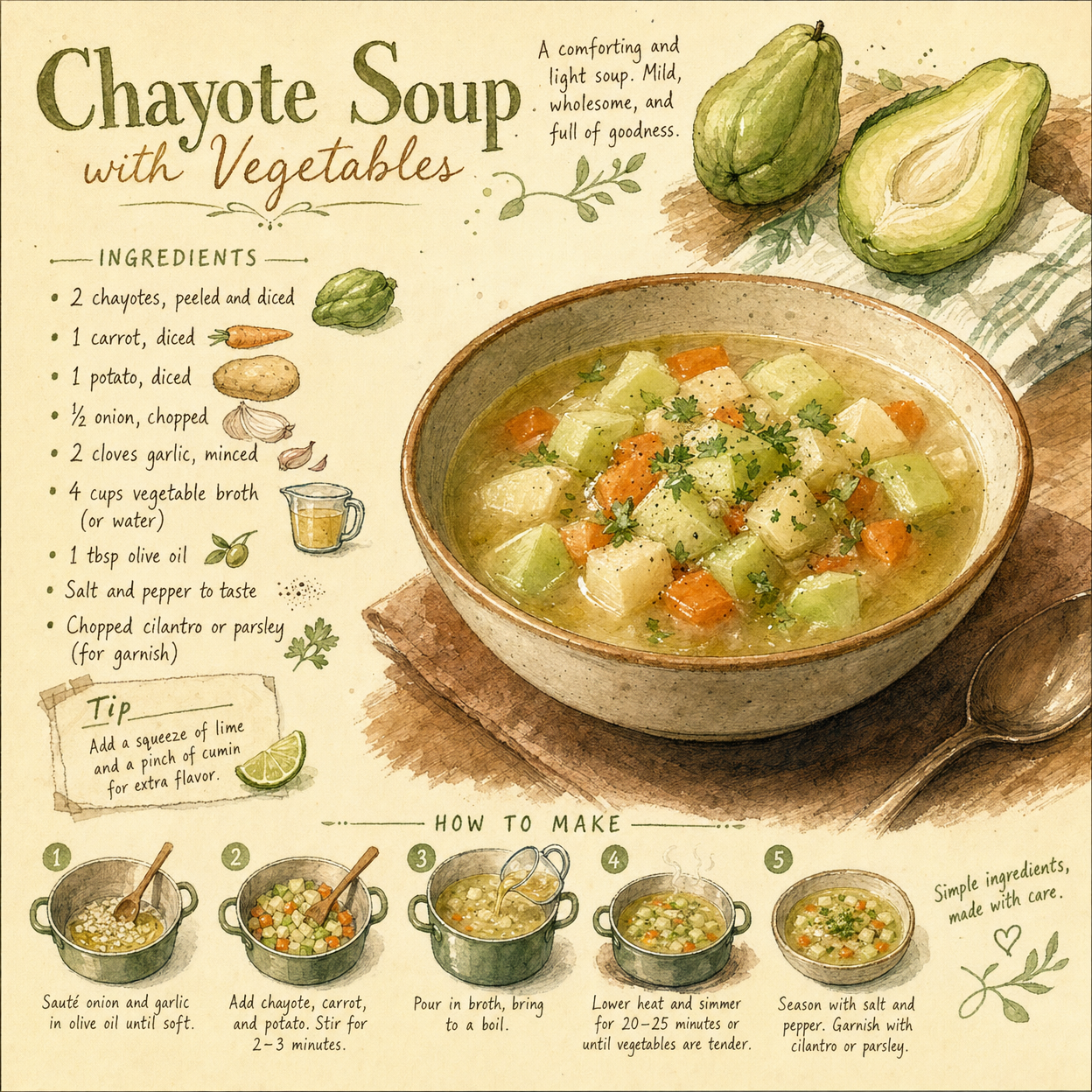
Guisquil Sauté (Guatemalan): Sliced chayote sautéed simply with onions, tomatoes, and a pinch of oregano.
Tayota con Bacalao (Dominican): Chayote stewed in a rich tomato sauce with salted codfish and peppers.
Chow Chow Kootu (Indian): Chayote simmered with lentils, coconut, and cumin.