
Escarole
Leafy Green
Also known as: English: Escarole, Broad-leaved Endive. Spanish: Escarola. French: Scarole. Portuguese: Escarola. Italian: Scarola.
About this crop
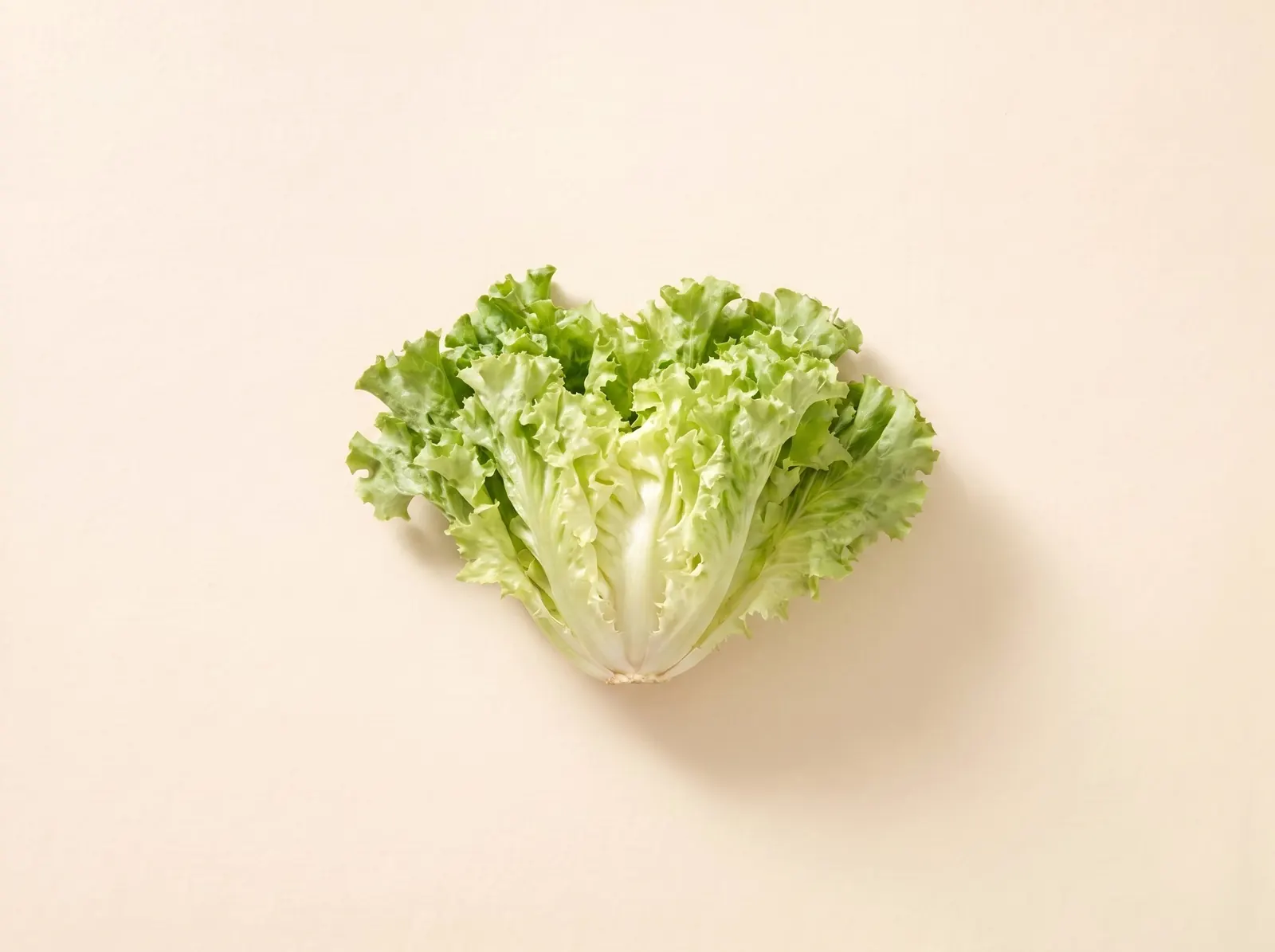
Escarole is a broad-leaved, sturdy green belonging to the chicory family. It grows in large, loose heads with dark green outer leaves that transition to a pale, tender yellow-green at the heart. It possesses a mild, pleasant bitterness, less aggressive than radicchio or broccoli rabe, and a hearty texture that holds up beautifully to slow braising and simmering.
Health information for this food is under review. Reviewed claims will include their sources and limits.
Traditional uses
In Italian-American kitchens, escarole is the ultimate soup green. It is the essential ingredient in Italian Wedding Soup, where its sturdy leaves are simmered in a rich chicken broth alongside tiny meatballs and pastina. The slow simmer mellows its bitterness, transforming it into a silky, comforting presence. It is also frequently braised on its own with garlic, olive oil, and white beans for a humble, nourishing meal.
Beyond Italy, escarole and its chicory cousins are staples across the Mediterranean and North Africa. In French traditions, the tender inner leaves are prized for crisp, slightly bitter winter salads. In North African cuisines, sturdy greens like escarole are often wilted into complex, spiced stews, providing necessary bulk and a balancing bitter note.
This wedding green connects the historic Italian traditions of Rhode Island with the broader Mediterranean world. Whether it is floating in a celebratory soup on Federal Hill or braised with beans for a quiet weeknight dinner, escarole represents the enduring comfort of slow-cooked, resilient greens.
How to prepare
Escarole can be very sandy, so it must be washed meticulously. Cut off the root end so the leaves separate, then wash them in a large basin of cold water, lifting the leaves out so the grit settles at the bottom. The dark outer leaves are best for cooking, while the pale, tender inner leaves can be reserved for salads.
For a classic Italian braise, heat olive oil in a heavy pot and sauté sliced garlic until golden. Add the washed, roughly chopped escarole leaves (with some water still clinging to them). Cover the pot and let the greens wilt for a few minutes. Uncover, season with salt and perhaps a pinch of red pepper flakes, and simmer until the escarole is very tender and silky.
To use escarole in soup, simply chop the leaves and stir them into a simmering chicken or vegetable broth during the last ten to fifteen minutes of cooking. They will soften beautifully without turning to mush.
Recipe ideas
Share how you use Escarole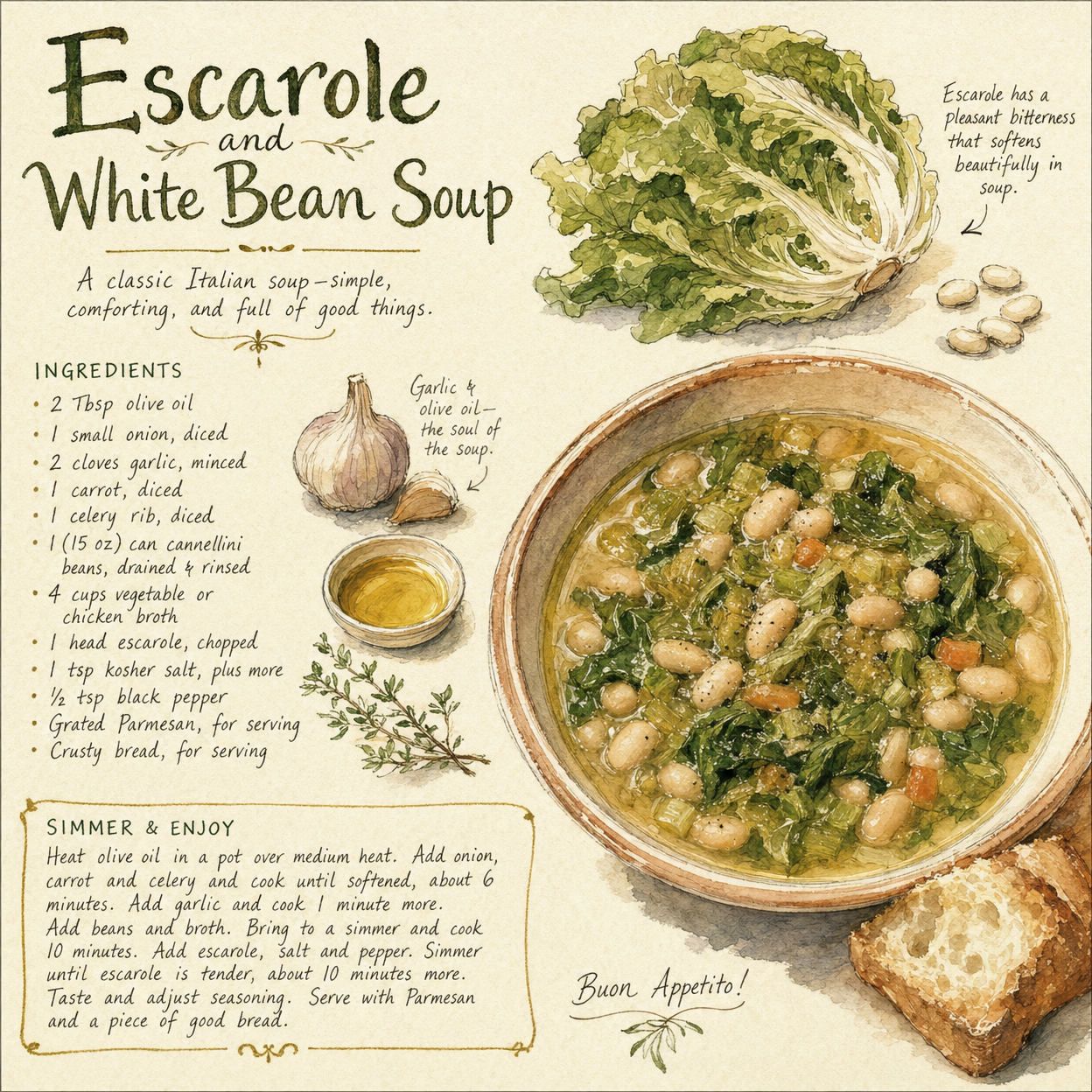
Italian Wedding Soup: A comforting chicken broth filled with tiny meatballs, pastina, and silky, simmered escarole.
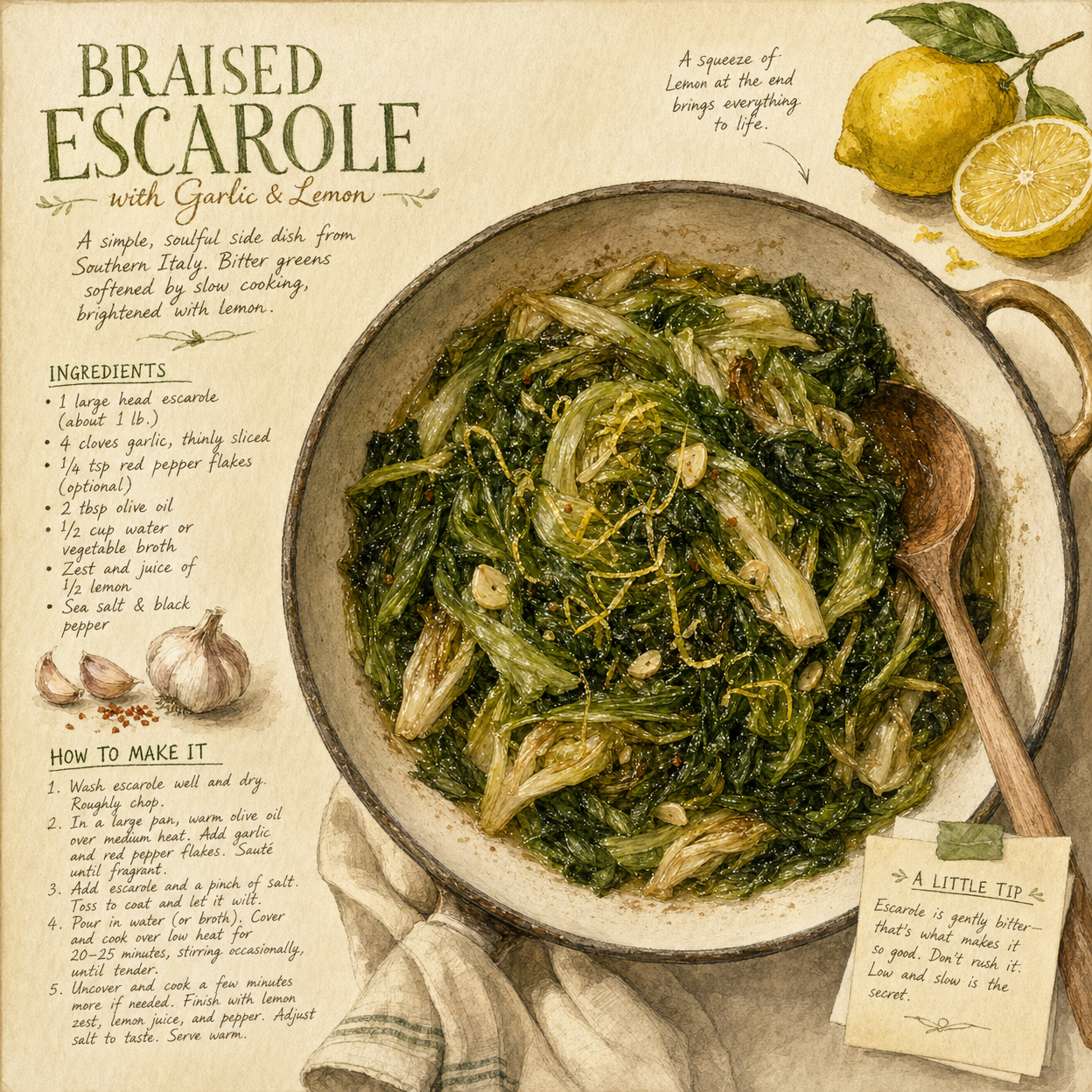
Escarole and Beans (Beans and Greens): Braised escarole simmered with cannellini beans, garlic, and olive oil, served with crusty bread.
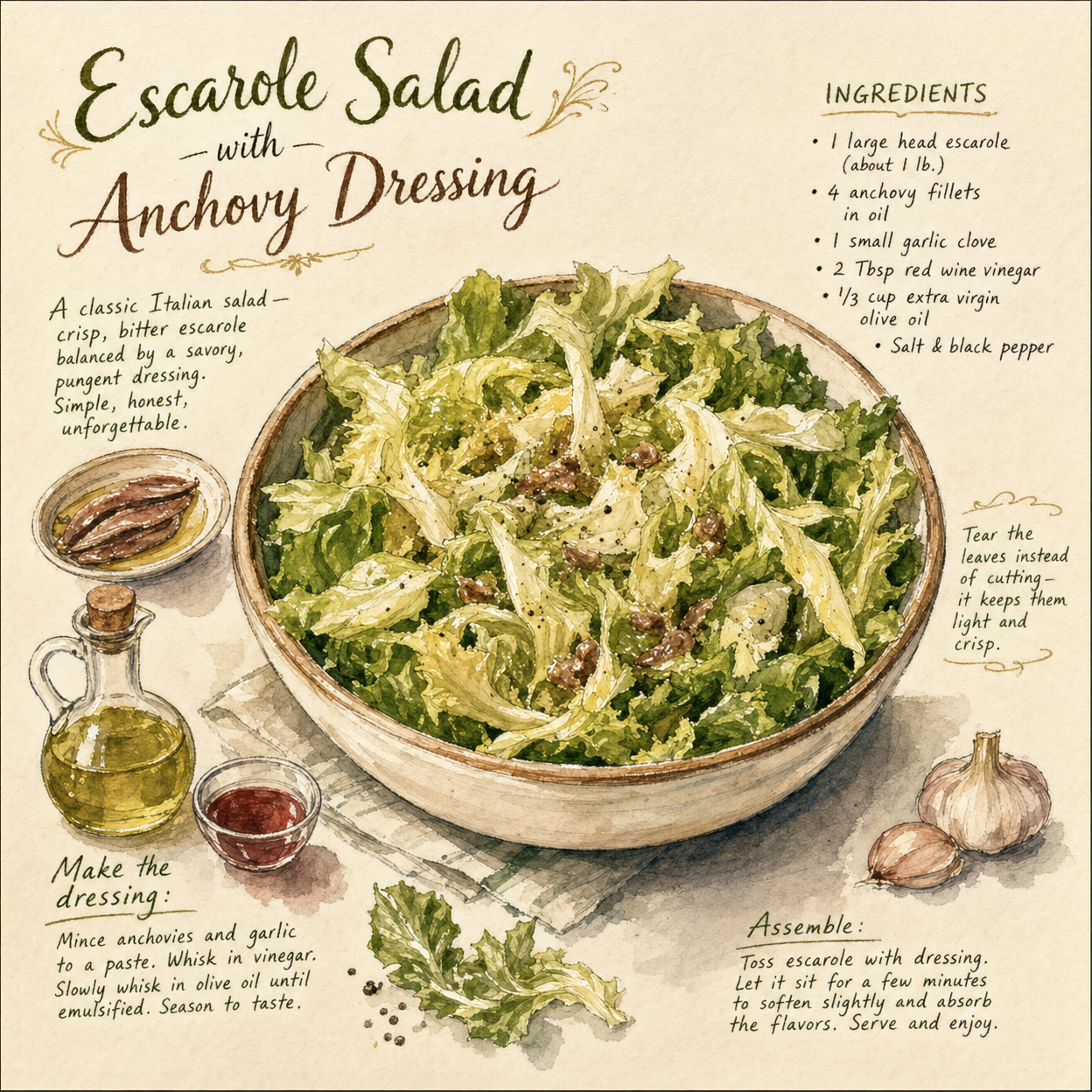
Winter Chicory Salad: The pale, tender inner leaves of escarole tossed with a sharp vinaigrette, walnuts, and shaved cheese.