Kale
Leafy Green
Also known as: English: Kale, Curly Kale, Lacinato Kale (Tuscan/Dinosaur Kale). Spanish: Col rizada. French: Chou frisé. Portuguese: Couve-frisada. Italian: Cavolo nero (Lacinato).
About this crop
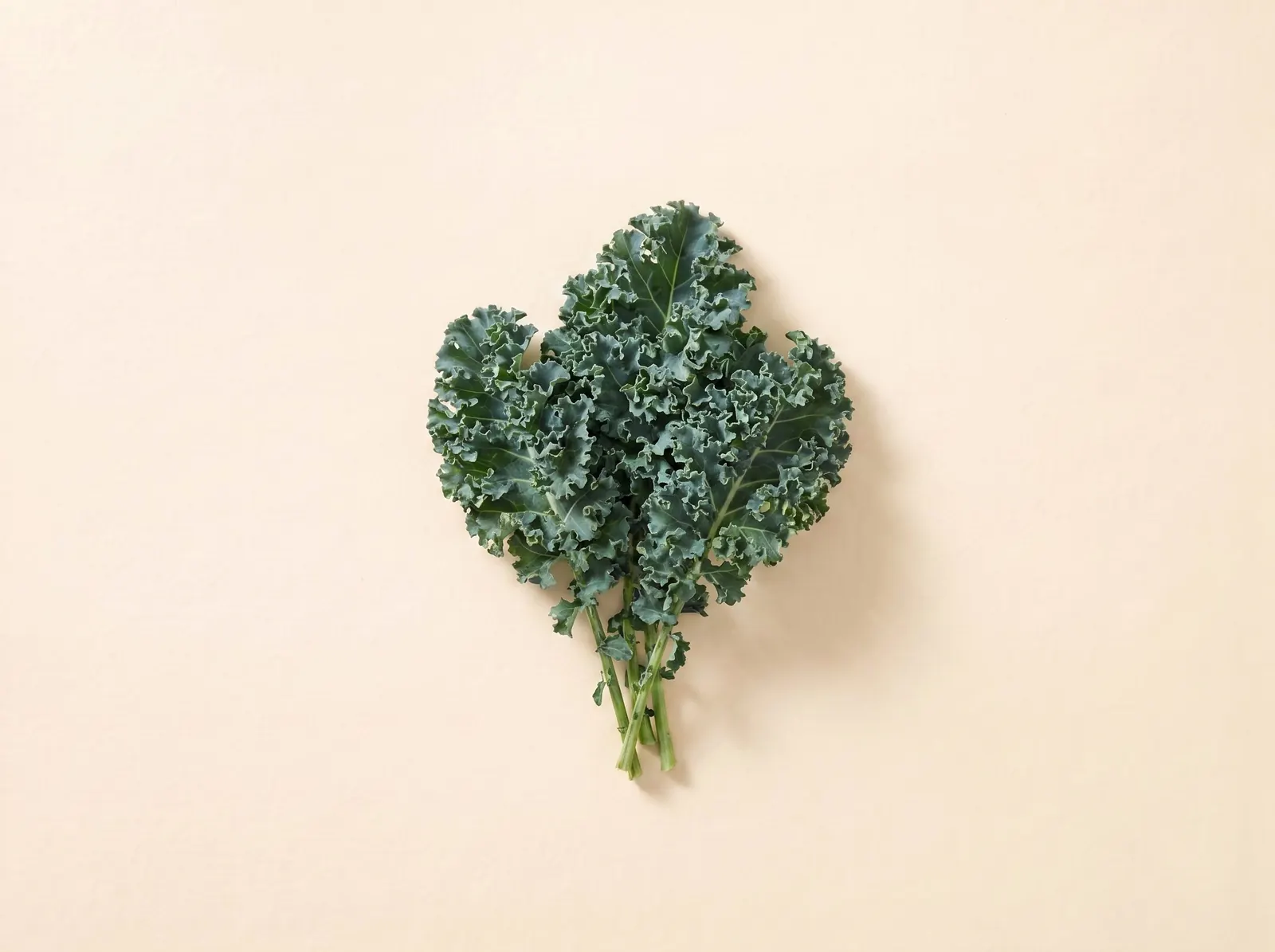
Kale is a hardy leafy brassica with curly or flat dark green leaves and a sturdy central stem. It is one of the vegetables widely grown in Rhode Island, available across nearly every farm in the state from spring through hard frost. Its slightly bitter, peppery flavor mellows with cooking and develops sweetness after exposure to cold weather.
Health information for this food is under review. Reviewed claims will include their sources and limits.
Traditional uses
Kale has been cultivated across Europe for over two thousand years, valued by Mediterranean and Northern European communities as a winter staple that survives where other greens fail. In Rhode Island, kale is a backbone crop for nearly every local farm, served in CSAs from May through hard frost. While Portuguese Kale (couve) holds the cultural heart of Lusophone families, curly and Lacinato kale serve a similar role in modern American kitchens through the cold months.
How to prepare
Strip the leaves from the tough central stem before cooking. For sautéed kale, heat olive oil with garlic, add chopped leaves, and cook until tender, finishing with lemon juice. For massaged kale salad, slice raw leaves thin, drizzle with olive oil and salt, and rub for two minutes until softened. For kale chips, toss leaves with oil and salt, then bake at low heat until crisp.
Recipe ideas
Share how you use KaleSautéed Kale with Garlic and Lemon. Massaged Kale Salad with Tahini Dressing. Tuscan Ribollita (white bean and kale soup). Caldo Verde-style soup with curly kale as substitute for couve.