
Long Beans
Legume
Also known as: English: Long Beans, Yard-Long Beans, Snake Beans. Spanish: Habichuela larga. French: Haricot kilomètre. Portuguese: Feijão-chicote. Khmer: Sandaek kuor. Chinese (Mandarin): Dòujiǎo. Hindi: Barbati. Tagalog: Sitaw.
About this crop
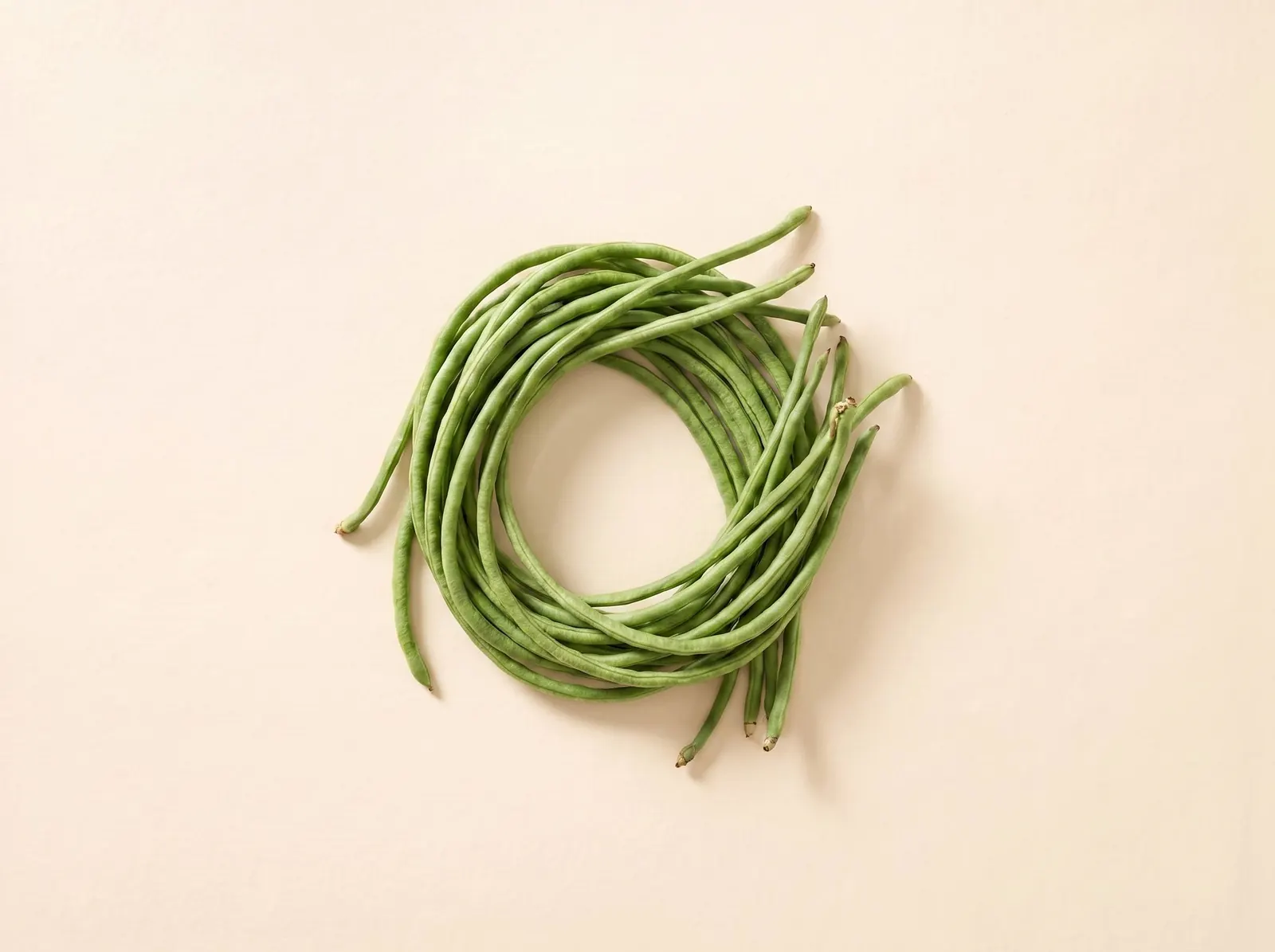
Long beans are extraordinary, slender legumes that grow on vigorous climbing vines, producing pods that can reach up to three feet in length. They hang in pairs like green ribbons, with a slightly wrinkled, pliable texture. Unlike standard green beans, they are denser, less watery, and possess a deeper, earthier flavor that stands up exceptionally well to intense heat and bold spices.
Health information for this food is under review. Reviewed claims will include their sources and limits.
Traditional uses
In Cambodian, Thai, and Chinese kitchens, long beans are prized for their ability to absorb flavor while maintaining a firm, chewy texture. They are frequently chopped into short segments and dry-fried in a wok until blistered and wrinkled, then tossed with garlic, chilies, and fermented pastes. In Southeast Asian salads, such as green papaya salad, they are often bruised raw in a mortar to soak up lime juice and fish sauce.
Remarkably, the long bean is the exact same species as the black-eyed pea, a foundational crop of West African and Southern African American foodways. While African traditions focus on harvesting and drying the mature seeds inside the pod, Asian traditions harvest the pod while it is still green and tender. The plant traveled across the globe, adapting to different culinary needs while remaining a vital source of sustenance.
This single plant connects the stir-fries of Elmwood's Cambodian community with the Hoppin' John of Southern traditions. It is a living testament to how a single crop can weave through different cultures, offering its tender green pods to one tradition and its hearty, dried seeds to another, nourishing the world in multiple forms.
How to prepare
Long beans should be washed and trimmed at both ends. Because they are so long, they are almost always cut into manageable segments, usually about two to three inches long. They do not need to be strung like some older varieties of green beans.
For a classic Chinese dry-fry, heat a wok with oil until smoking. Add the bean segments and fry them until the skins blister and wrinkle, which takes a few minutes. Remove the beans, pour off most of the oil, and then fry aromatics like garlic, ginger, and chilies. Return the beans to the wok, toss with soy sauce and a pinch of sugar, and serve.
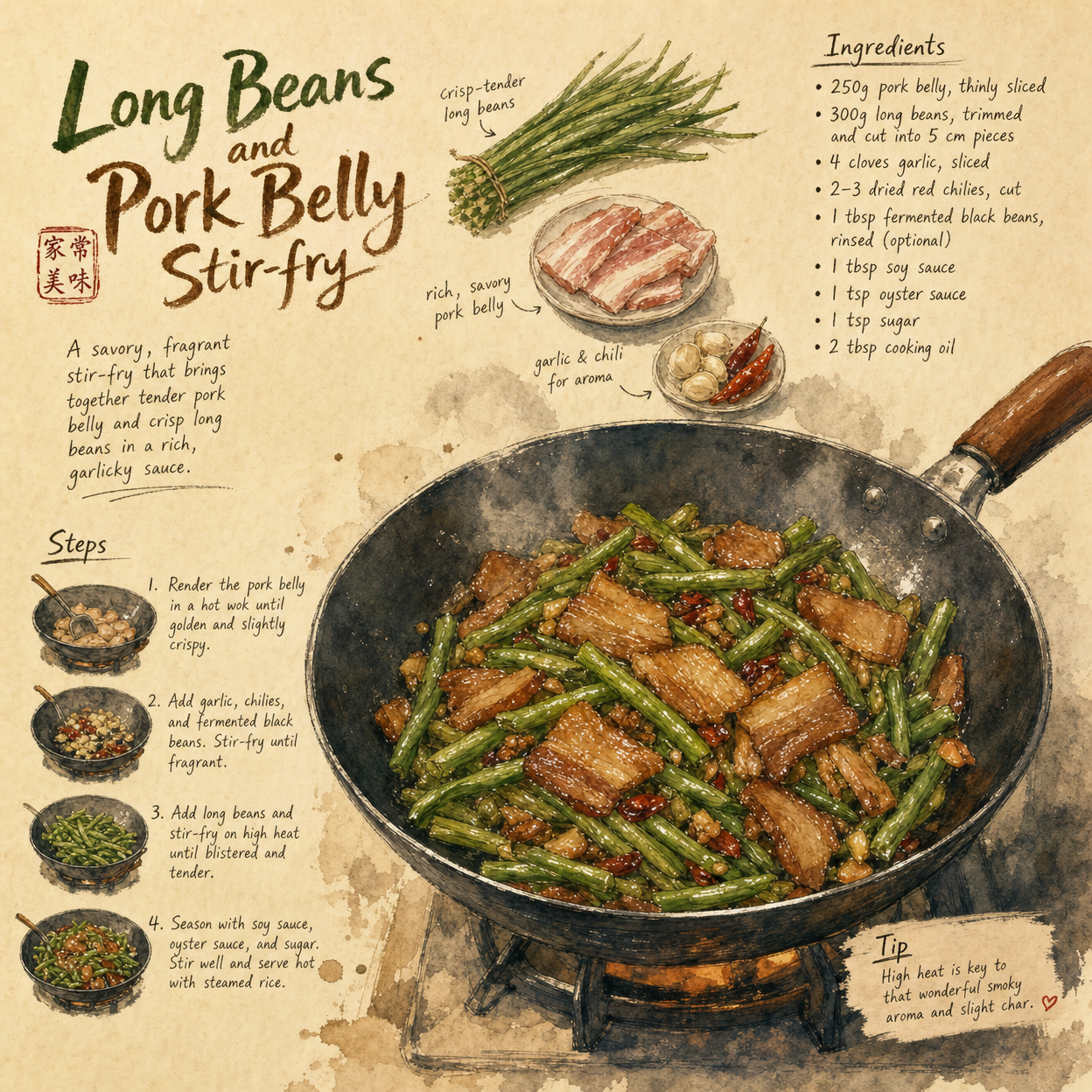
In a Cambodian or Thai preparation, you might cut the beans into one-inch pieces and stir-fry them with minced pork, holy basil, and a pungent chili-garlic paste. The dense texture of the beans perfectly absorbs the intense, savory sauce without becoming mushy.
Recipe ideas
Share how you use Long Beans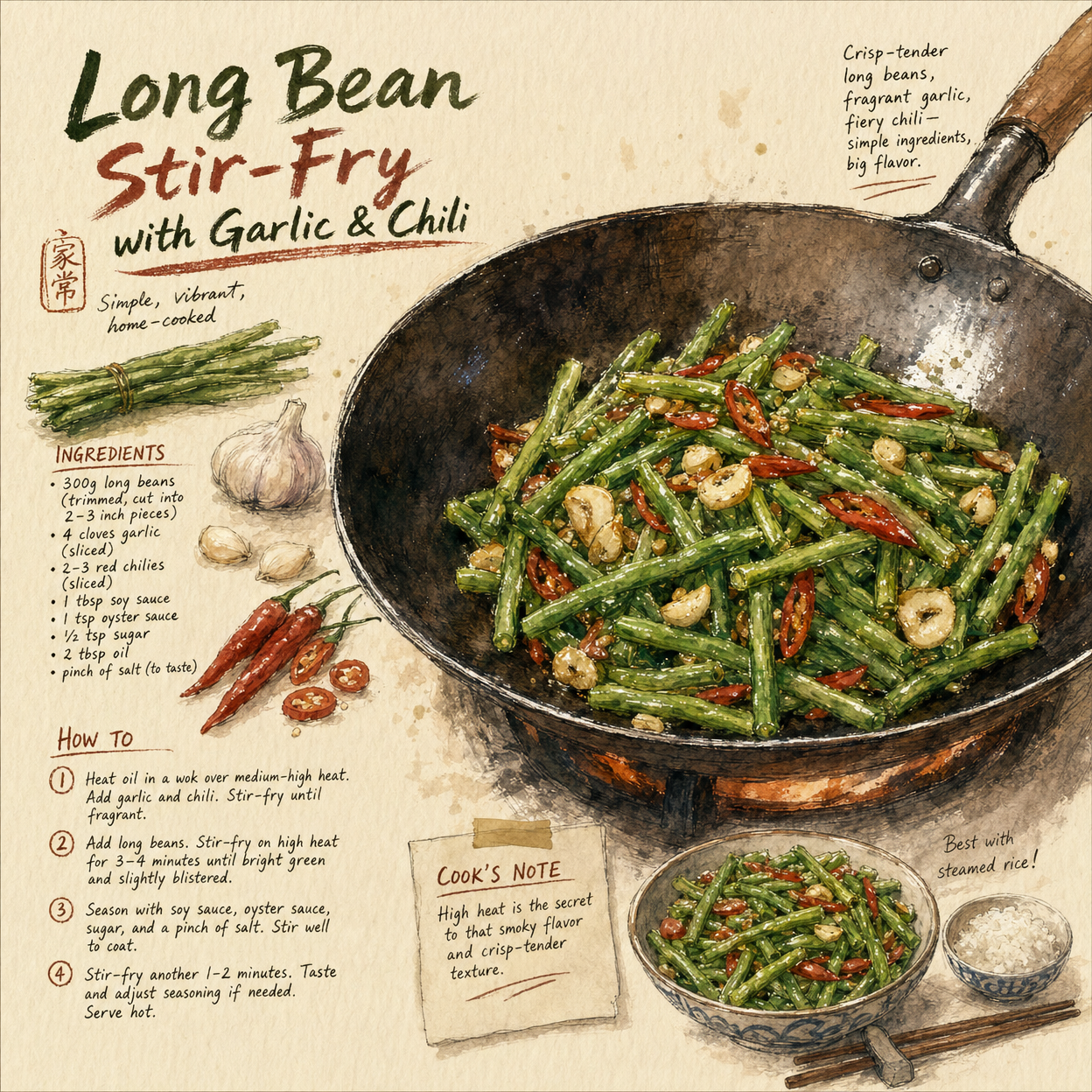
Dry-Fried Long Beans (Chinese Sichuan Style): Blistered long beans tossed with garlic, ginger, dried chilies, and sometimes a small amount of minced pork.
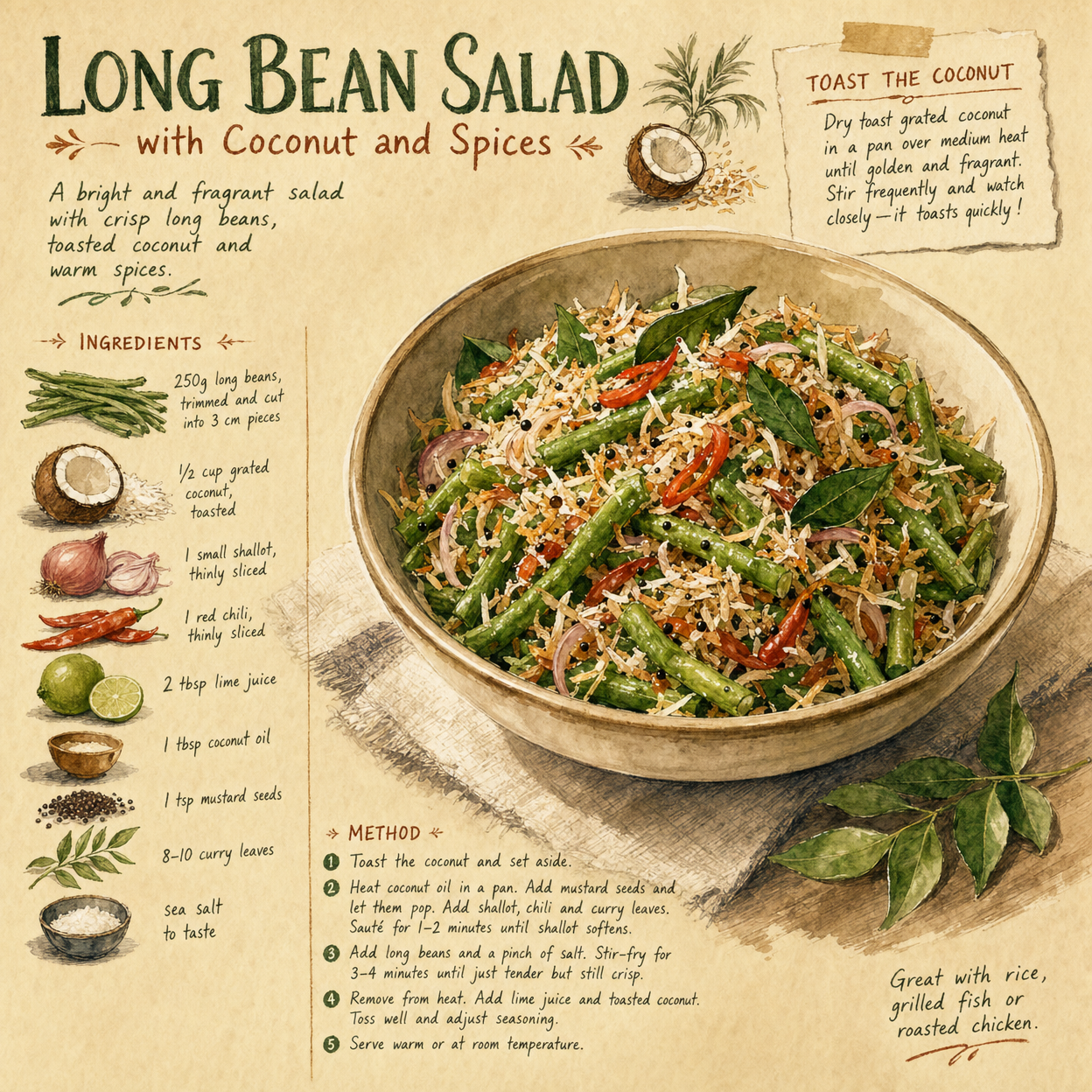
Som Tum Add-in (Thai/Lao Papaya Salad): Raw long beans cut into segments and lightly bruised in a mortar with green papaya, tomatoes, lime, and fish sauce.
Adobong Sitaw (Filipino Long Bean Stew): Long beans simmered gently in a savory, tangy sauce of soy sauce, vinegar, garlic, and black pepper.