
Malagueta Pepper
Vegetable
Also known as: English: Malagueta Pepper. Spanish: Malagueta. Portuguese: Pimenta-malagueta. Cape Verdean Creole: Malagueta.
About this crop
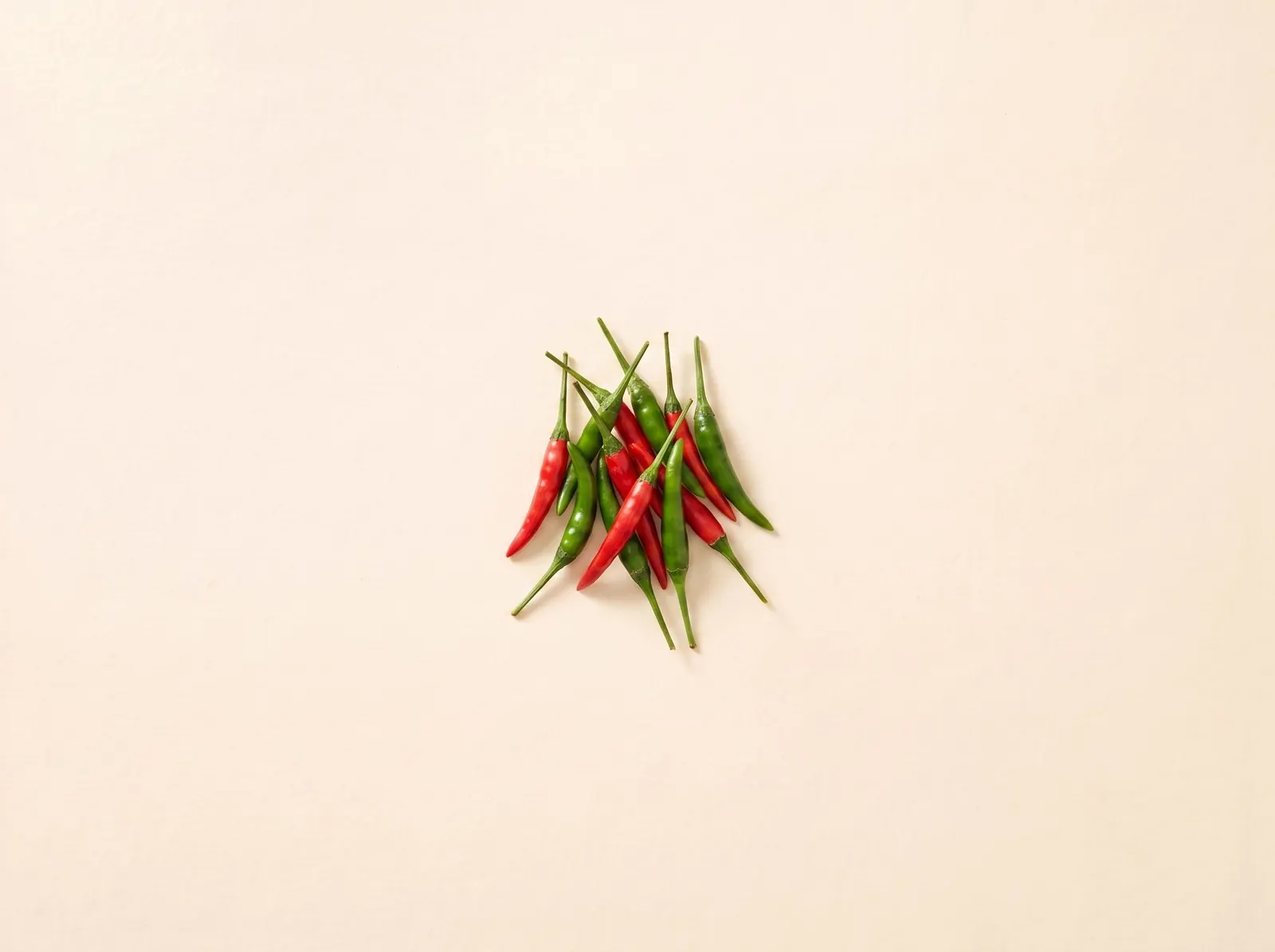
The malagueta is a tiny, fiercely hot pepper that grows pointing upright toward the sun on small, bushy plants. Measuring barely an inch long, it ripens from green to a brilliant, warning red. Despite its small size, it packs a massive, sharp, and immediate heat, accompanied by a bright, slightly fruity flavor that cuts through rich, heavy dishes.
Health information for this food is under review. Reviewed claims will include their sources and limits.
Traditional uses
In Cape Verdean, Portuguese, and Brazilian traditions, the malagueta is the defining source of heat. It is rarely cooked whole into dishes; instead, it is preserved in oil or vinegar to create potent hot sauces that sit on every dining table. A few drops of malagueta oil are essential for cutting through the richness of a Brazilian feijoada or a Cape Verdean cachupa, waking up the palate.
Botanically, the malagueta is the exact same species as the piri piri pepper of Mozambique and Angola, and the tabasco pepper of North America. The Portuguese encountered this pepper in Brazil and carried it across their trade routes to Africa, where it became deeply embedded in the local cuisines, eventually returning to the Americas in new forms.
This tiny, fiery pepper connects the Cape Verdean and Portuguese communities of Rhode Island with the broader African diaspora. Whether it is called malagueta in Pawtucket or piri piri in a Mozambican kitchen, this upright little pepper provides the essential, bright fire that brings complex, slow-cooked stews to life.
How to prepare
Because malagueta peppers are so small and intensely hot, they are most commonly used to infuse liquids rather than being chopped directly into food. Always wash your hands thoroughly after handling them, or wear gloves.
To make a traditional Cape Verdean or Brazilian hot sauce (molho de pimenta), pack a small, sterilized glass jar with whole, washed malagueta peppers. You can add a clove of garlic or a bay leaf if desired. Fill the jar to the brim with neutral oil, olive oil, or white vinegar. Let it sit in a cool, dark place for at least a week. The liquid will become intensely spicy and flavorful.
When serving a rich stew like cachupa or feijoada, simply spoon a few drops of the infused oil or vinegar directly over your bowl. The bright, sharp heat will cut through the heavy starches and meats perfectly.
Recipe ideas
Share how you use Malagueta Pepper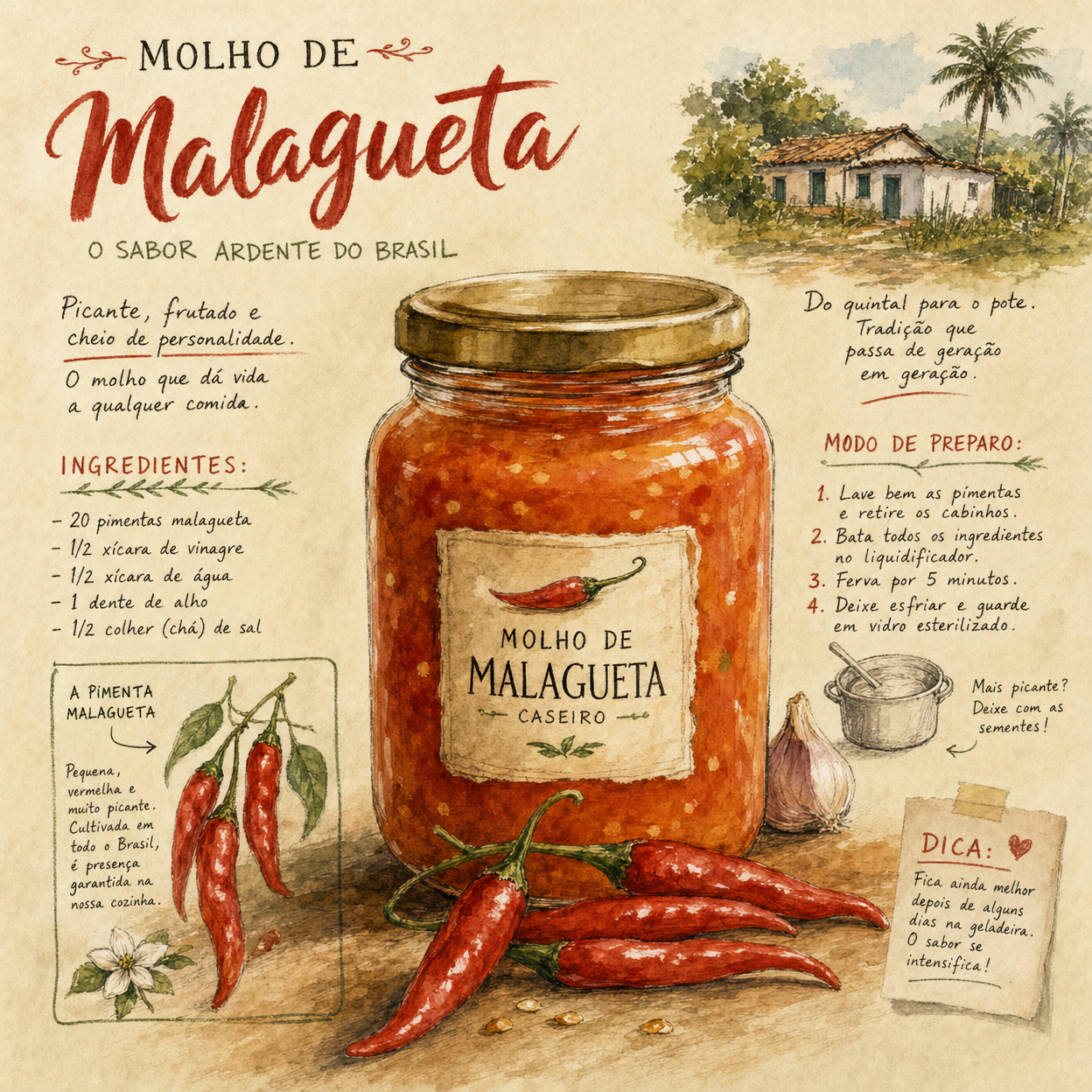
Molho de Pimenta (Malagueta Hot Sauce): Whole malagueta peppers steeped in oil or vinegar, used as a table condiment.
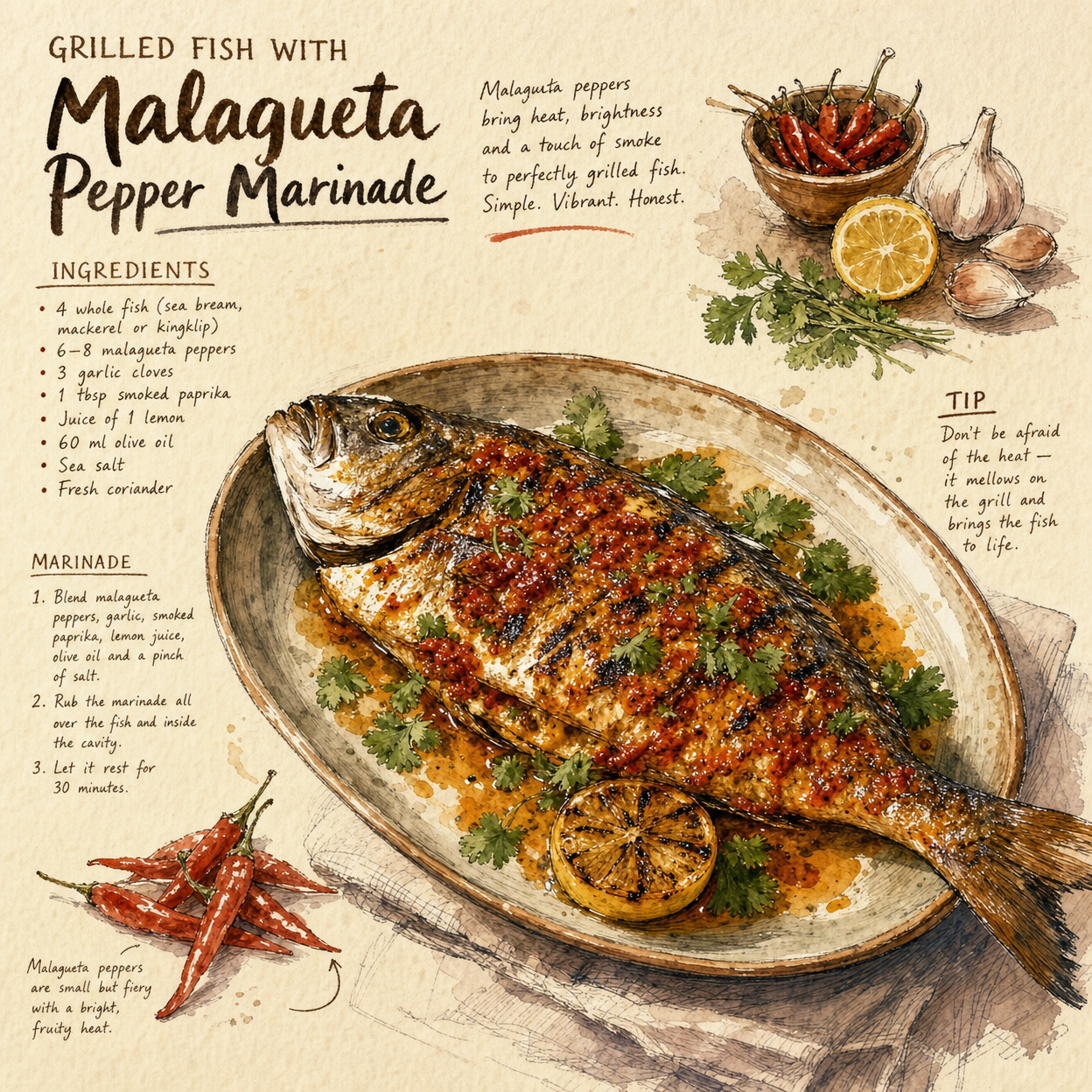
Piri Piri Chicken (Mozambican/Portuguese): Chicken marinated in a fiery blend of malagueta/piri piri peppers, garlic, lemon, and oil, then grilled.
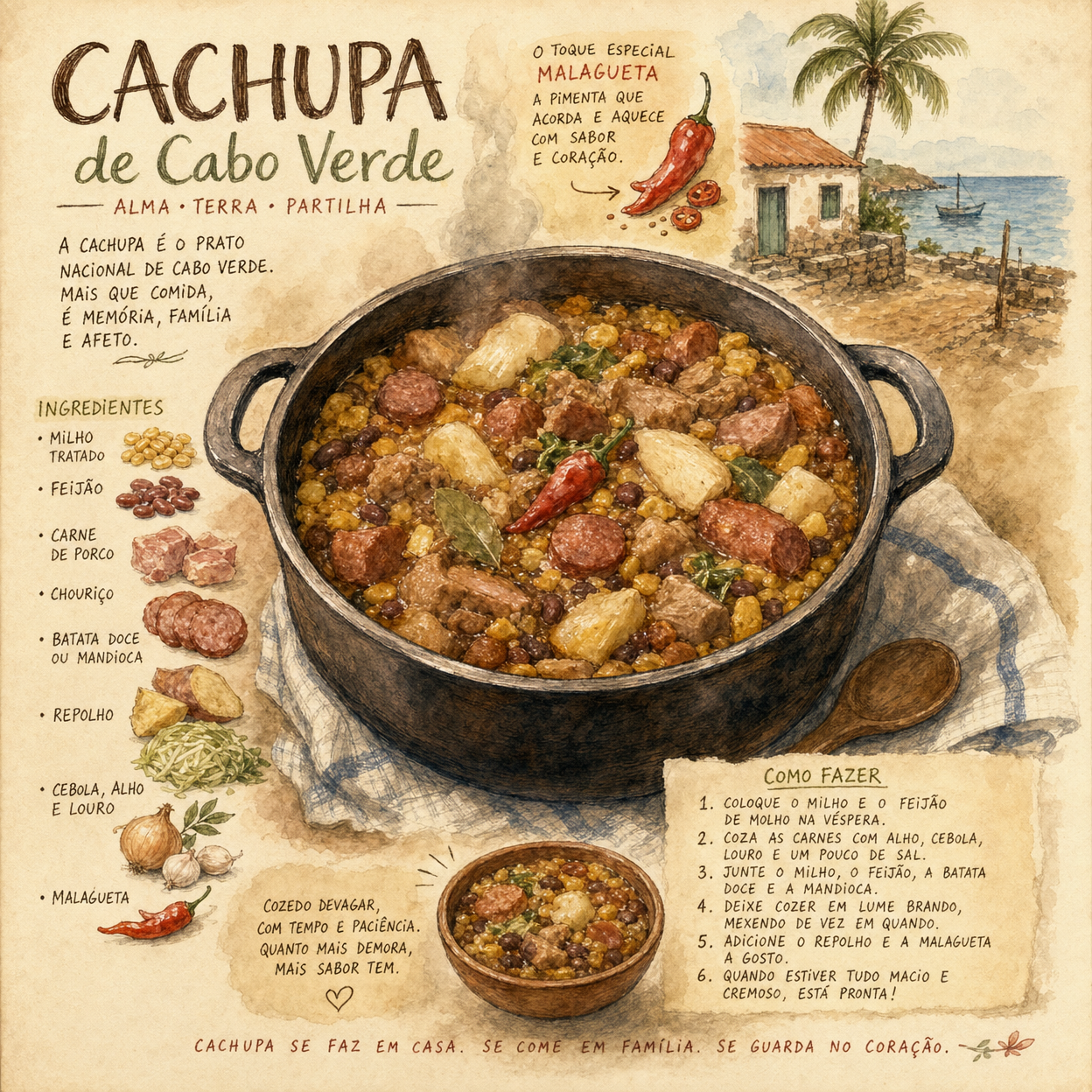
Feijoada Accompaniment (Brazilian): A few drops of malagueta oil dashed over a rich, heavy black bean and pork stew.