
Malanga
Root
Also known as: English: Malanga, Yautia, Tannia. Spanish: Malanga, Yautía. French: Chou caraïbe. Portuguese: Taioba. Haitian Creole: Malanga. Yoruba: Cocoyam.
About this crop
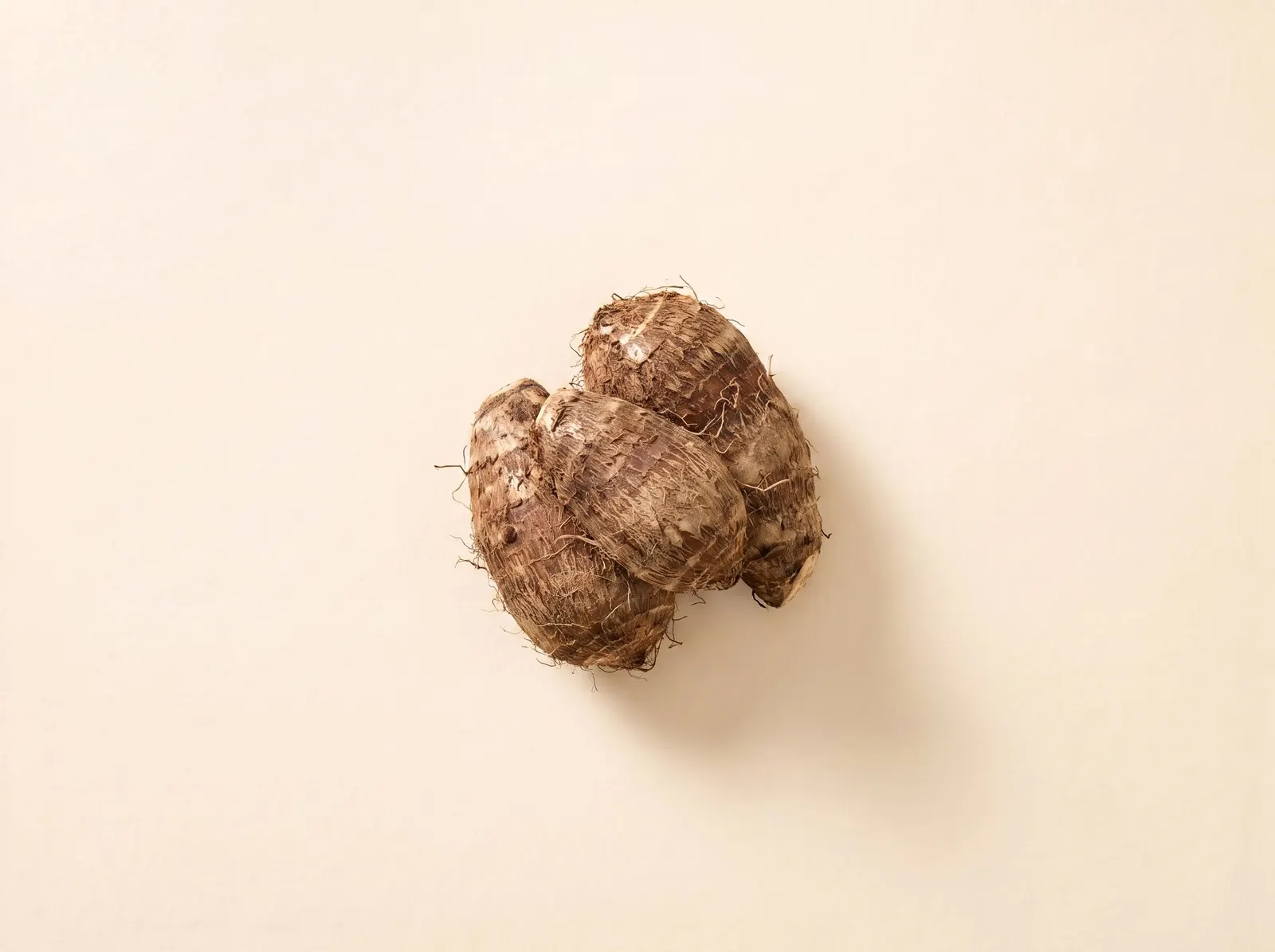
Malanga is a dense, starchy tuber closely related to taro, but with a shaggier, earthier exterior and flesh that ranges from crisp white to pale pink or yellow. It has a distinctively earthy, nutty flavor, often compared to a cross between a potato and a chestnut, and a unique texture that acts as a powerful natural thickener when grated or mashed into soups and stews.
Health information for this food is under review. Reviewed claims will include their sources and limits.
Traditional uses
In Cuban, Dominican, and Puerto Rican kitchens, malanga (or yautía) is revered as the ultimate comfort food. It is also grated raw into batters for crispy fritters (frituras de malanga) or simmered in hearty sancocho stews, where it naturally thickens the broth.
In West Africa, this exact same root is known as a type of cocoyam. It is boiled and pounded into fufu, or roasted and eaten with spicy palm oil sauces. The leaves of the malanga plant are also edible and are used similarly to taro leaves, stewed down into rich, nourishing greens.
This underground treasure connects the Caribbean and West African communities of Rhode Island. Whether it is grated into a delicate Cuban fritter in Cranston or pounded into a hearty West African fufu in Pawtucket, malanga provides deep, earthy nourishment and a shared sense of ancestral comfort.
How to prepare
Malanga must be peeled and cooked thoroughly. Use a sharp knife to cut away the shaggy, brown skin, revealing the firm flesh beneath. Rinse the peeled root well.
For a puree (often used in Cuban households), boil chunks of peeled malanga in lightly salted water until very tender. Drain and mash it with a little butter, milk, and a pinch of salt. The texture will be denser and stickier than mashed potatoes, with a deeply comforting, nutty flavor.
To use malanga as a thickener in a Caribbean sancocho or stew, simply peel it, cut it into large chunks, and add it to the simmering broth during the last thirty minutes of cooking. As it softens, its starches will naturally thicken the soup, giving it a rich, velvety consistency.
Recipe ideas
Share how you use Malanga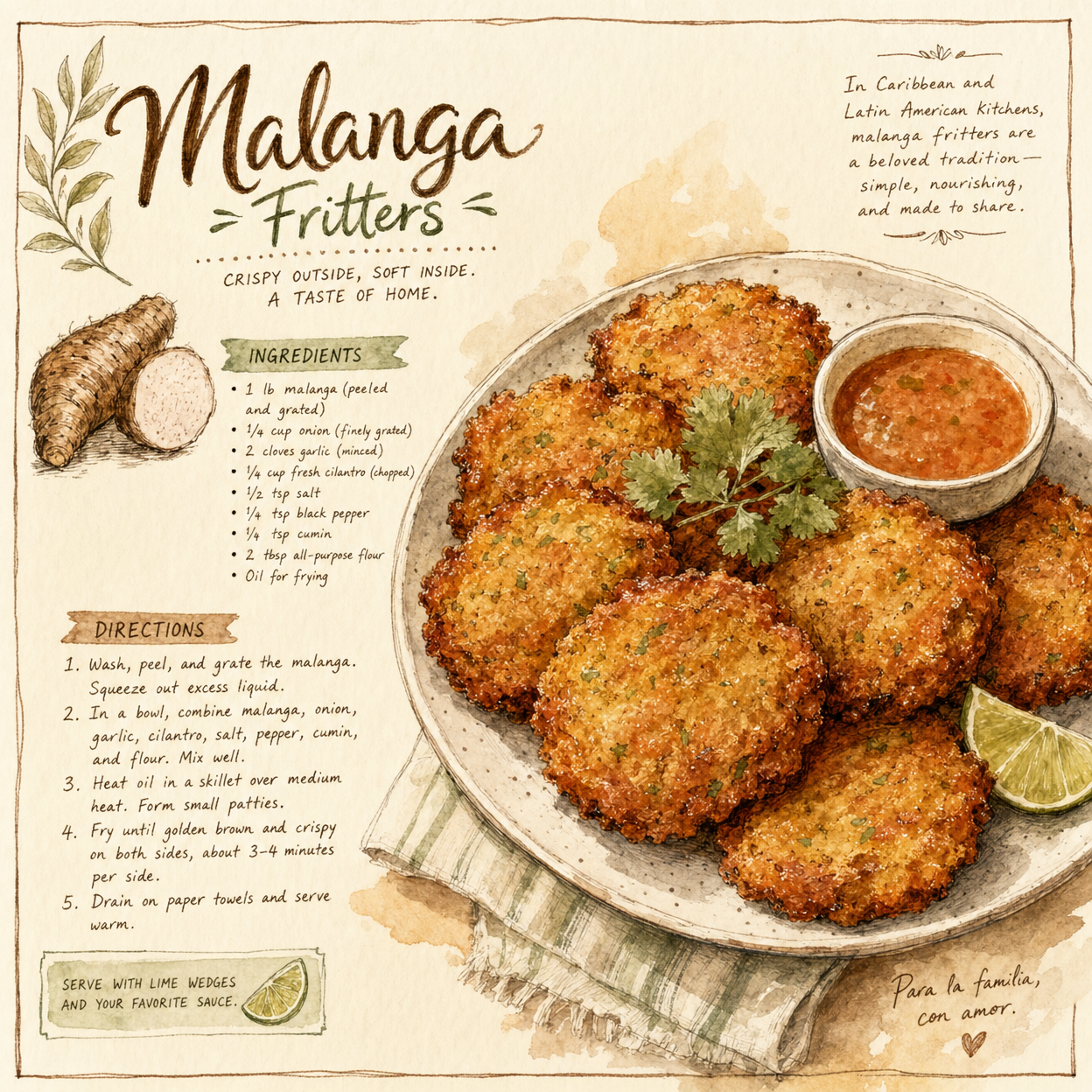
Frituras de Malanga (Cuban Fritters): Raw malanga grated with garlic and parsley, dropped by the spoonful into hot oil until crispy.
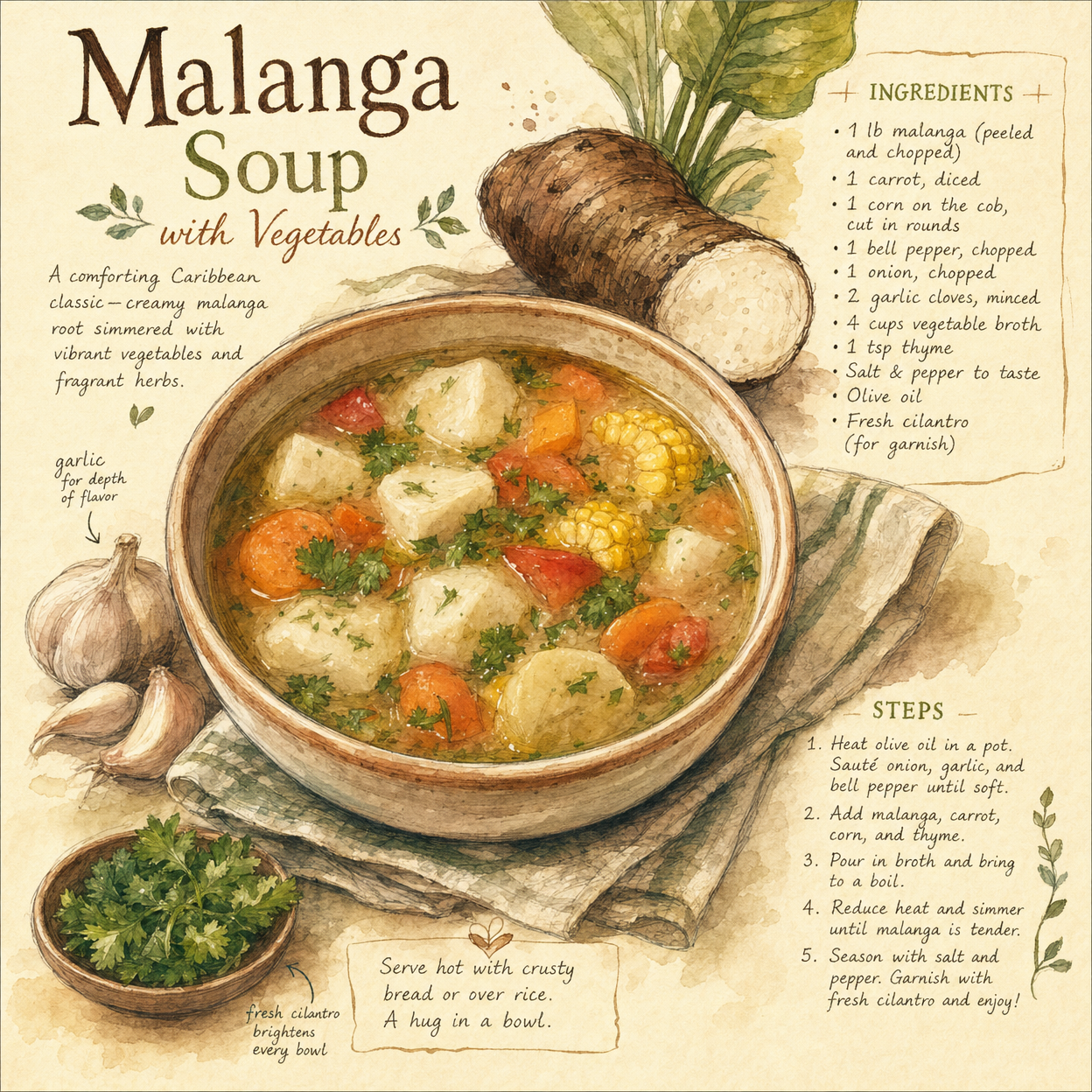
Sancocho (Caribbean Root Stew): A hearty, complex stew of meats, corn, and various root vegetables, including malanga, which thickens the broth.
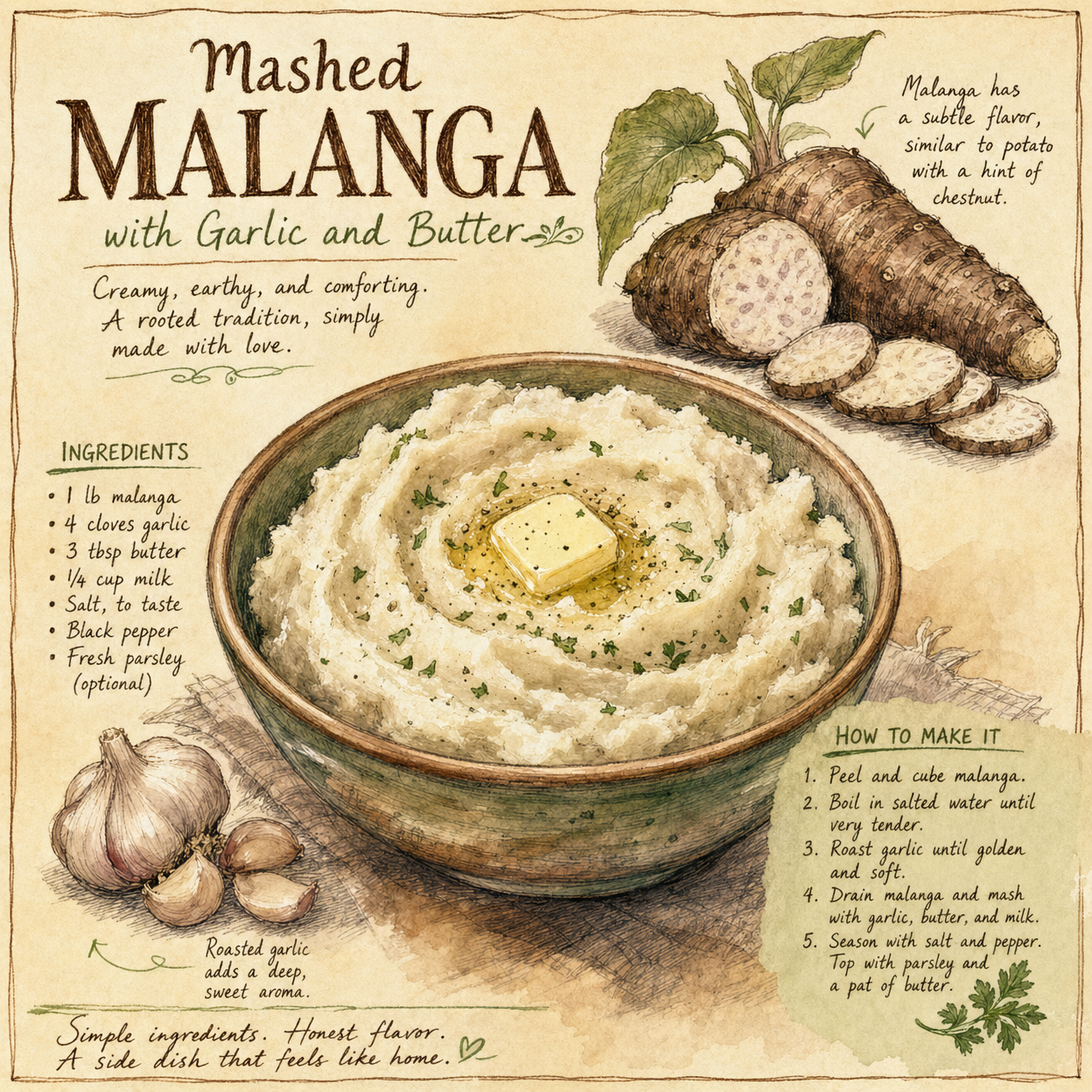
Puré de Malanga (Comfort Mash): Boiled malanga mashed simply with butter and milk, served as a side dish.