Mustard Greens
Leafy Green
Also known as: English: Mustard Greens. Spanish: Mostaza. French: Feuilles de moutarde. Portuguese: Folhas de mostarda. Cape Verdean Creole: Mostarda. Hindi: Sarson ka saag. Chinese (Mandarin): Jiècài.
About this crop
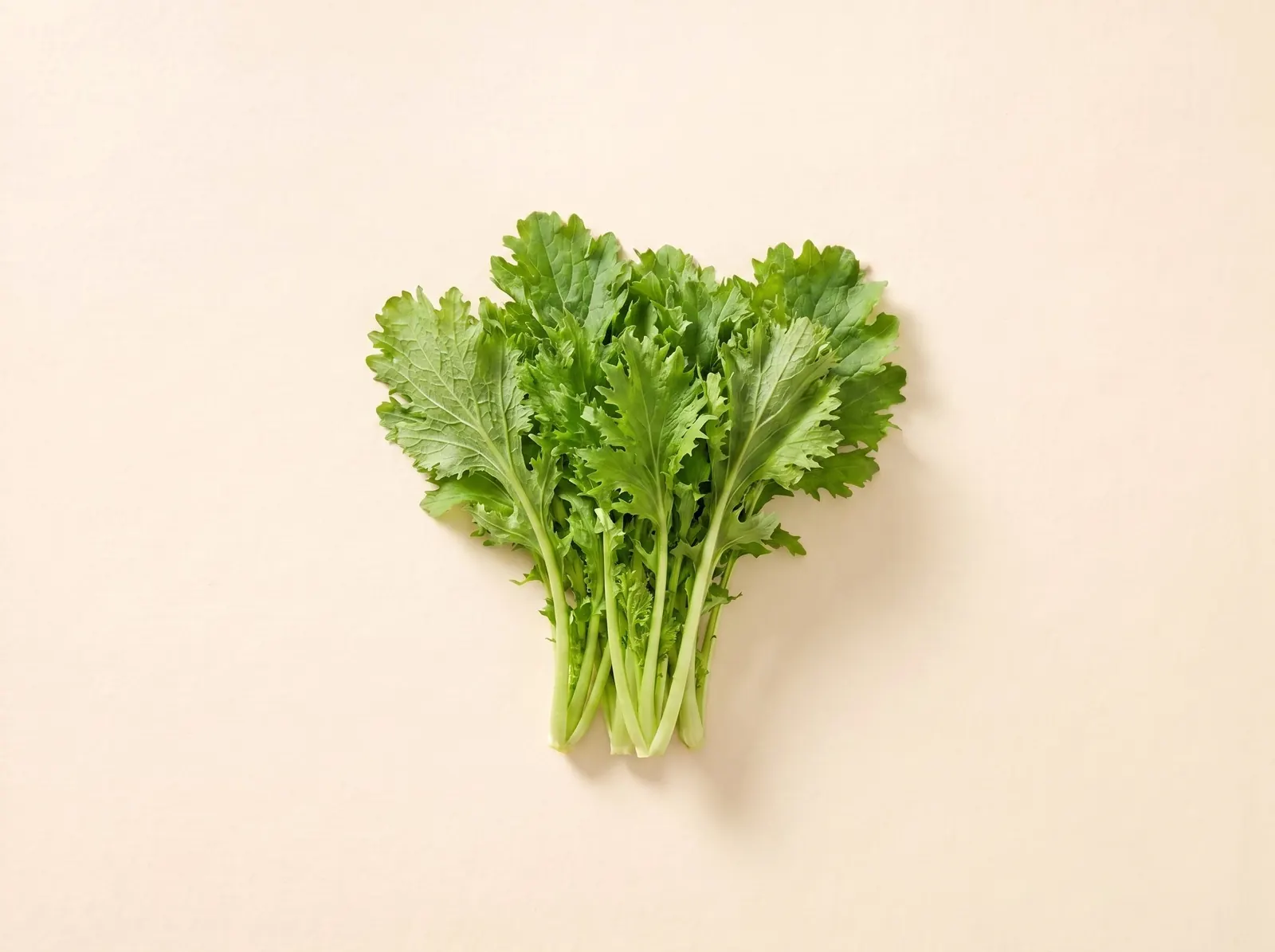
Mustard greens are sharp, peppery leafy brassicas with serrated or smooth dark green leaves. They share the same biting heat as their seed counterpart, mellowing with cooking into a deep, earthy flavor. They are one of the most reliably grown cool-season greens in Rhode Island, available through spring and fall harvests at local farms.
Health information for this food is under review. Reviewed claims will include their sources and limits.
Traditional uses
In the American South and African American cooking, mustard greens hold a place alongside collards as a foundational pot of greens, slow-cooked with smoked meats. In Punjabi cuisine, sarson ka saag is a winter ritual, served with cornbread (makki di roti) and ghee. Cape Verdean and Portuguese kitchens fold mustard greens into hearty stews like cachupa. The plant's bridge across these traditions is its sharp bitterness, valued for cutting through the richness of fatty meats and starches.
How to prepare
Wash thoroughly and remove tough stems if leaves are mature. For a Southern preparation, slow-cook with smoked meat or vegetable broth until tender and silky. For an Indian sarson ka saag, simmer with spinach, garlic, and ginger, then puree. For a quick sauté, heat oil with garlic and red pepper flakes, then wilt the chopped greens with a splash of vinegar to balance the heat.
Recipe ideas
Share how you use Mustard GreensSouthern Slow-Cooked Mustard Greens with smoked turkey. Punjabi Sarson Ka Saag with makki di roti. Cape Verdean Cachupa addition. Quick-sautéed Mustard Greens with garlic and red pepper flakes.