Parsley
Herb
Also known as: English: Parsley, Flat-leaf Parsley, Italian Parsley, Curly Parsley. Spanish: Perejil. French: Persil. Portuguese: Salsa. Italian: Prezzemolo. Arabic: Baqdoonis.
About this crop
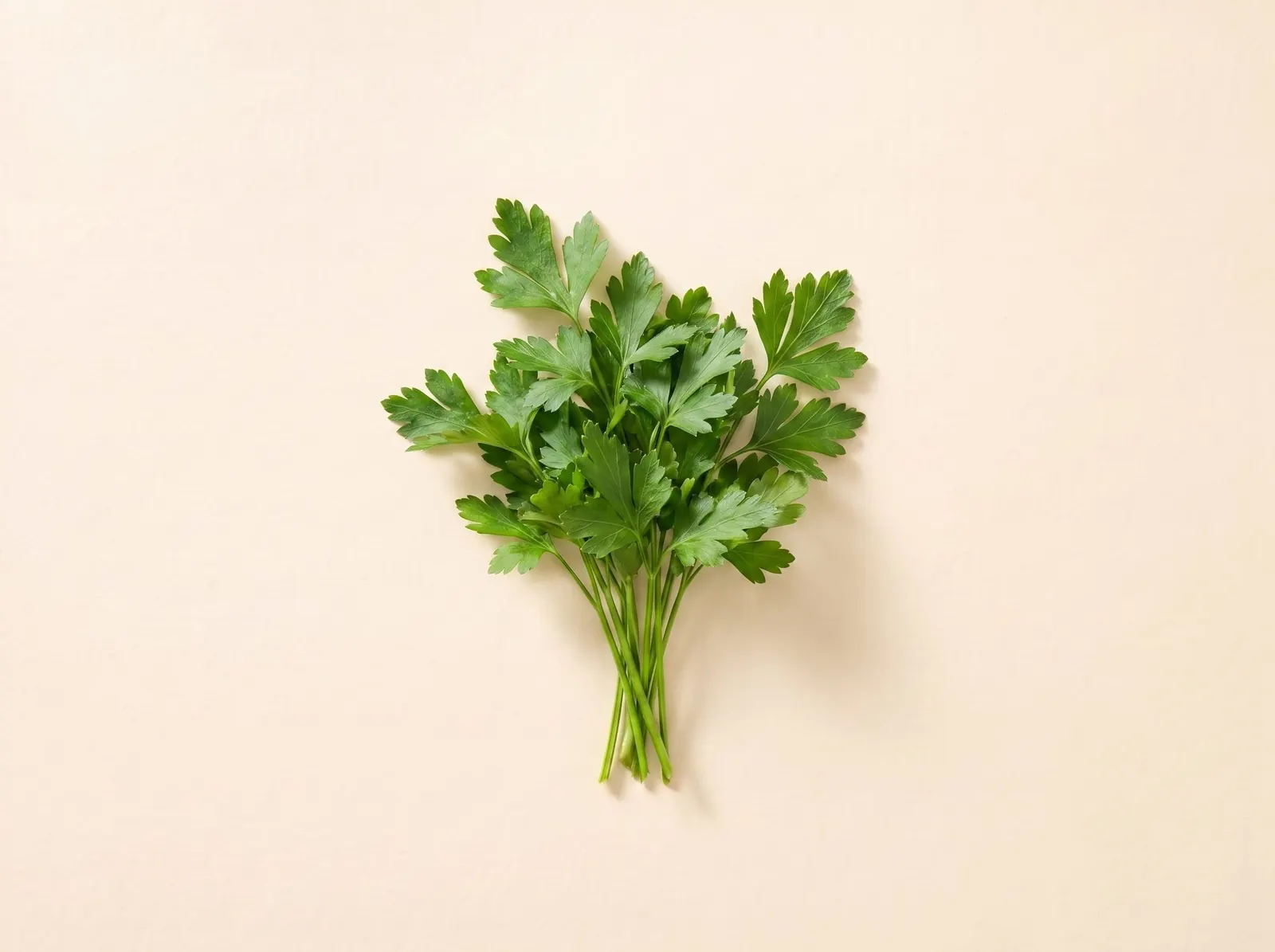
Parsley is a bright green, leafy herb with two main varieties: flat-leaf (Italian) and curly. Flat-leaf has a stronger, more peppery flavor and is preferred for cooking, while curly is often used as a garnish. It is one of the most widely available fresh herbs in Rhode Island, cultivated by nearly every local farm and available year-round through greenhouse production.
Health information for this food is under review. Reviewed claims will include their sources and limits.
Traditional uses
In Middle Eastern and Mediterranean traditions, parsley is treated as a vegetable in its own right, not a garnish. Lebanese tabbouleh uses massive quantities of finely chopped parsley as the dish's foundation. In Italian and Portuguese kitchens, it serves as the universal finishing herb for soups, stews, and seafood. Across Persian, Greek, and North African traditions, fresh parsley features prominently in raw herb plates served alongside main meals. It is among the most ubiquitous fresh greens in the global pantry.
How to prepare
Wash the bunch and shake dry. The stems are tender and flavorful, so chop them along with the leaves rather than discarding. Add raw at the end of cooking for fresh, bright flavor, or use the stems in stocks and braises for slow-cooked depth. For a Middle Eastern tabbouleh, finely chop a large quantity and combine with bulgur, mint, tomato, and lemon juice.
Recipe ideas
Share how you use ParsleyLebanese Tabbouleh (parsley as the main ingredient, not garnish). Italian Salsa Verde with parsley, capers, and anchovy. Persian Sabzi Khordan (fresh herb plate). Argentine Chimichurri.