
Plantain
Fruit
Also known as: English: Plantain. Spanish: Plátano. French: Banane plantain. Portuguese: Banana-da-terra. Haitian Creole: Bannann. Swahili: Ndizi.
About this crop
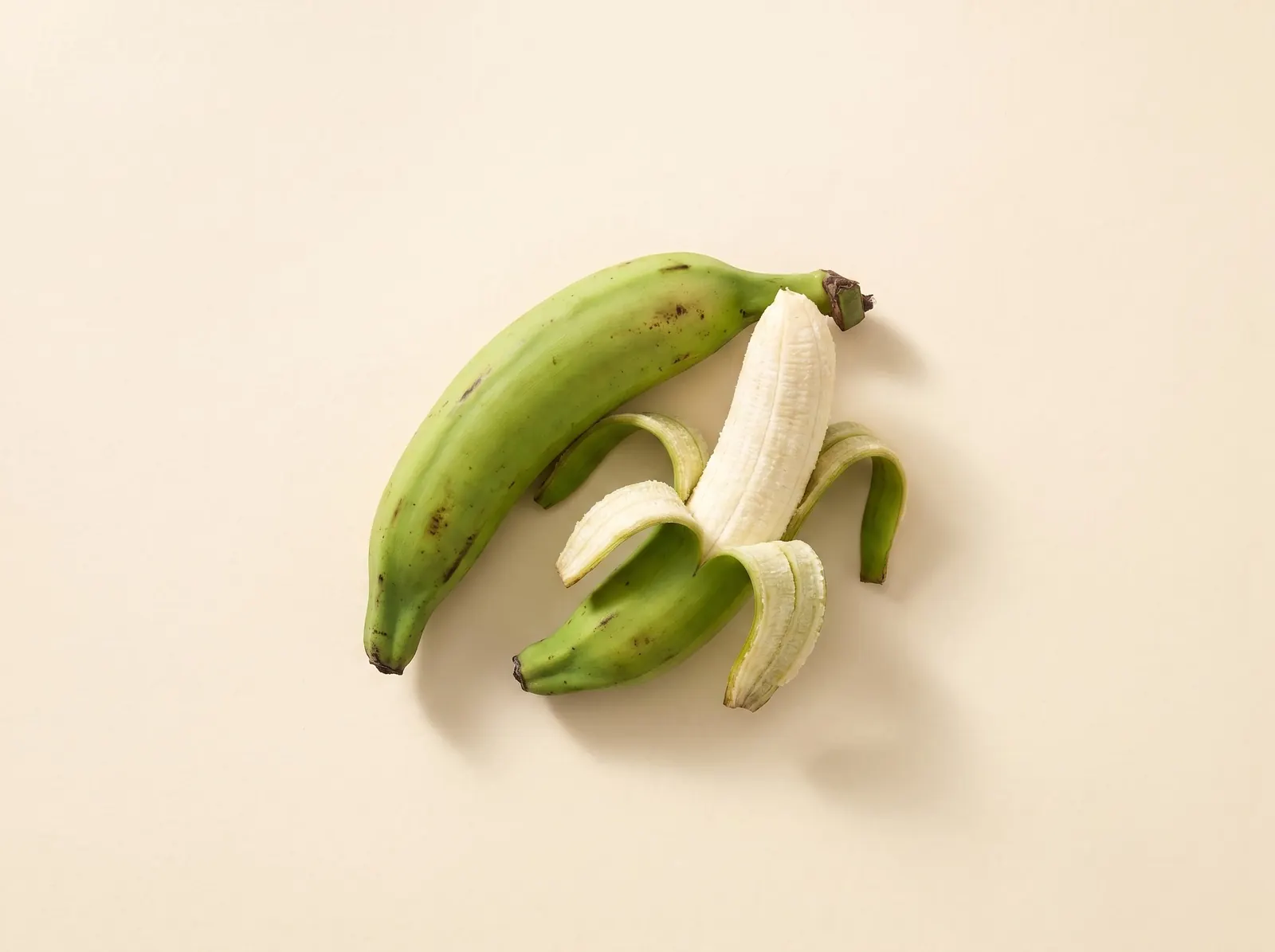
The plantain is a large, starchy relative of the sweet banana, designed for cooking rather than eating raw. Its thick skin transitions from vibrant green to yellow, and finally to mottled black as it ripens. At each stage, the plantain offers a different culinary experience: green plantains are firm and savory like potatoes, while black plantains are soft, sweet, and deeply caramelized when fried. Import-Only Note (NYC and RI context): plantains cannot be field-grown outdoors in the Northeast; they are greenhouse-only and not commercially viable for fruit, so they are sourced wholesale through import supply chains.
Health information for this food is under review. Reviewed claims will include their sources and limits.
Traditional uses
In Dominican, Puerto Rican, and broader Caribbean traditions, the plantain is foundational. Green plantains are twice-fried and smashed into crispy tostones, or boiled and mashed with garlic and oil to create mangú or mofongo. Sweet, black plantains are sliced and fried into maduros, offering a caramelized, sweet counterpoint to savory rice and beans.
This exact same fruit is equally central to West and East African foodways. In West Africa, ripe plantains are fried into sweet dodo or alloco, often served alongside spicy stews or grilled fish. In East Africa, green plantains (matoke) are steamed and mashed into a savory, comforting staple. The plantain traveled across the Atlantic, carrying its versatility and nourishment to new shores.
This single fruit connects the Dominican kitchens of Broad Street with the West African kitchens of Pawtucket. Whether it is mashed into a Dominican mangú for breakfast or fried into Nigerian dodo for dinner, the plantain is a universal comfort, a shared starchy canvas that unites the culinary traditions of the diaspora.
How to prepare
To peel a green plantain, cut off both ends, score the thick skin lengthwise in three or four places, and pry the skin off with your thumbs or a butter knife. Ripe (yellow or black) plantains can be peeled easily like a standard banana.
For classic Dominican tostones, slice a green plantain into thick rounds. Fry them in oil over medium heat until golden but not brown. Remove them, smash them flat using a heavy glass or a tostonera, and fry them a second time until crispy. Sprinkle with salt immediately.
For sweet maduros, wait until the plantain skin is almost entirely black and the fruit feels soft. Slice it on a bias and fry the slices slowly in a little oil or butter until they are deeply caramelized and sweet on both sides.
Recipe ideas
Share how you use Plantain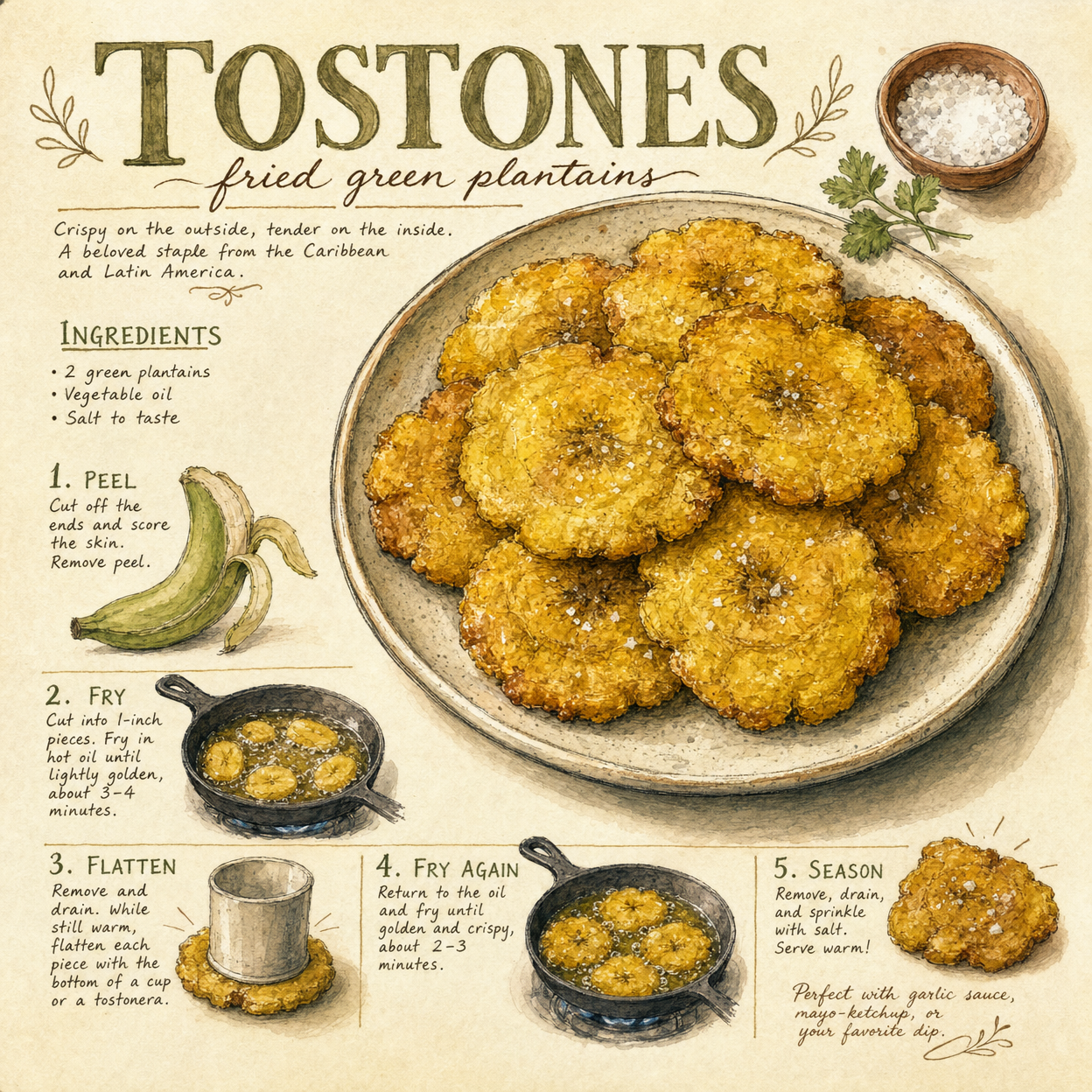
Mangú (Dominican Mashed Plantains): Green plantains boiled and mashed with butter, oil, and cold water, topped with pickled red onions.
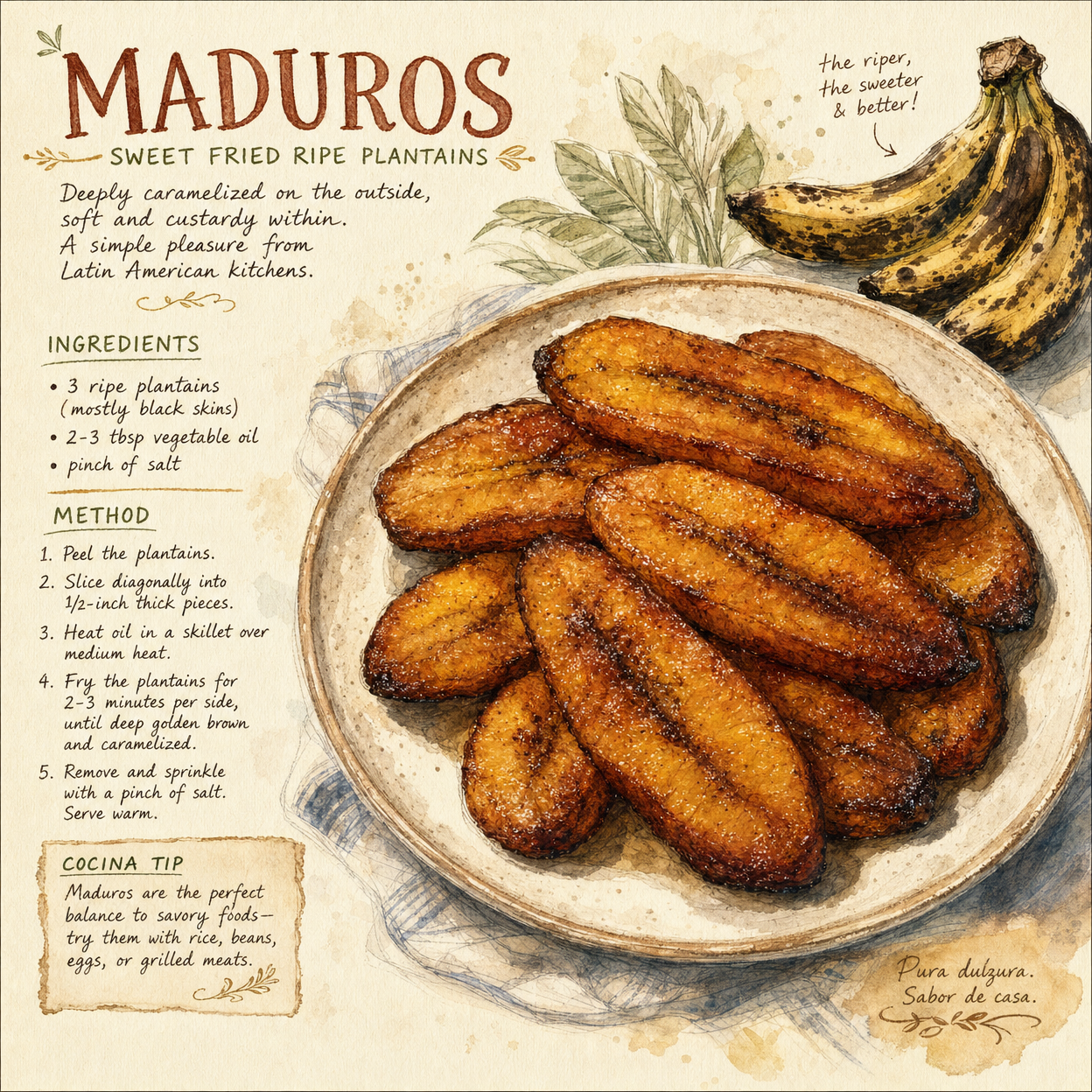
Dodo (West African Fried Plantains): Ripe, sweet plantains sliced and fried until caramelized, served as a side to savory stews.
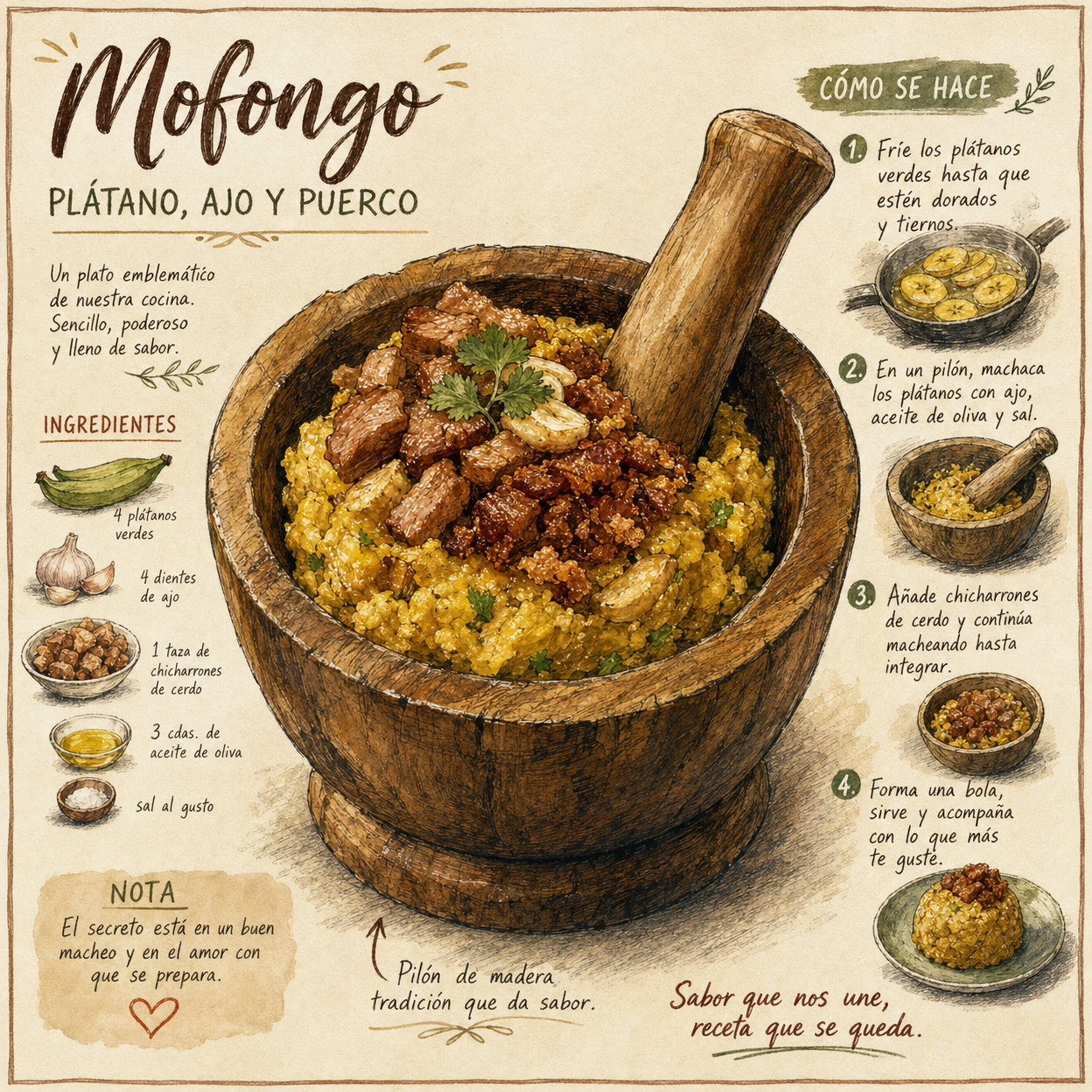
Mofongo (Puerto Rican): Fried green plantains mashed in a pilón with garlic, olive oil, and pork cracklings.