
Portuguese Kale
Leafy Green
Also known as: English: Portuguese Kale, Collard Greens. Spanish: Col forrajera. French: Chou cavalier. Portuguese: Couve-galega, Couve. Cape Verdean Creole: Kouve.
About this crop
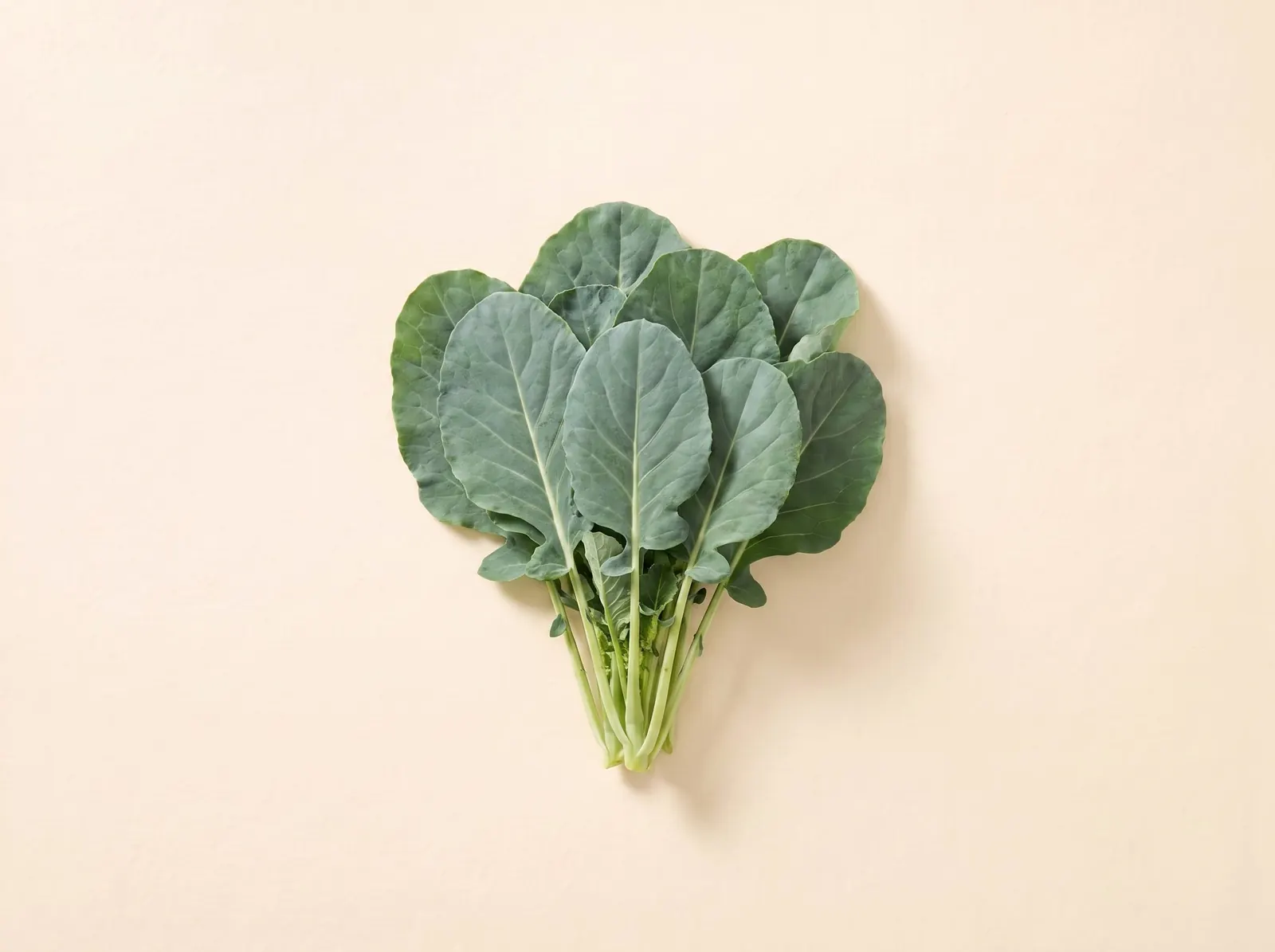
Portuguese kale, or couve, is a tall, majestic brassica with large, flat, paddle-shaped leaves that range from blue-green to dark emerald. Unlike curly kale, its leaves are smooth and sturdy, with a prominent, tough central stem. It is a resilient, cold-hardy plant that sweetens after a frost, offering a deep, earthy, and slightly mineral flavor that forms the backbone of Lusophone cooking.
Health information for this food is under review. Reviewed claims will include their sources and limits.
Traditional uses
In Portuguese, Azorean, and Cape Verdean traditions, couve is the undisputed king of greens. It is the essential ingredient in Caldo Verde, the iconic Portuguese soup where the leaves are shredded into hair-thin ribbons and simmered in a potato broth with a single slice of chouriço. In Brazil, it is sliced just as thinly and quickly sautéed (couve mineira) to serve alongside the rich, heavy bean stew, feijoada.
Botanically, Portuguese kale is the exact same species as the collard greens revered in the American South and the sukuma wiki of East Africa. While a Southern cook might simmer the whole leaves for hours with a smoked ham hock, a Portuguese cook shreds them finely for a delicate soup. The plant is identical; only the knife work and the pot change.
This Atlantic green connects the Portuguese and Cape Verdean communities of East Providence and Pawtucket with the African American traditions of the broader state. It is a shared, sturdy leaf that has sustained working people across the Atlantic world, providing essential nourishment and deep, earthy comfort.
How to prepare
To prepare couve for traditional Portuguese or Brazilian dishes, the knife work is crucial. Wash the large leaves and slice the tough central stem out of each one. Stack several leaf halves on top of each other, roll them tightly into a dense cigar shape (a chiffonade), and use a very sharp knife to slice the roll crosswise into the thinnest possible ribbons, almost like green hair.
For Caldo Verde, these delicate green ribbons are stirred into a pureed potato and onion broth during the very last few minutes of cooking. They turn bright green and tender almost instantly, providing a fresh, slightly crunchy contrast to the creamy soup.
For a Brazilian-style couve mineira, heat a little oil or butter in a wide skillet. Add minced garlic, then toss in the finely shredded greens. Sauté them very quickly over high heat for just one or two minutes until they wilt and turn vibrant green. Season with salt and serve immediately.
Recipe ideas
Share how you use Portuguese Kale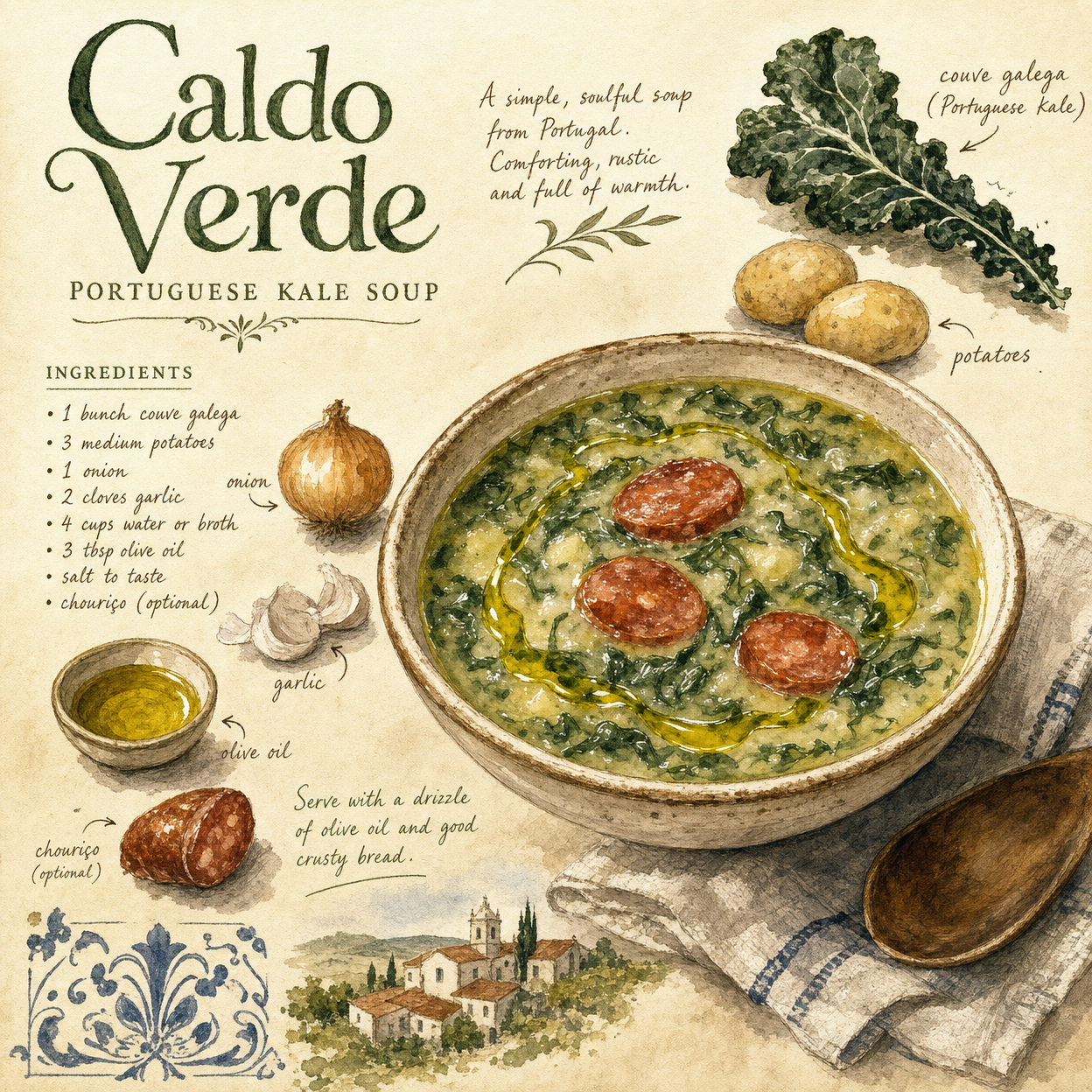
Caldo Verde (Portuguese Green Soup): A comforting, creamy potato broth studded with hair-thin ribbons of couve and a slice of smoked sausage.
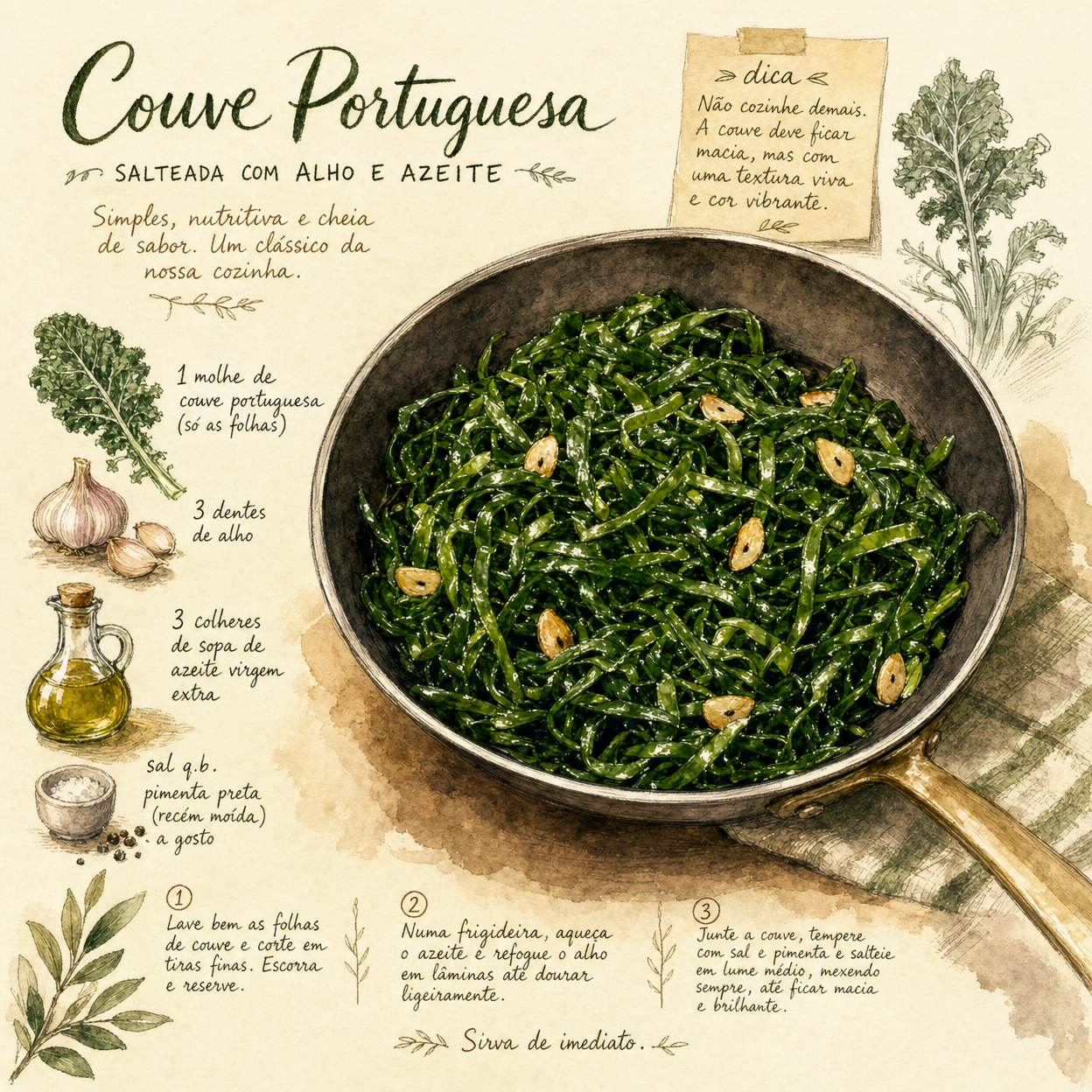
Couve Mineira (Brazilian Sautéed Greens): Finely shredded kale flashed in a hot pan with garlic and butter, served alongside black beans.
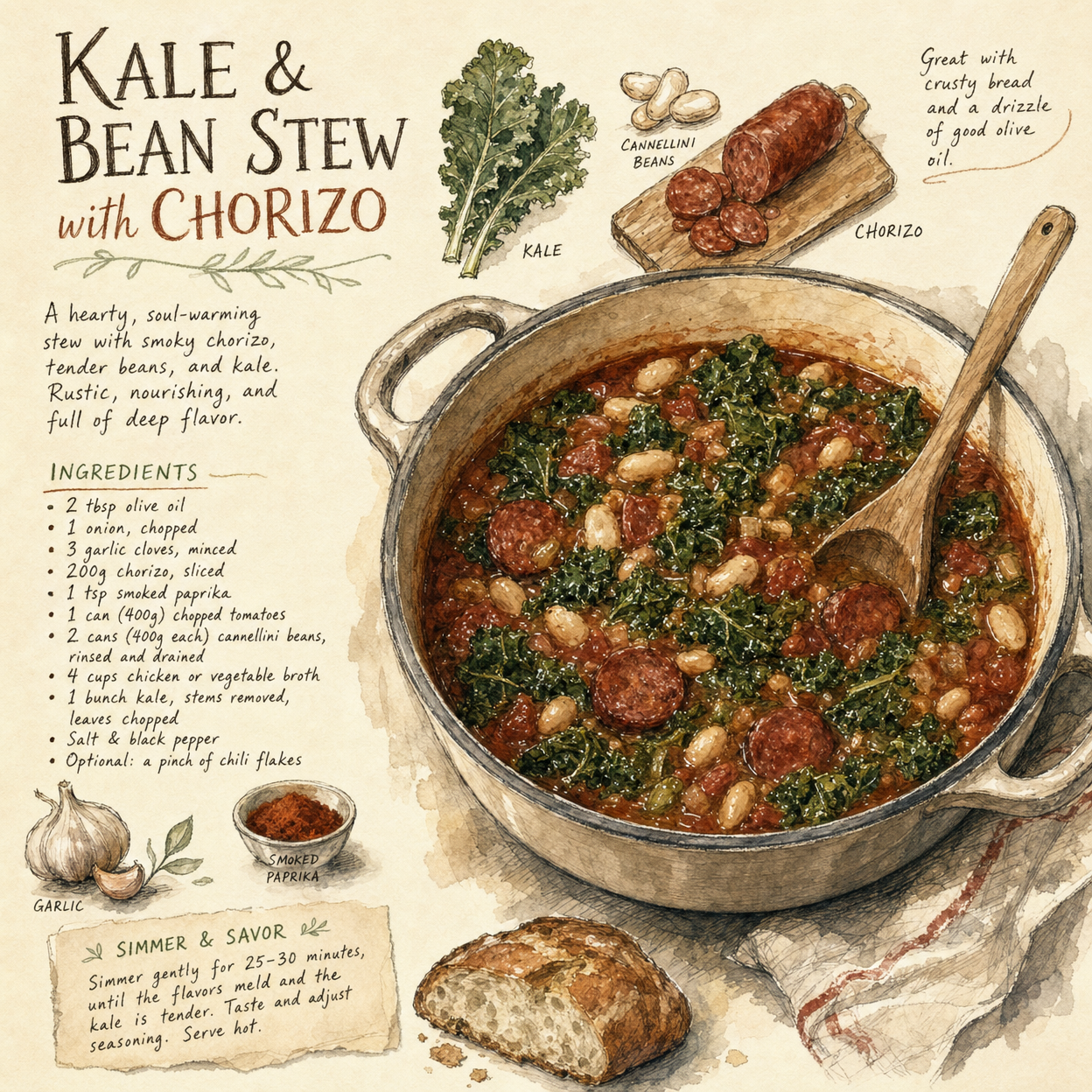
Cape Verdean Cachupa (Corn and Bean Stew): A hearty, slow-cooked stew of hominy and beans, often finished with roughly chopped couve.