
Ridge Gourd
Vegetable
Also known as: English: Ridge Gourd, Luffa, Chinese Okra. Spanish: Lufa. French: Papengaye. Portuguese: Bucha. Hindi: Turai. Chinese (Mandarin): Sīguā. Tagalog: Patola.
About this crop
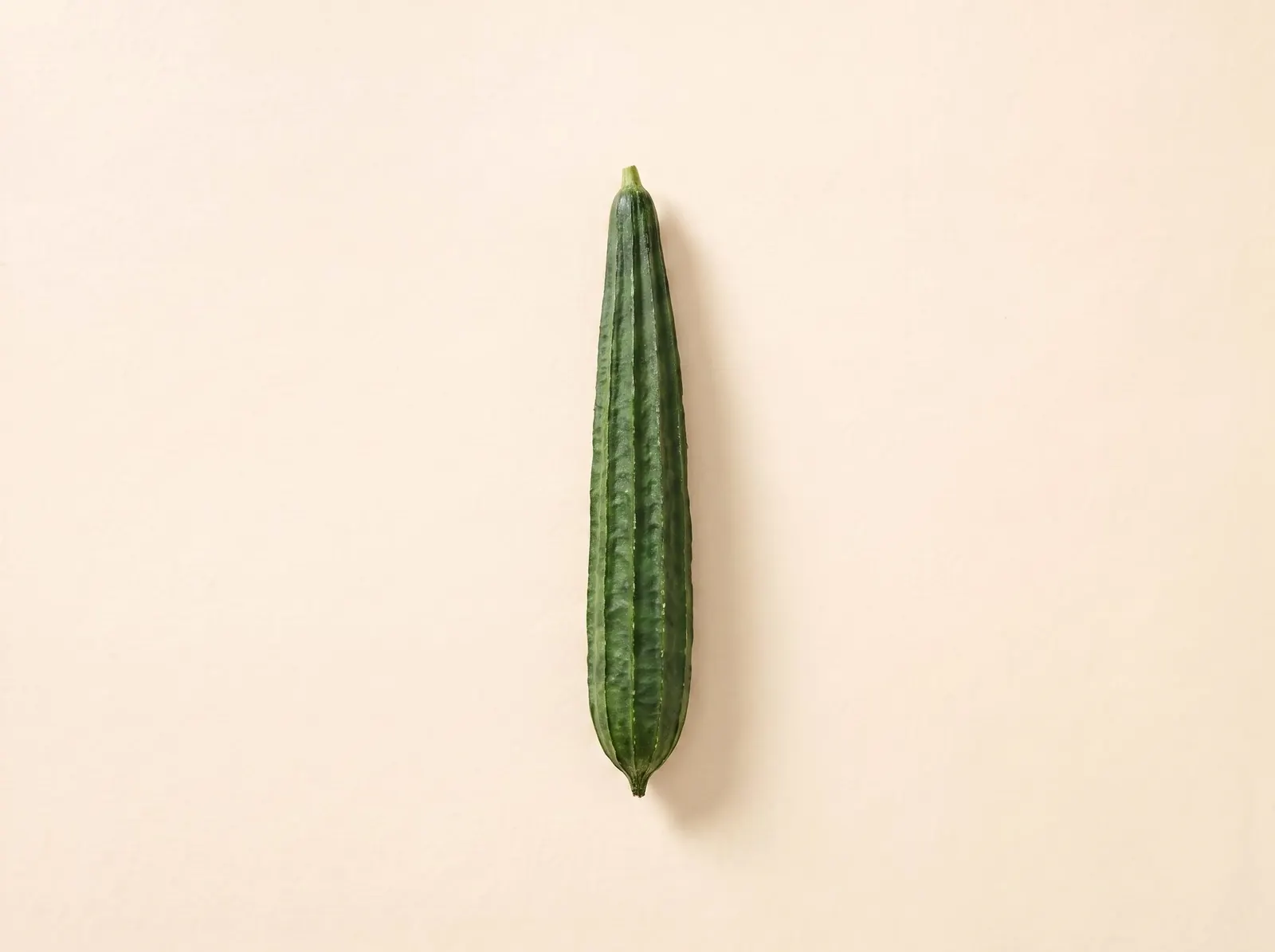
The ridge gourd is a long, striking vegetable that grows on climbing vines, characterized by ten sharp, prominent ridges running down its dark green skin. When young and tender, its flesh is spongy, slightly sweet, and highly absorbent, similar to zucchini but with a more delicate, porous texture. If left to mature and dry on the vine, the fibrous interior becomes the familiar bath loofah.
Health information for this food is under review. Reviewed claims will include their sources and limits.
Traditional uses
In Indian kitchens, the ridge gourd (turai) is a beloved, cooling summer vegetable. Because its spongy flesh absorbs water and flavors so readily, it is often simmered into light, soupy dals or quick, spiced stir-fries. It is a staple of home cooking rather than restaurant fare.
In Chinese and Southeast Asian traditions, it is known as Chinese okra or silk gourd. It is prized for its delicate texture and is frequently sliced and dropped into clear, restorative broths or quickly stir-fried with garlic and delicate seafood like shrimp. In the Philippines, it is a key ingredient in misua, a comforting glass noodle soup.
This ridged vine connects the Indian, Chinese, and Filipino communities of Rhode Island. It is a shared symbol of gentle, restorative home cooking, a vegetable that doesn't shout with bold flavors, but quietly absorbs the essence of the broth it is cooked in, providing hydration and comfort.
How to prepare
The sharp, tough ridges of the gourd must be removed before cooking, but the smooth skin between the ridges is tender and edible. Use a vegetable peeler to strip away just the raised, dark green ridges, leaving a striped pattern of pale flesh and dark skin. Slice off the stem and the tip.
For a simple Indian preparation, cut the peeled gourd into bite-sized cubes. Heat a little oil, add mustard seeds and a pinch of turmeric, then add the gourd. It will release a significant amount of its own water as it cooks, creating a light, natural sauce. Simmer until the flesh is translucent and tender, finishing with fresh cilantro.
In a Chinese or Filipino soup, slice the prepared gourd into half-moons. Drop them into a simmering chicken or seafood broth during the last five minutes of cooking. The spongy flesh will soak up the savory broth, becoming incredibly juicy and tender.
Recipe ideas
Share how you use Ridge Gourd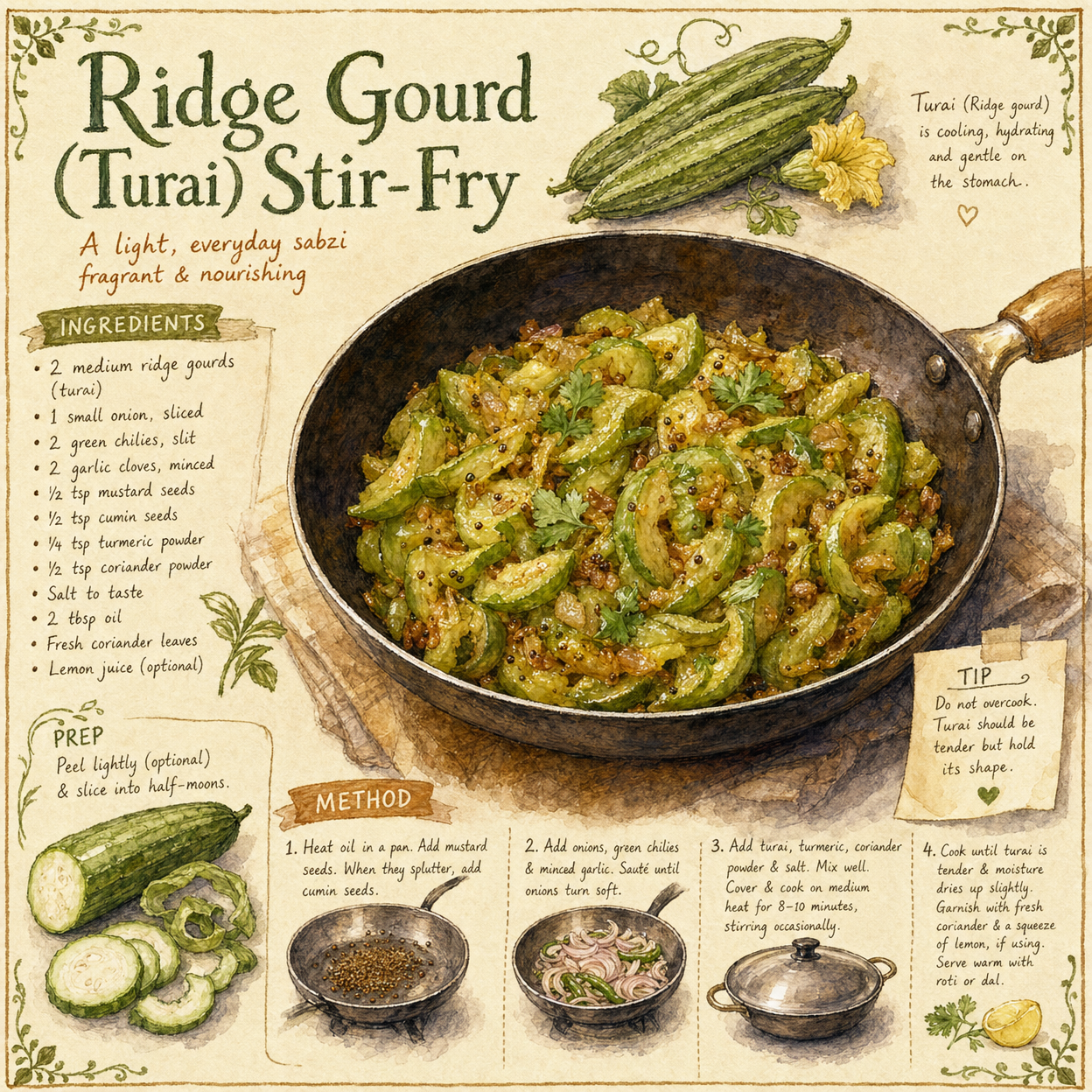
Turai Ki Sabzi (Indian Ridge Gourd Curry): A light, soupy curry made by simmering ridge gourd with tomatoes, cumin, and turmeric.

Misua Soup with Patola (Filipino): A comforting broth with fine wheat noodles, minced pork, and tender slices of ridge gourd.

Stir-fried Silk Gourd (Chinese): Ridge gourd quickly sautéed with garlic, ginger, and shrimp, often finished with a light oyster sauce.