
Sunchoke
Root
Also known as: English: Sunchoke, Jerusalem Artichoke. Spanish: Tupinambo. French: Topinambour. Portuguese: Tupinambo. Italian: Topinambur.
About this crop
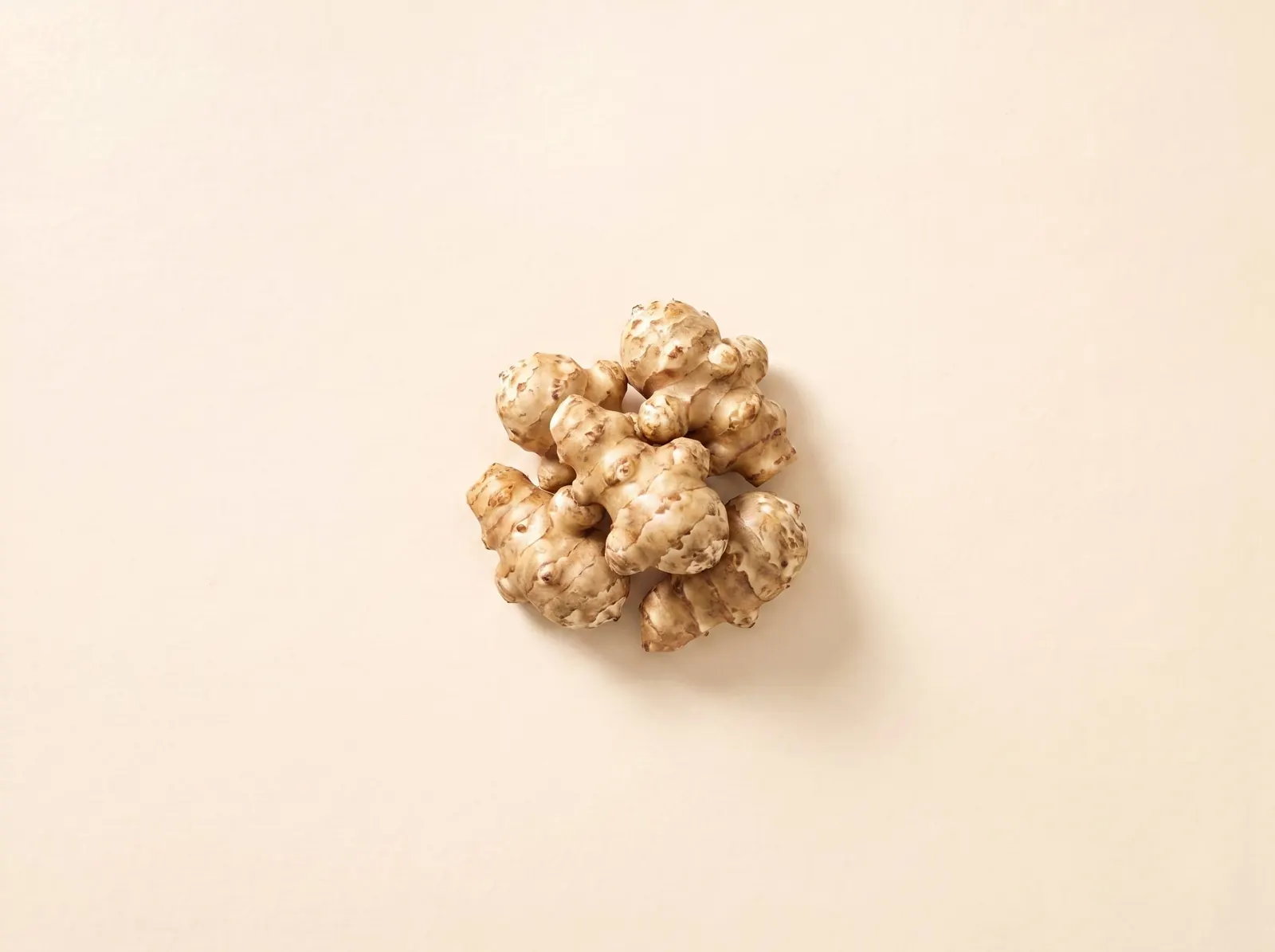
The sunchoke is the knobby, irregular tuber of a native North American sunflower. It looks somewhat like a cross between a small potato and a piece of ginger, with a thin, edible skin. Unlike potatoes, which store energy as starch, sunchokes store energy as inulin, giving them a crisp, water-chestnut-like texture when raw, and a sweet, deeply nutty, artichoke-like flavor when roasted.
Safety
Sunchokes are rich in inulin, a type of fiber that is fermented in the gut. Large servings can cause gas, bloating or loose stools, especially if you are not used to them. Start with a small portion.
Applies to: Everyone; most noticeable at large servings.
Health information for this food is under review. Reviewed claims will include their sources and limits.
Traditional uses
Long before European contact, the sunchoke was cultivated and foraged by Indigenous peoples across North America, including the Northeast. It was a vital, reliable winter food source that could be left in the frozen ground and dug up as needed. It was eaten raw for its crisp hydration, or slow-roasted in earth ovens until it became sweet and tender.
When French explorers encountered the root, they sent it back to Europe, where it became a massive culinary fad before the potato took over. Today, in French (topinambour) and Italian (topinambur) traditions, it is treated as a delicacy, often pureed into silky, nutty soups or roasted with savory meats to highlight its complex, artichoke-like flavor.
This sun root connects the deep, indigenous history of the American Northeast with the refined culinary traditions of Europe. It is a reminder that the soil of New England has always produced complex, sophisticated flavors, offering a bridge between the ancestral diets of the region and the modern, globalized kitchen.
How to prepare
Sunchokes have very thin skins that do not need to be peeled, which is fortunate given their knobby, irregular shapes. However, they must be scrubbed meticulously with a brush under cold running water to remove any trapped dirt.
Sunchokes can be eaten raw. Slice them paper-thin (a mandoline is helpful) and toss them into a salad with a sharp, lemony vinaigrette. They will provide a fantastic, sweet crunch similar to a water chestnut or jicama.
To roast sunchokes, cut them into even chunks. Toss them with olive oil, salt, and hearty herbs like rosemary or thyme. Roast them in a hot oven until the skins are crispy and the insides are soft and creamy.
Recipe ideas
Share how you use Sunchoke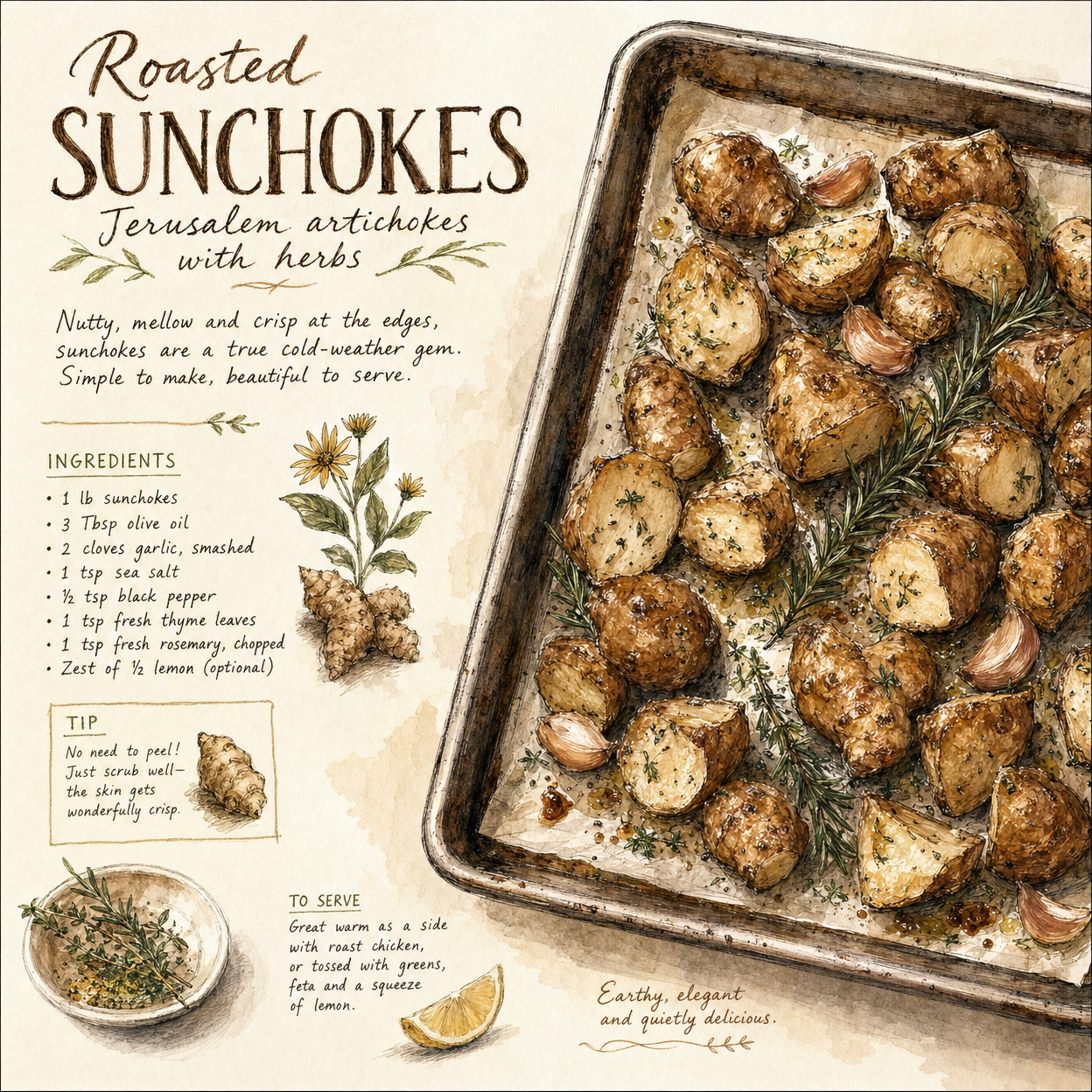
Roasted Sunchokes (European/Modern): Scrubbed, cubed sunchokes roasted with olive oil and thyme until crispy on the outside and creamy inside.
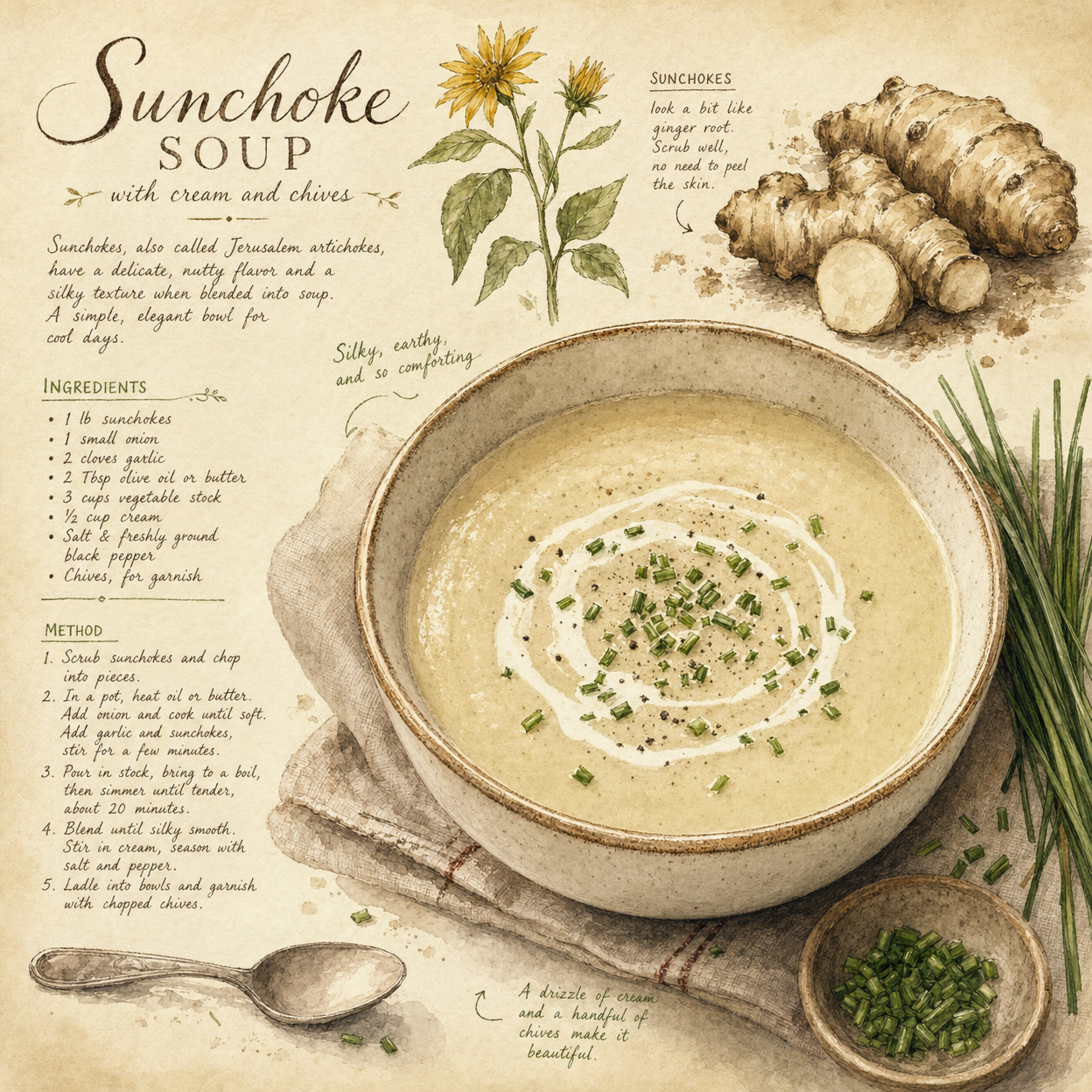
Shaved Sunchoke Salad: Paper-thin slices of raw sunchoke tossed with arugula, lemon juice, olive oil, and shaved parmesan.
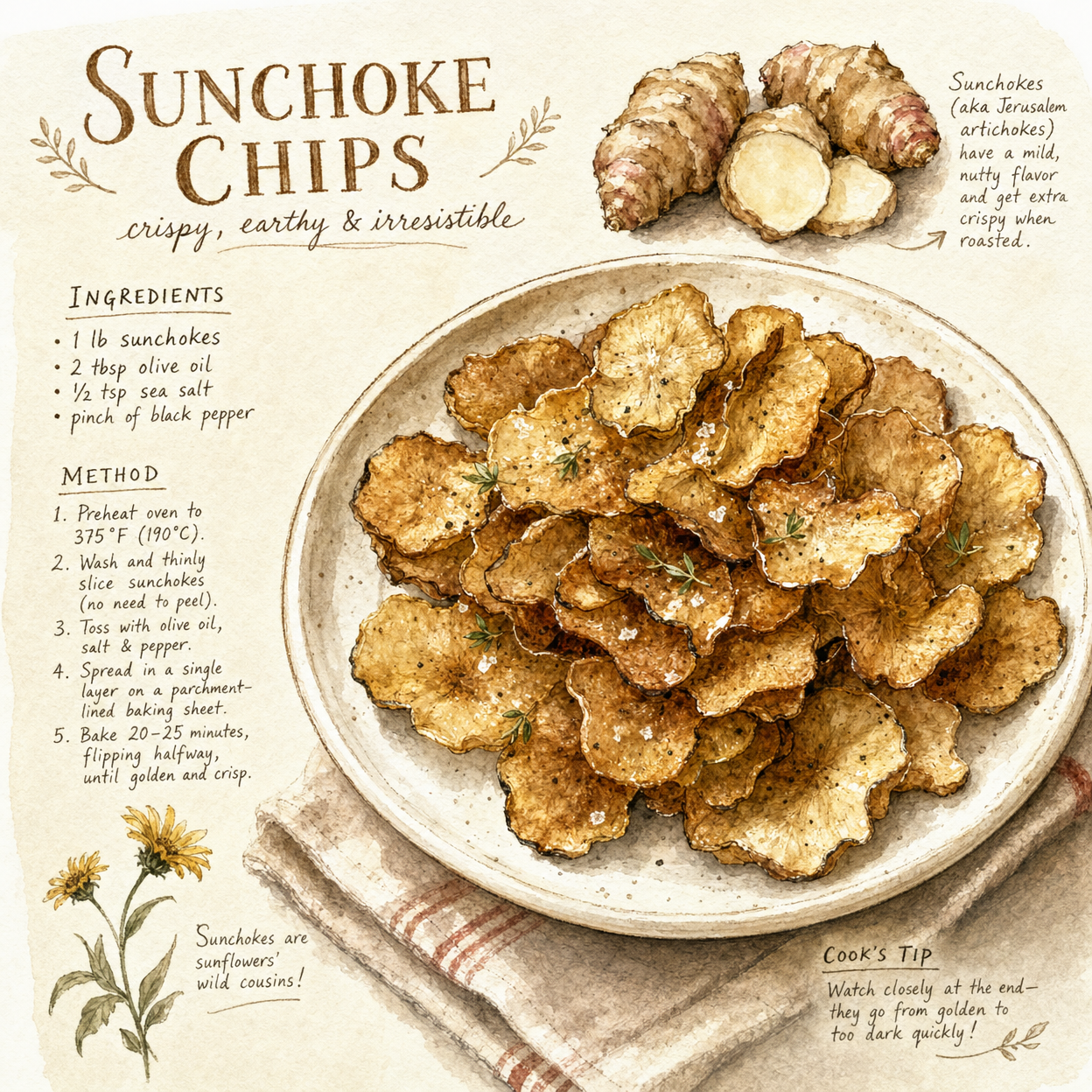
Sunchoke Puree (French Topinambour): Boiled sunchokes mashed with a little cream and butter into a silky, nutty alternative to mashed potatoes.