
Sweet Potato Leaves
Leafy Green
Also known as: English: Sweet Potato Leaves, Sweet Potato Greens. Yoruba: Èwédú-ogede. Igbo: Akwukwo nri. Twi: Borɔnkɔnma. Filipino: Talbos ng kamote. Spanish: Hojas de batata.
About this crop
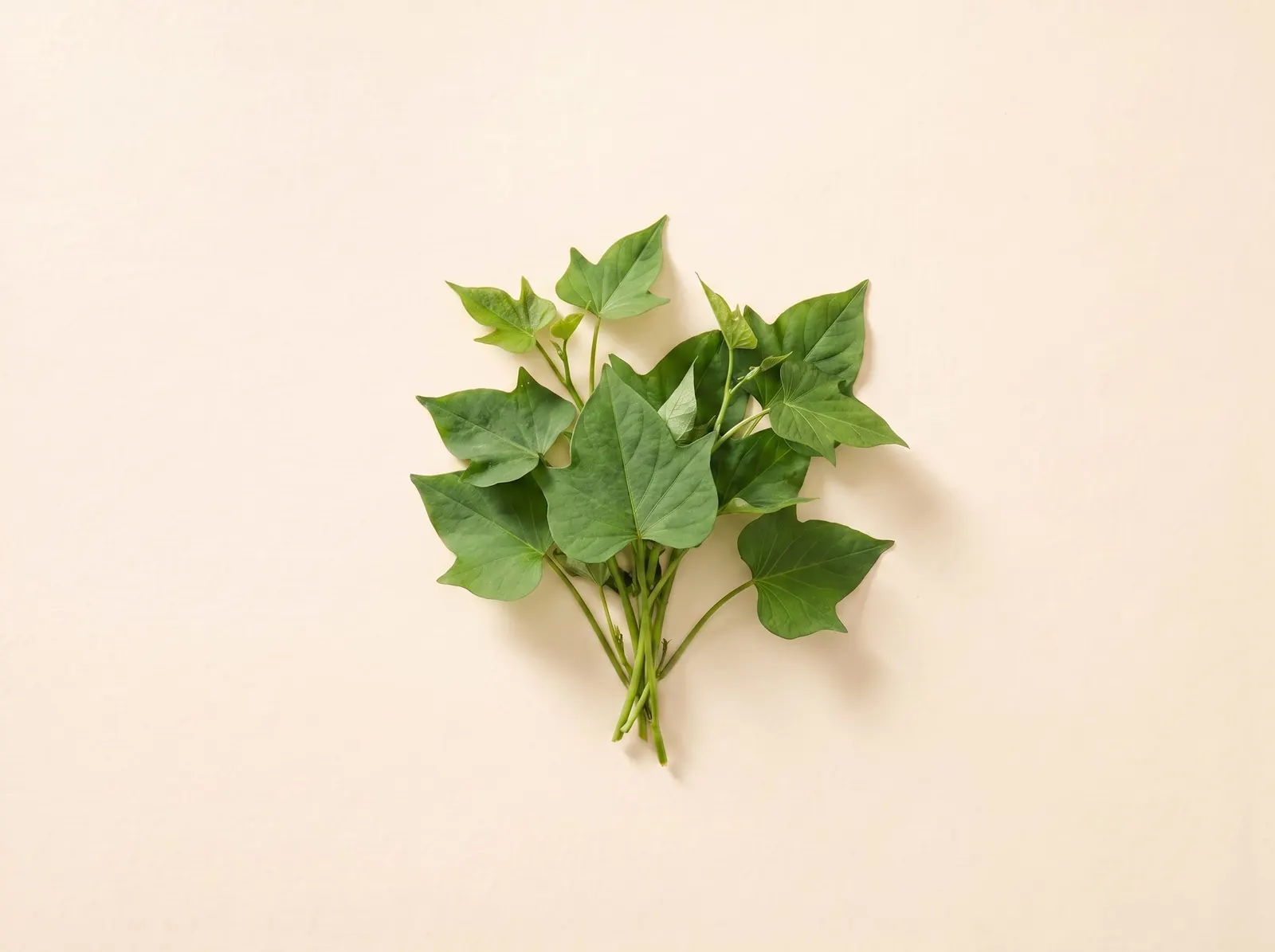
Sweet Potato Leaves are the heart-shaped, tender greens that grow on sweet potato vines. While North American agriculture treats them as discardable foliage, across West Africa, the Caribbean, and Southeast Asia they are a deeply valued leafy vegetable in their own right, prepared in stews, soups, and quick sautés. They offer mild, slightly sweet flavor.
Health information for this food is under review. Reviewed claims will include their sources and limits.
Traditional uses
In the Philippines, talbos ng kamote is a humble, beloved everyday dish. In Caribbean traditions, the leaves are sometimes added to callaloo preparations alongside other greens. The crop highlights how diaspora kitchens have always made full use of every part of the plant, while industrial agriculture overlooks the leaves entirely.
How to prepare
Wash the young, tender leaves and remove any tough stems. For a West African preparation, sauté with onion, tomato, and palm oil until wilted. For a Filipino-style adobong talbos, simmer with garlic, vinegar, and soy sauce until tender. The leaves cook quickly, usually in five minutes or less, and are best added at the end of cooking to preserve color and texture.
Recipe ideas
Share how you use Sweet Potato LeavesWest African Sweet Potato Leaf Stew with palm oil and smoked fish. Filipino Adobong Talbos ng Kamote. Stir-fried Sweet Potato Greens with garlic and ginger. Sweet Potato Leaf Soup with peanut paste.