
Taro
Root
Also known as: English: Taro, Cocoyam, Dasheen. Spanish: Malanga isleña. French: Madère. Portuguese: Inhame. Khmer: Traov. Chinese (Mandarin): Yùtou. Hindi: Arbi. Hawaiian: Kalo.
About this crop
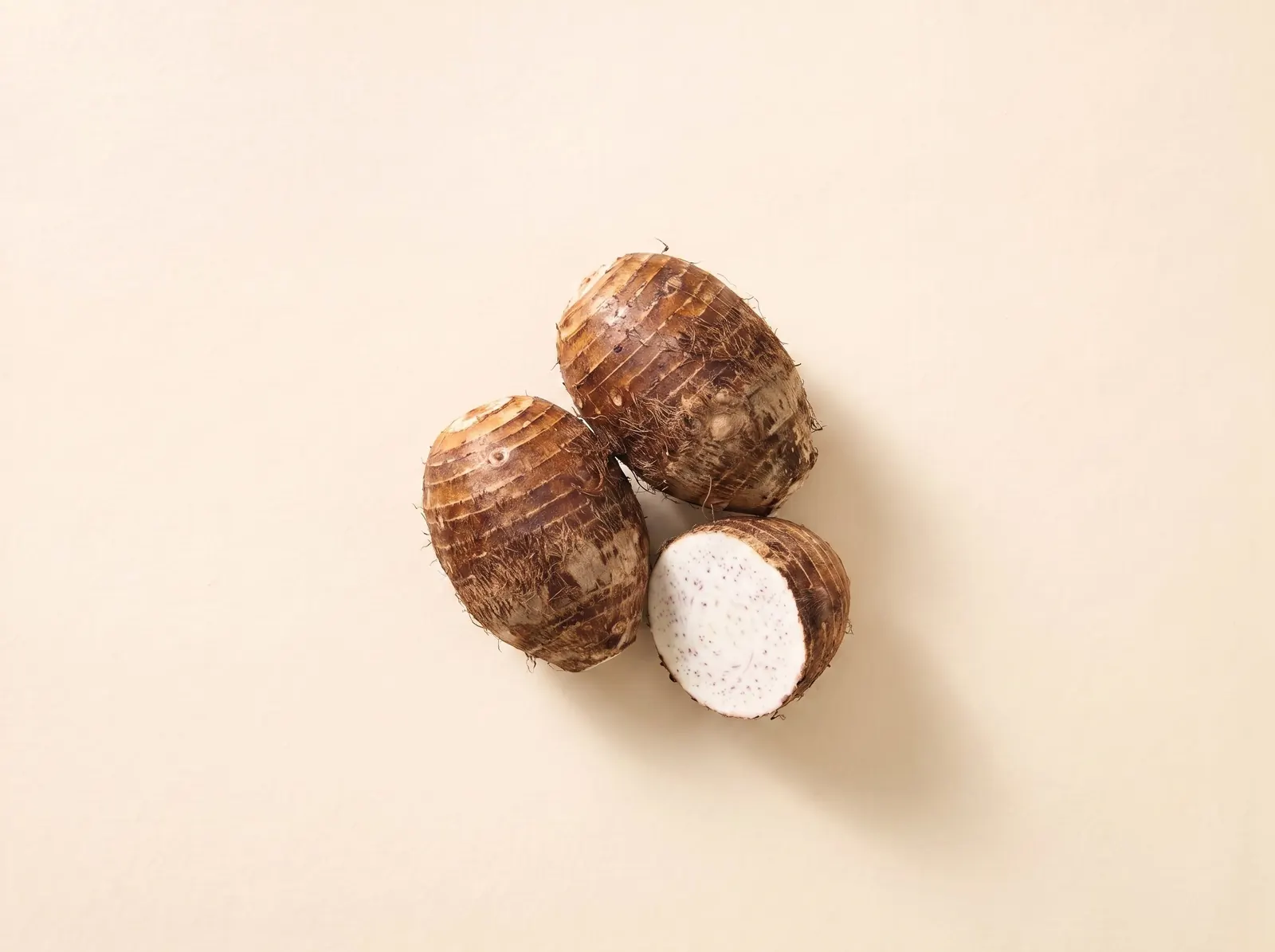
Taro is one of the world's oldest cultivated crops, a starchy root vegetable with a rough, brown, hairy exterior. Inside, the flesh can range from pure white to pale purple, often speckled with tiny purple fibers. When cooked, it transforms into a dense, creamy, and slightly sweet staple that absorbs flavors beautifully while providing deep, sustained nourishment.
Safety
Never eat any part of taro raw, including the root (corm), leaves and stems. All parts contain needle-like calcium oxalate crystals that can cause painful itching and swelling of the mouth and throat. Cook taro until completely soft; leaves and stems need long cooking, because undercooked leaves can still irritate. Wear gloves when peeling or cutting raw taro, since the sap can make skin itch.
Applies to: Taro (Colocasia esculenta) corms, leaves and stems, for everyone.
Health information for this food is under review. Reviewed claims will include their sources and limits.
Traditional uses
In Cambodian and broader Southeast Asian traditions, taro is a versatile ingredient used in both savory and sweet dishes. It is often simmered in rich coconut milk for desserts or fried into crispy snacks. In Chinese cuisine, it is mashed and deep-fried into delicate taro puffs or braised with rich meats like pork belly.
Across the Atlantic, taro is known as cocoyam in West Africa and dasheen in the Caribbean. In these traditions, it is a foundational carbohydrate, often boiled and pounded into fufu or added to hearty, complex soups like Jamaican pepperpot. The leaves of the taro plant, known as callaloo in the Caribbean, are just as important as the root, stewed down into a rich, spinach-like dish.
This ancient root connects the Pacific Islands, Southeast Asia, Africa, and the Caribbean. Whether it is pounded into Hawaiian poi, simmered in a Cambodian dessert, or boiled alongside green bananas in a Dominican kitchen, taro represents the deep, starchy foundation of human sustenance across the tropics.
How to prepare
Peel the rough skin with a sharp knife, then rinse the root well.
For a simple preparation, cut the peeled taro into chunks and boil it in salted water until tender, which usually takes about twenty minutes. It can then be mashed with butter and garlic, much like potatoes, though it will have a denser, stickier texture.
In a Southeast Asian dessert preparation, boil the taro chunks until soft, then simmer them gently in coconut milk sweetened with palm sugar and a pinch of salt. The taro will absorb the rich coconut flavor, creating a comforting, warm pudding.
Recipe ideas
Share how you use Taro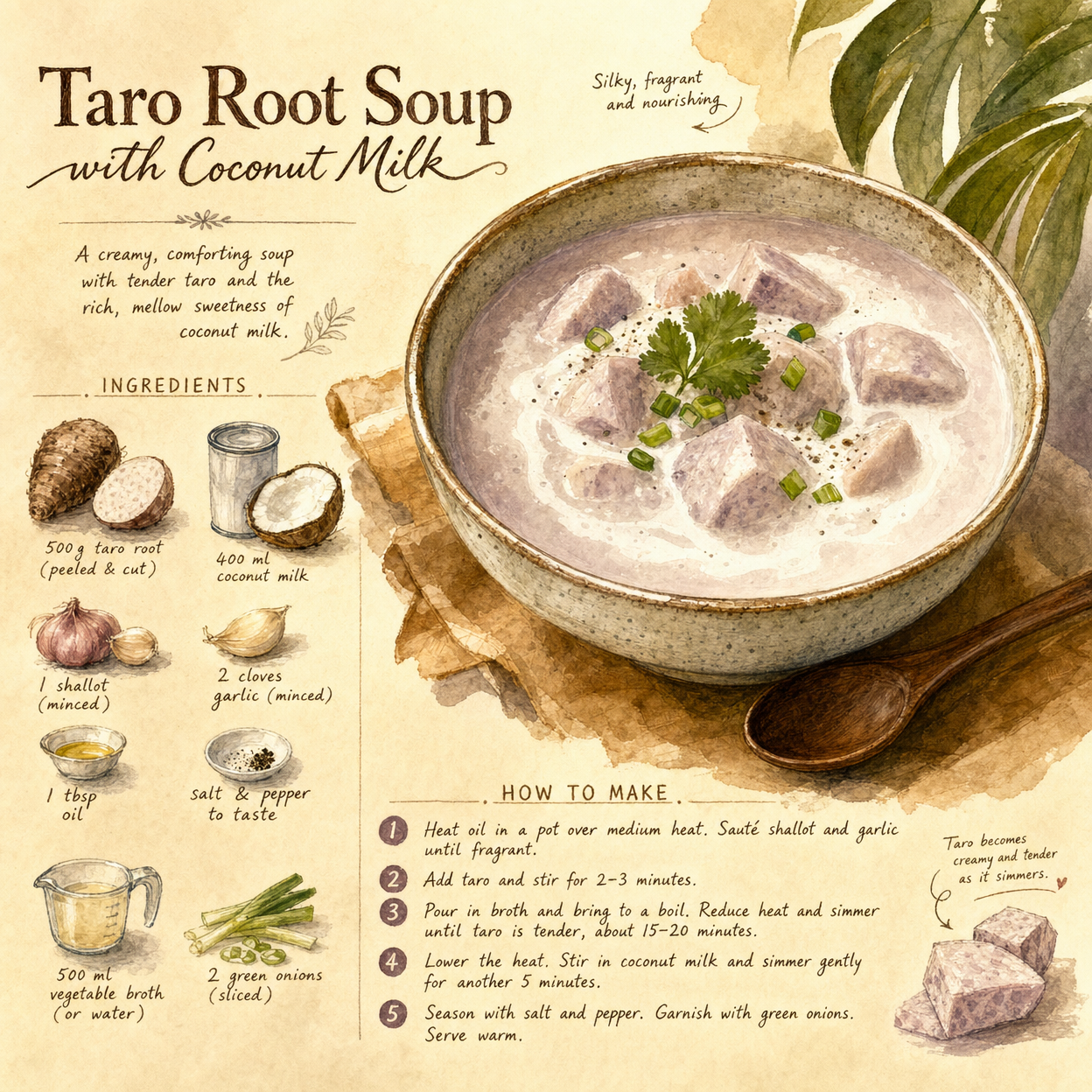
Taro and Coconut Pudding (Cambodian/Thai): Soft chunks of taro simmered in sweet, salted coconut milk.
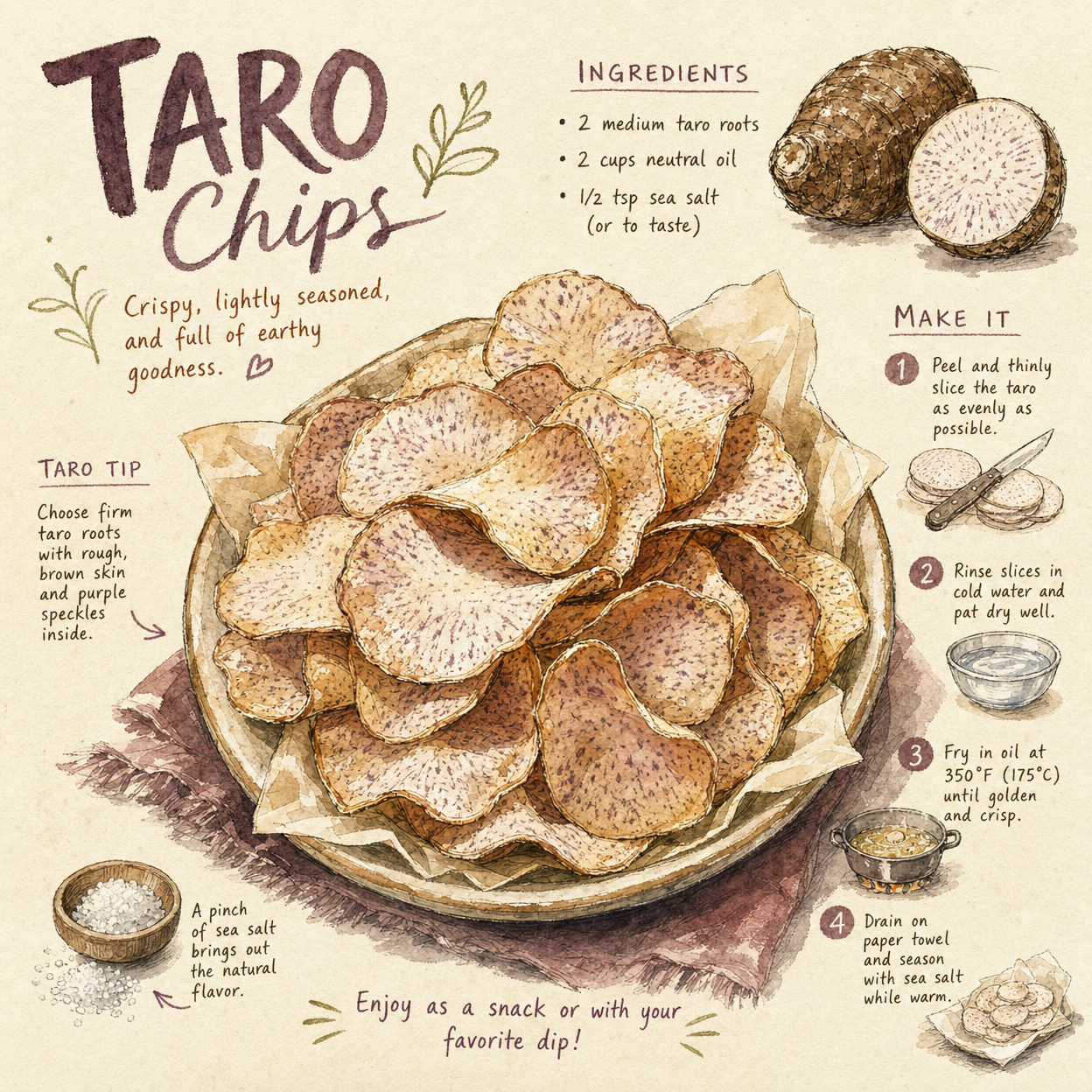
Dasheen Soup (Caribbean): A hearty soup where taro root is simmered with provisions, dumplings, and thyme.
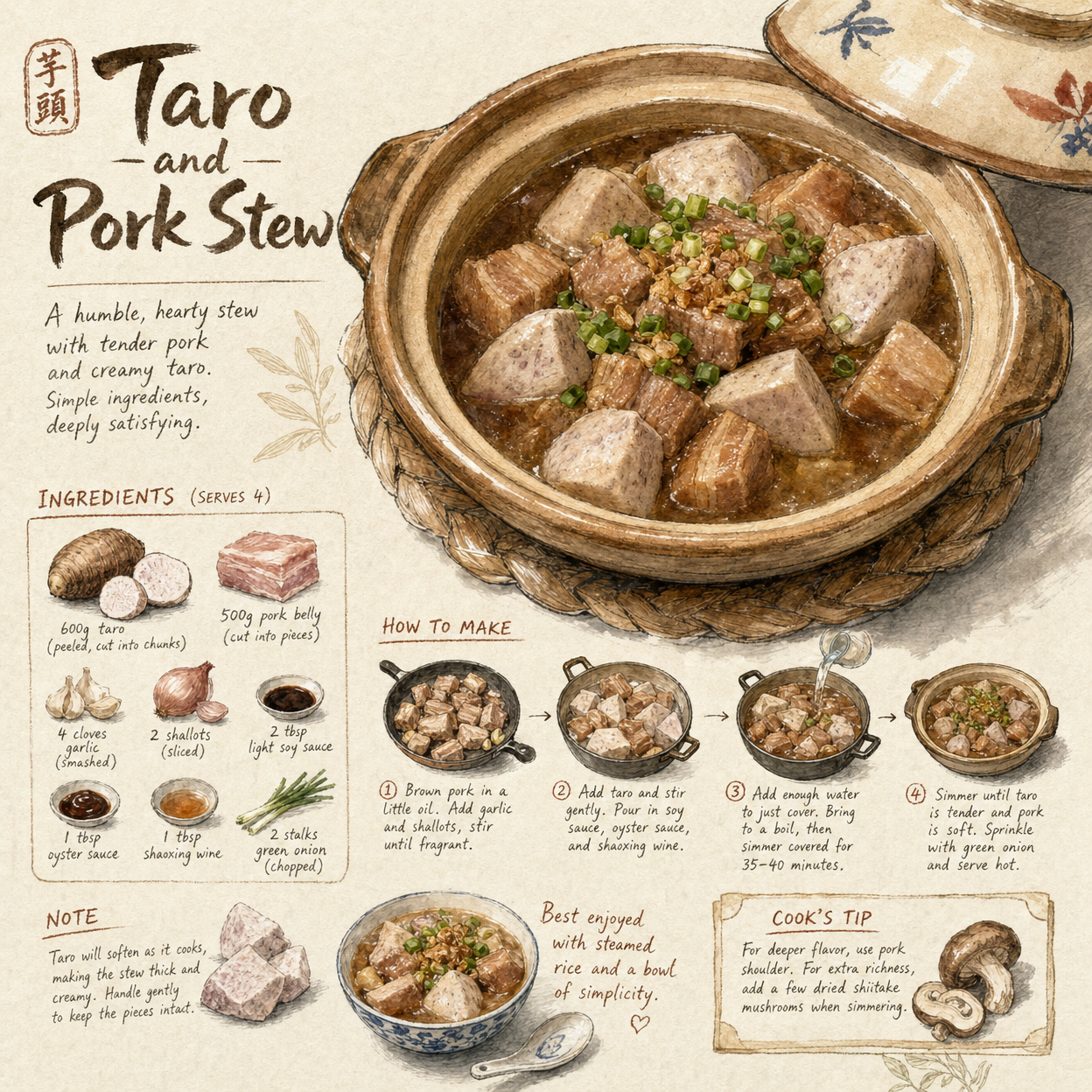
Braised Pork with Taro (Chinese): A rich, savory dish where taro absorbs the deep flavors of braised pork belly and soy sauce.