
Thai Basil
Herb
Also known as: English: Thai Basil. Spanish: Albahaca tailandesa. French: Basilic thai. Khmer: Chi neang vorng. Vietnamese: Rau que. Italian: Basilico (Genovese variety).
About this crop
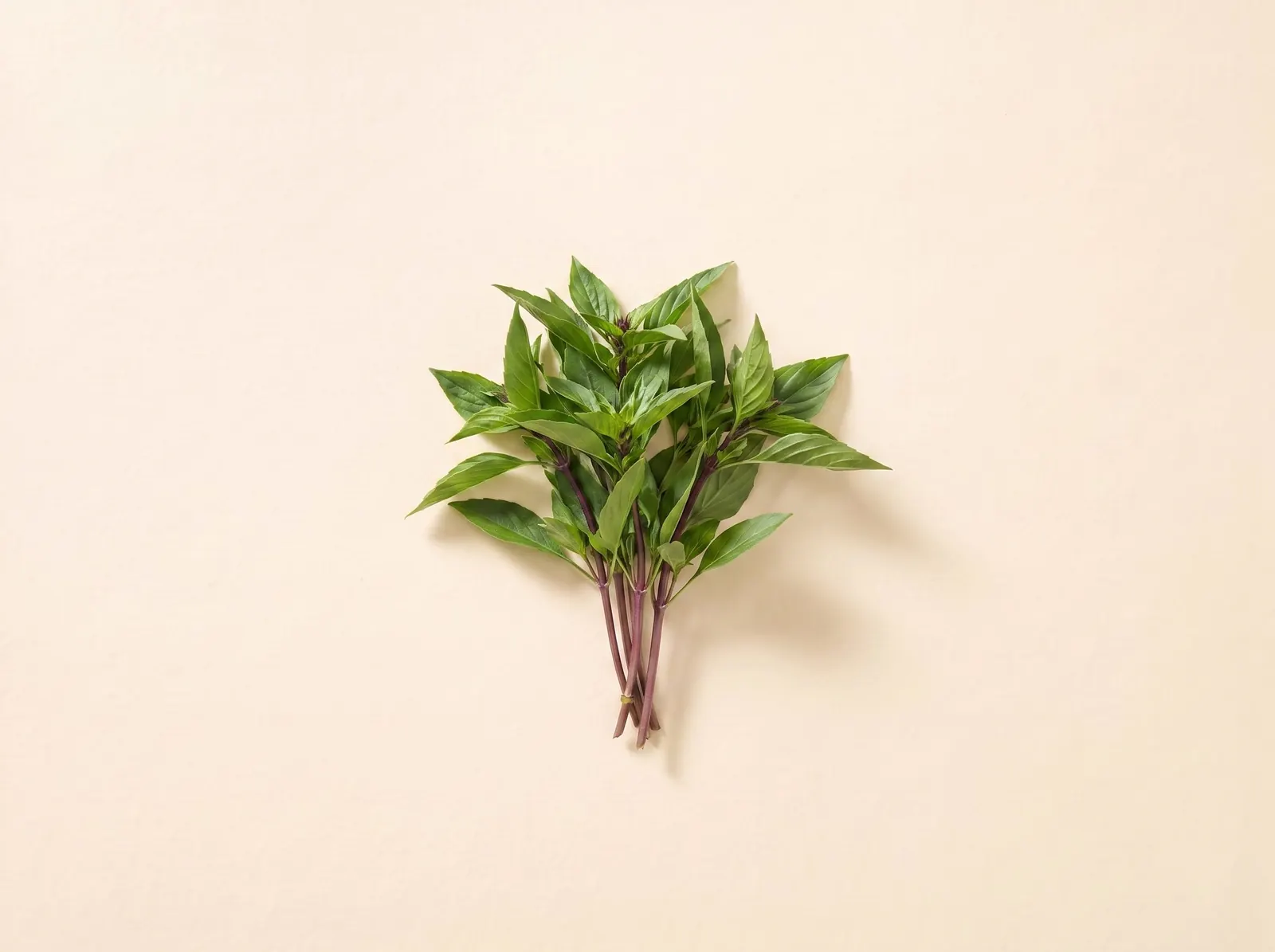
Thai basil is a sturdy, aromatic herb with dark green, slightly serrated leaves and distinctive purple stems and flower clusters. Unlike its Italian cousin, Genovese basil, Thai basil has a pronounced anise and licorice flavor that holds up beautifully under heat, making it ideal for stir-fries, curries, and soups rather than raw applications. The plant thrives in warm weather and can grow vigorously in Rhode Island summers.
Health information for this food is under review. Reviewed claims will include their sources and limits.
Traditional uses
In Cambodian, Laotian, and Vietnamese kitchens, Thai basil is as essential as salt. It appears in nearly every noodle soup as a fresh garnish, in stir-fries where it wilts into the sauce at the last moment, and in green curries where its anise notes complement coconut milk. On Federal Hill in Providence, Italian-American cooks reach for Genovese basil to make pesto and top their margherita pizzas. The two basils are cousins in the same genus (Ocimum), separated by geography but connected by the same human instinct: tear a fragrant leaf, drop it into something hot, and let the aroma fill the kitchen. The bridge is in the gesture.
How to prepare
Thai basil is best added at the end of cooking or just before serving to preserve its fragrance. Tear or roughly chop the leaves and stir them into hot dishes in the final minute. For Southeast Asian curries, add whole sprigs and let them wilt into the sauce. Unlike Genovese basil, Thai basil can withstand high heat without turning black, making it perfect for wok cooking. For a simple introduction, tear fresh leaves over a bowl of pho or any hot noodle soup.
Recipe ideas
Share how you use Thai Basil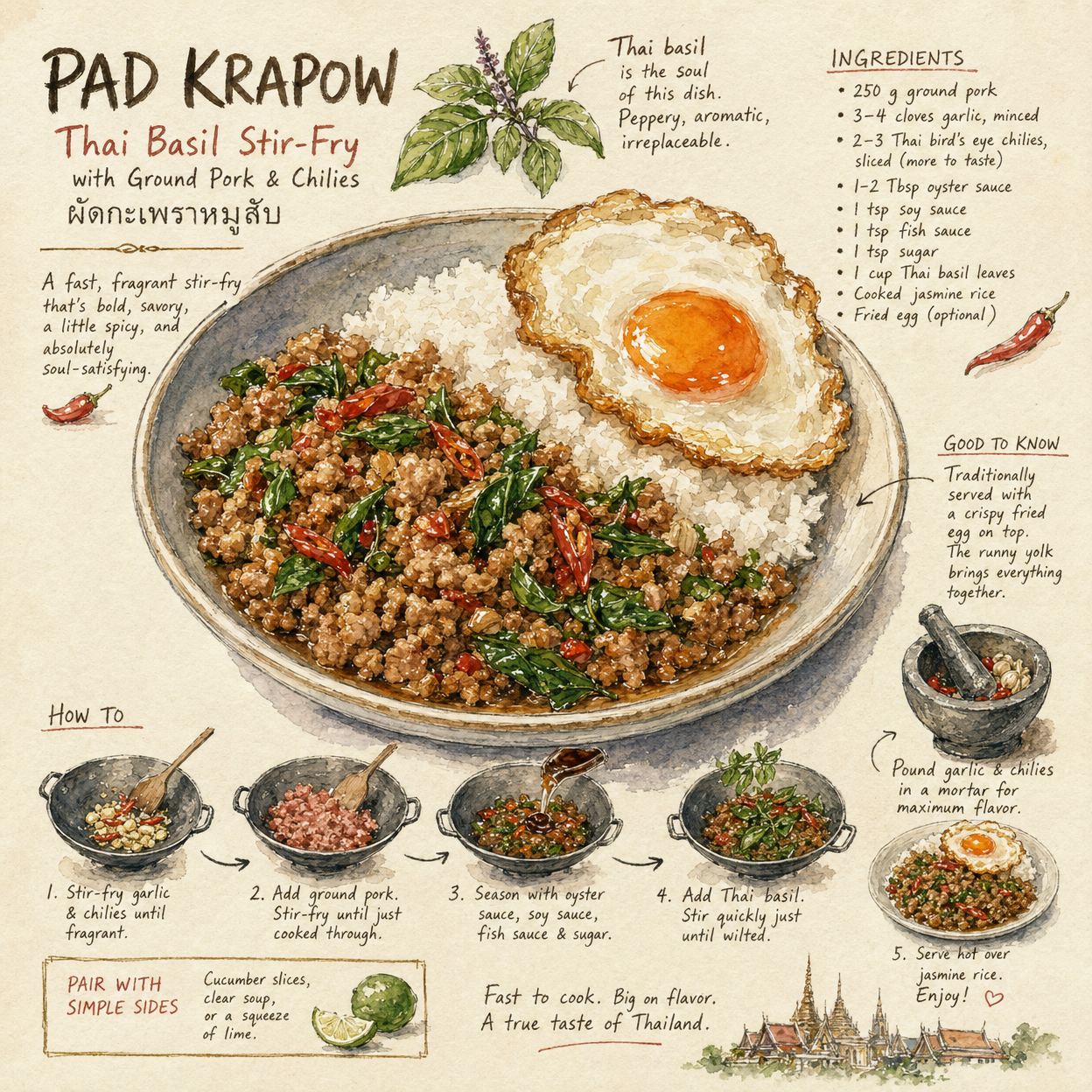
Cambodian Stir-Fried Basil Chicken (sach moan cha krapao). Vietnamese Pho Garnish (fresh sprigs alongside bean sprouts and lime). Thai Drunken Noodles (pad kee mao with wide rice noodles and basil). Italian-Cambodian Fusion Pesto (Thai basil, peanuts, fish sauce, and lime).