
Yuca
Root
Also known as: English: Cassava, Yuca, Manioc. Spanish: Yuca. French: Manioc. Portuguese: Mandioca, Macaxeira. Haitian Creole: Manyòk. Swahili: Muhogo.
About this crop
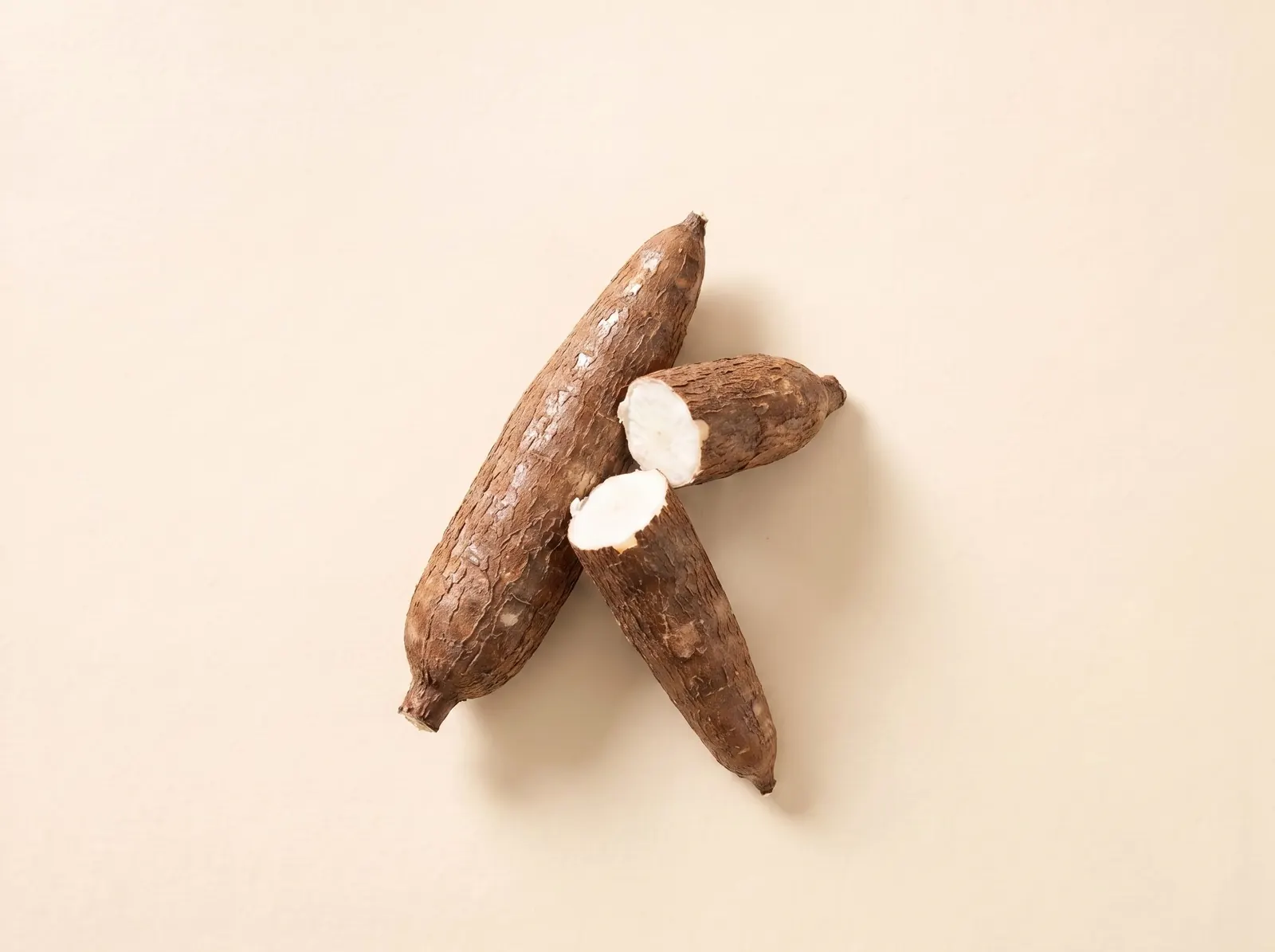
Yuca, also known as cassava, is a dense, starchy tuber with a rough, bark-like brown skin and firm, stark-white flesh. It is one of the most drought-resistant crops in the world, capable of thriving in poor soils where other plants fail. When cooked, its dense flesh transforms, becoming soft, slightly translucent, and deeply comforting, with a mild, earthy flavor that absorbs sauces beautifully.
Safety
Never eat cassava (yuca) root raw. It contains natural compounds that can release cyanide. Peel it completely, cut it into pieces, and boil it in plenty of water until fully soft. Cooking alone is enough only for sweet cassava; bitter cassava needs extra traditional processing (such as grating, long soaking or fermenting) before cooking. If you do not know which type you have, ask the seller.
Applies to: Cassava root, for everyone.
Health information for this food is under review. Reviewed claims will include their sources and limits.
Traditional uses
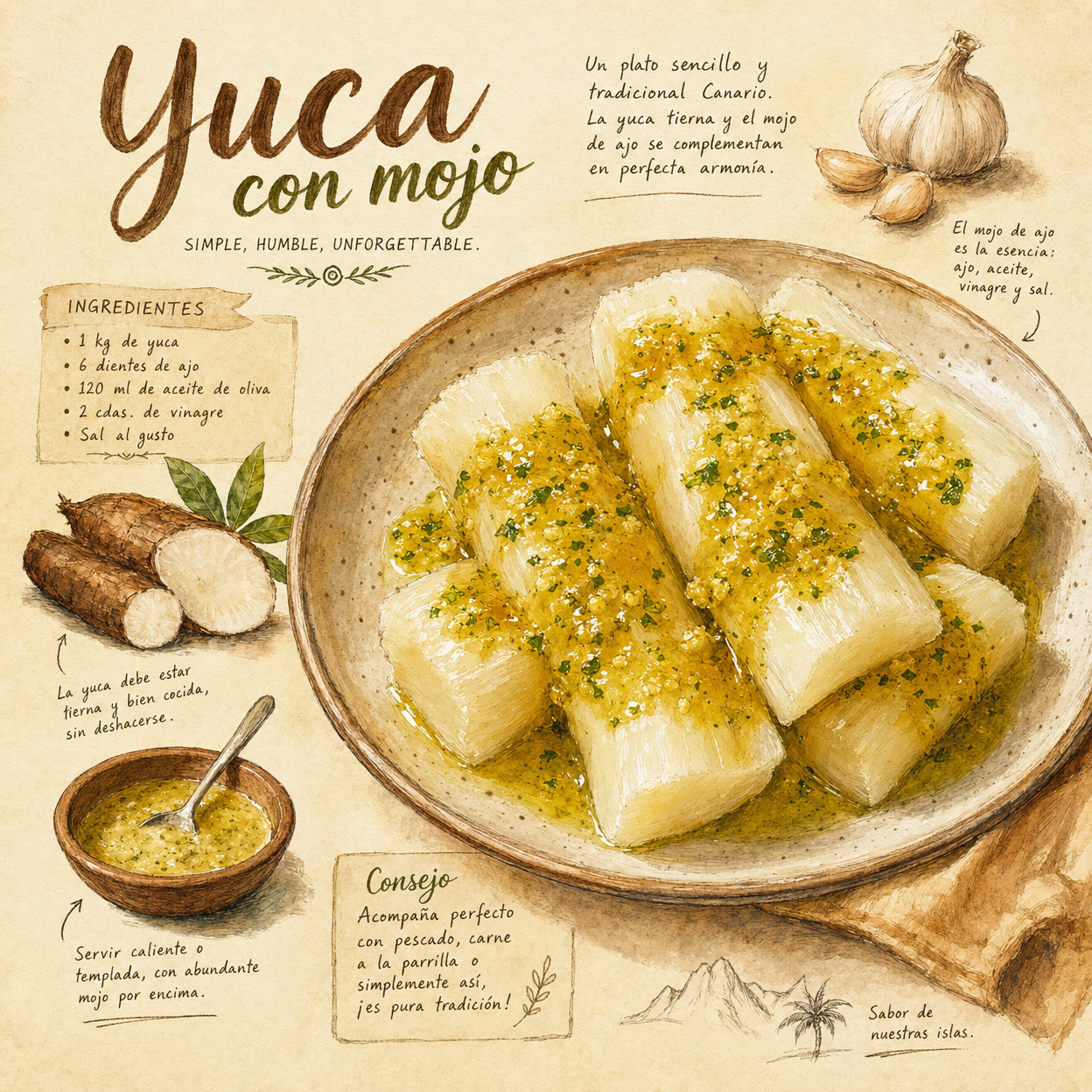
In Dominican, Cuban, and Central American traditions, yuca is a beloved staple. It is often boiled until tender and served simply with mojo, a vibrant sauce of garlic, sour orange, and oil. It can also be mashed into dough for empanadas or fried into thick, crispy wedges that rival any potato fry.
Originally native to South America, yuca was brought to Africa, where it revolutionized the continent's foodways. In West Africa, it is fermented and roasted into garri, or pounded into the smooth, elastic dough known as fufu, which is used to scoop up rich, spicy soups. In Brazil and Cape Verde, it is ground into farinha (manioc flour) and toasted into farofa, a crucial accompaniment to stews.
This resilient root connects the Dominican families of Central Falls with the West African and Cape Verdean communities of Pawtucket. Whether it is boiled and dressed with garlic mojo, pounded into fufu, or toasted into farofa, yuca is the ultimate survivor crop, providing comfort across continents.
How to prepare
Cut the long root into manageable cylinders. Score the thick, waxy brown skin and the thin pinkish layer beneath it, then pry both layers off with a knife.
To boil yuca, place the peeled chunks in a pot of salted water, bring to a boil, and simmer until tender, which usually takes twenty to thirty minutes. You will know it is done when a fork pierces it easily and the flesh looks slightly translucent. Remove the fibrous core string from the center of each chunk before eating.
For crispy yuca fries, boil the yuca first until tender. Let it cool, remove the core, and cut the chunks into thick wedges. Fry the wedges in hot oil until golden and crispy on the outside, then sprinkle generously with salt.
Recipe ideas
Share how you use Yuca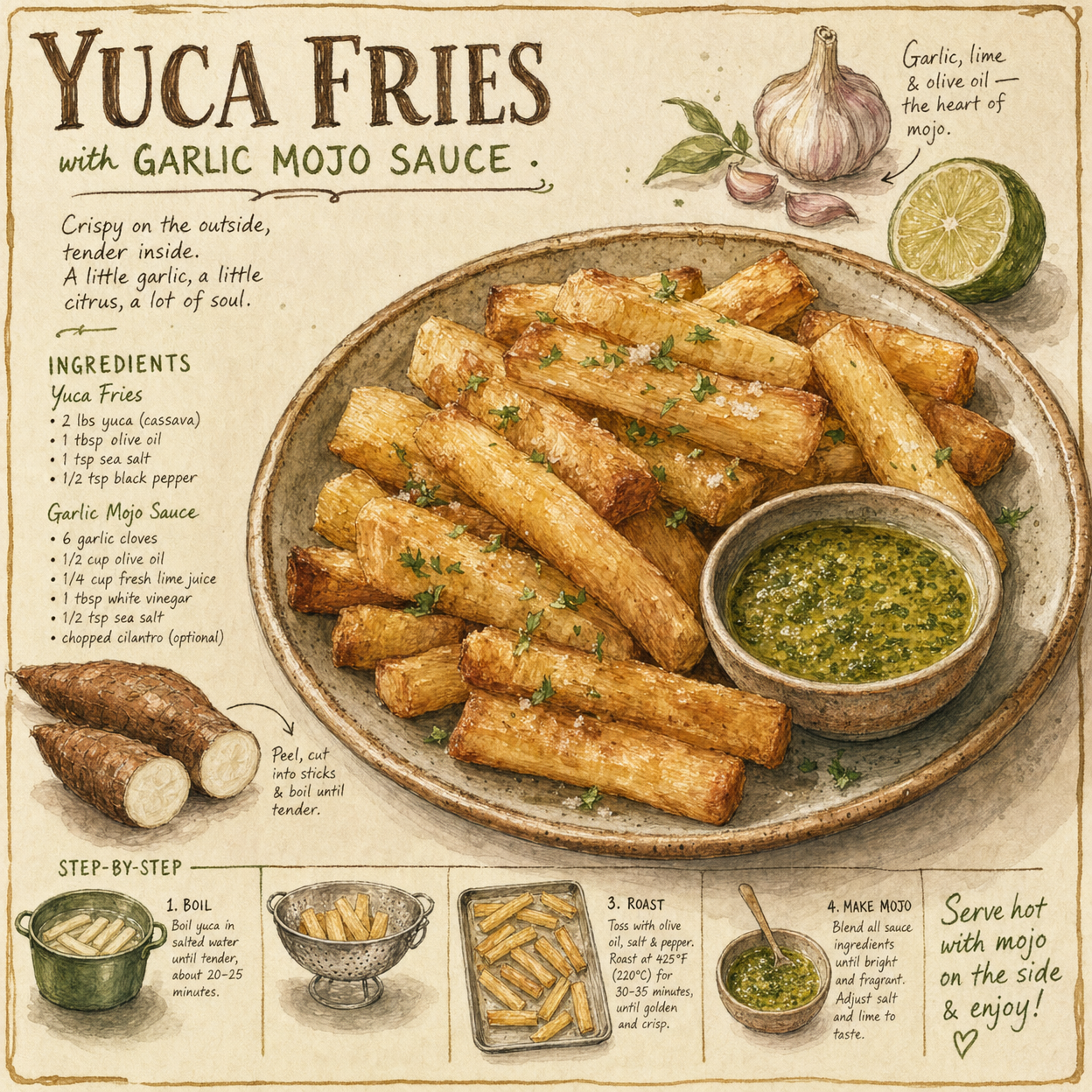
Yuca con Mojo (Cuban/Dominican): Boiled yuca dressed generously with a sauce of hot olive oil, garlic, and sour orange juice.
Fufu (West African): Boiled yuca (often mixed with plantain) pounded into a smooth, elastic dough for eating with soups.
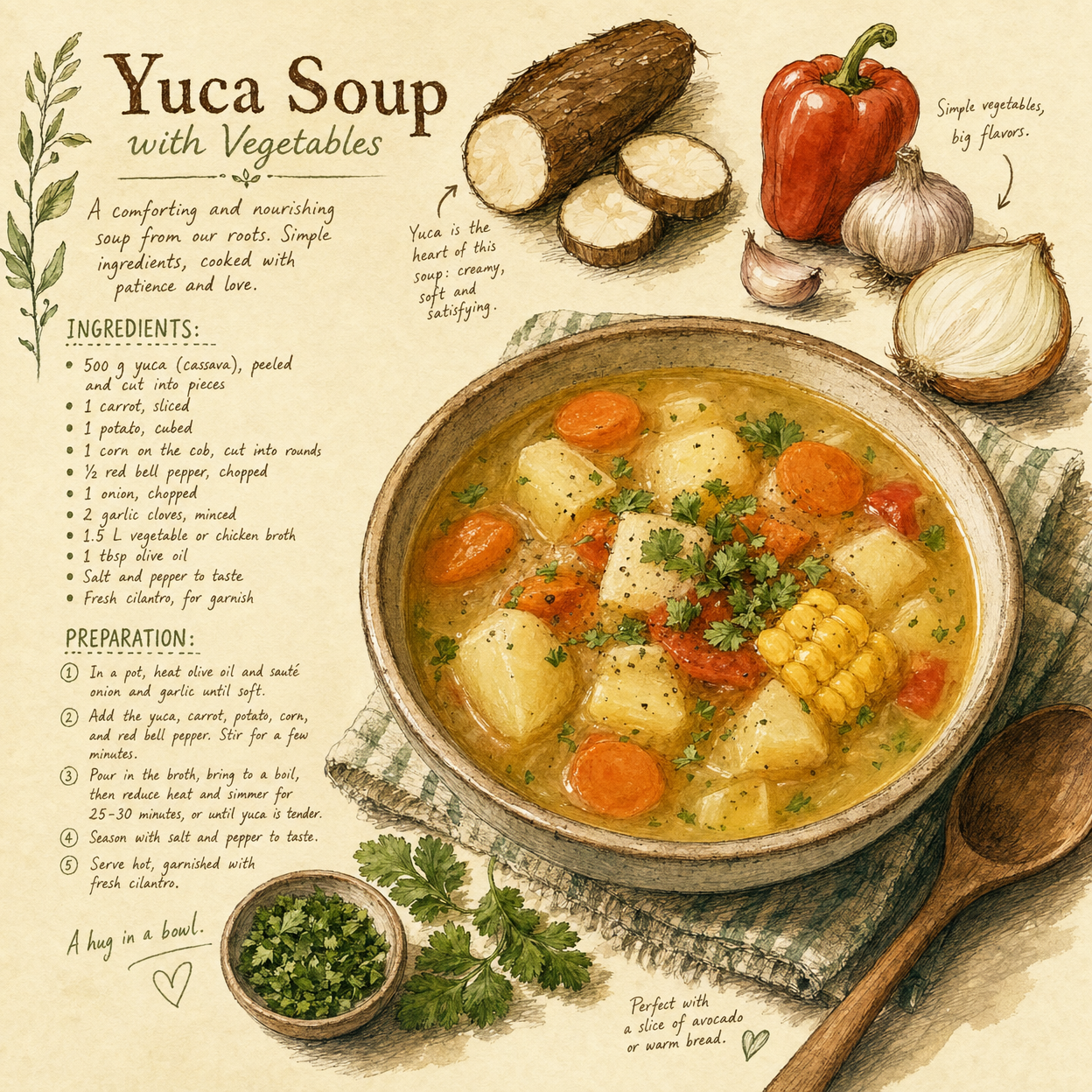
Sopa de Res con Yuca (Central American Beef Soup): A hearty beef broth loaded with chunks of yuca, corn, and cabbage.