
African Eggplant
The Garden's Jewel
Solanum aethiopicum
Vegetable
Also known as: Garden Egg, Igba (Yoruba), Anara (Igbo), Yalo (Hausa), Aubergine Africaine (French)
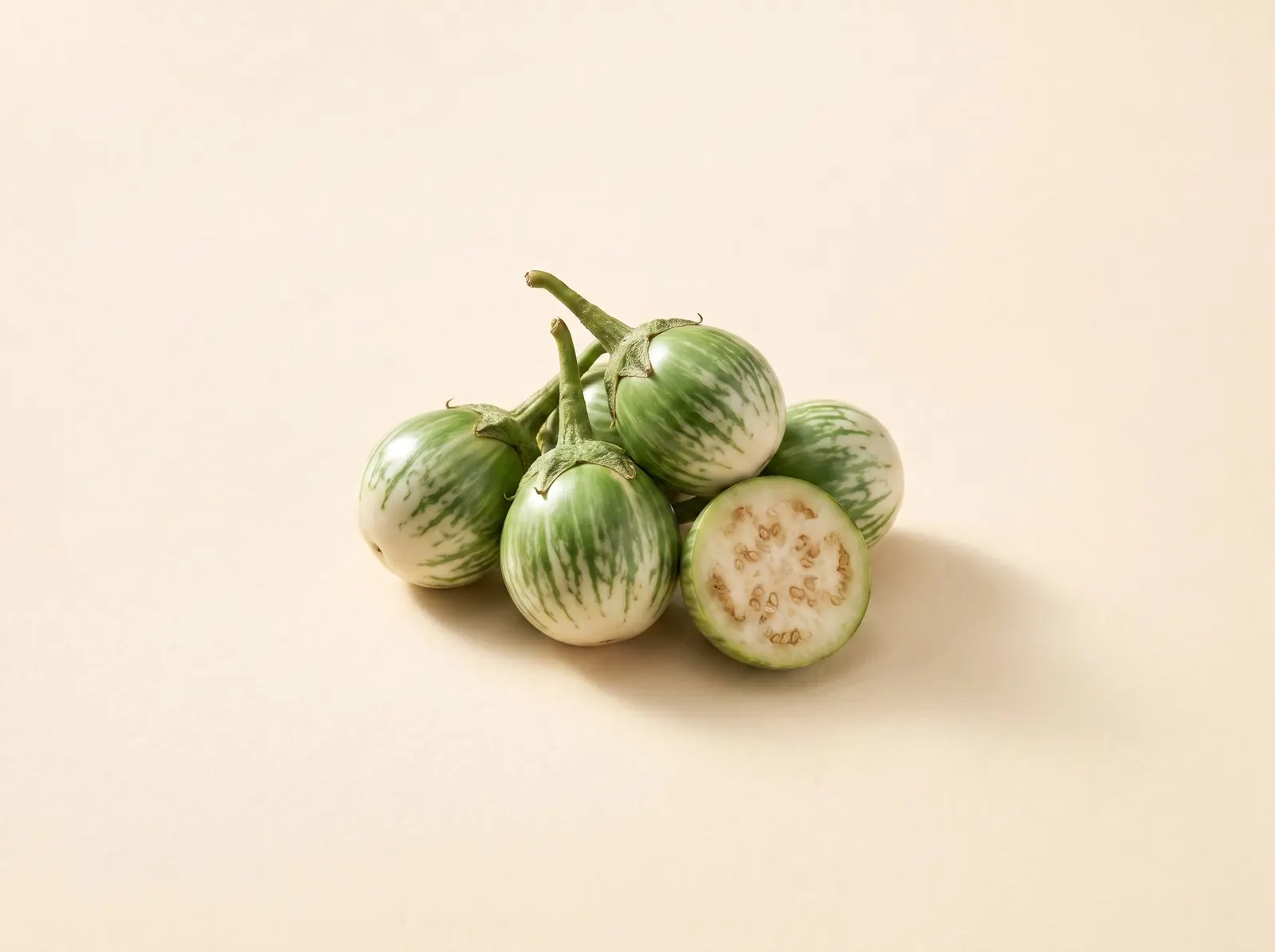
About this crop
The African Eggplant holds a profound place within African and Caribbean food traditions as a symbol of resilience, heritage, and community survival. For many African cultures, it is not just food but a living connection to land, ancestors, and identity. The garden egg's cultivation and consumption affirm the right to own the harvest on our own block, allowing communities to reclaim their right to grow and eat foods steeped in cultural meaning. Particularly for diaspora communities in urban America, access to African Eggplant is a form of cultural preservation and resistance against the loss of traditional diets.
In Providence and other American cities, families can grow and eat African Eggplant. It reconnects mothers to the wisdom of their forebears, who valued the garden egg. Sharing recipes, stories, and seeds across generations strengthens bonds and fosters a sense of belonging in a world where cultural erasure is a constant threat.
Moreover, the presence of African Eggplant in local markets and gardens builds community self-determination by creating spaces where African and Caribbean foodways can thrive. It challenges mainstream food systems that often overlook the crops that sustain Black families globally. In this way, every garden egg harvested and cooked is an act of honoring heritage and cultivating hope for the future.
Health information for this food is under review. Reviewed claims will include their sources and limits.
Traditional uses
It is from the mouth of the garden egg seller that one hears "paun."
West African: In West Africa, the African Eggplant is woven into the daily and ceremonial life of many ethnic groups. Among the Yoruba of Nigeria, known as igba or ikan, it flavors stews that are often served with yam or plantains, bringing a gentle bitterness that balances richer ingredients. The Igbo people call it anara or afufa and traditionally serve it with peanut butter sauce called Ose Oji, a sign of hospitality. In Ghana, the Akan people use nyaadua in Abomu, a stew rich with palm oil and fermented fish. The Wolof and Mandinka of Senegal and Gambia prize the garden egg in dishes like Thieboudienne and Mafe.
East African: East African communities embrace the African Eggplant in both fruit and leaf forms. In Uganda, the fruit (ntula) and leaves (nakati) are staples; leaves are often cooked like spinach, while fruits are boiled, mashed, and blended into stews with groundnut sauce. Kenya and Tanzania prepare it in vegetable mixes alongside sukuma wiki. In Rwanda and Burundi, garden egg fruits enrich sauces and stews.
Caribbean: Across the Caribbean, the African Eggplant's journey is a testament to resilience and cultural memory. In Jamaica, where it is called "garden egg" or "susumba," it appears in hearty soups and stews, often paired with saltfish or salted pork. Trinidad and Guyana incorporate it into curries and vegetable medleys (talkari). In Haiti, garden egg is essential in legume, a vegetable stew that sustains families.
African American: In the United States, African Eggplant's presence is most strongly felt in the Gullah Geechee communities of the Lowcountry. Here, descendants of enslaved Africans maintain garden egg cultivation and cooking traditions, using the vegetable in stews alongside okra and tomatoes, a direct link to their ancestors' foodways. Heritage seed savers keep bitter varieties alive, preserving taste and memory.
How to prepare
Sauteed Garden Egg with Tomatoes: Dice and cook with onion, garlic, tomatoes, and chili flakes. Nigerian Garden Egg Stew: Boil and mash garden eggs, cook with palm oil, smoked fish, ground crayfish, and spinach. Garden Egg and Chickpea Coconut Curry: Simmer diced garden eggs with chickpeas, coconut milk, curry powder, and lime.
How to use it
Share how you use African EggplantGrowing in Rhode Island
- Season
- Warm season; start indoors 6-8 weeks before last frost
- Garden suitability
- Yes, needs full sun (6-8 hours), rich well-draining soil
- Companion crops
- Beans, peas, borage (avoid fennel)
- Special considerations
- Use black plastic mulch to warm soil. Transplant outdoors after last frost when nighttime temps above 55°F. High tunnels can extend the growing season.
- Market availability
- Providence farmers markets late July through September