
Okra
The People's Vegetable
Abelmoschus esculentus
Vegetable
Also known as: Gombo (French), Bamia (Arabic), Quingombo (Spanish), Ila (Yoruba), Okwuru (Igbo)
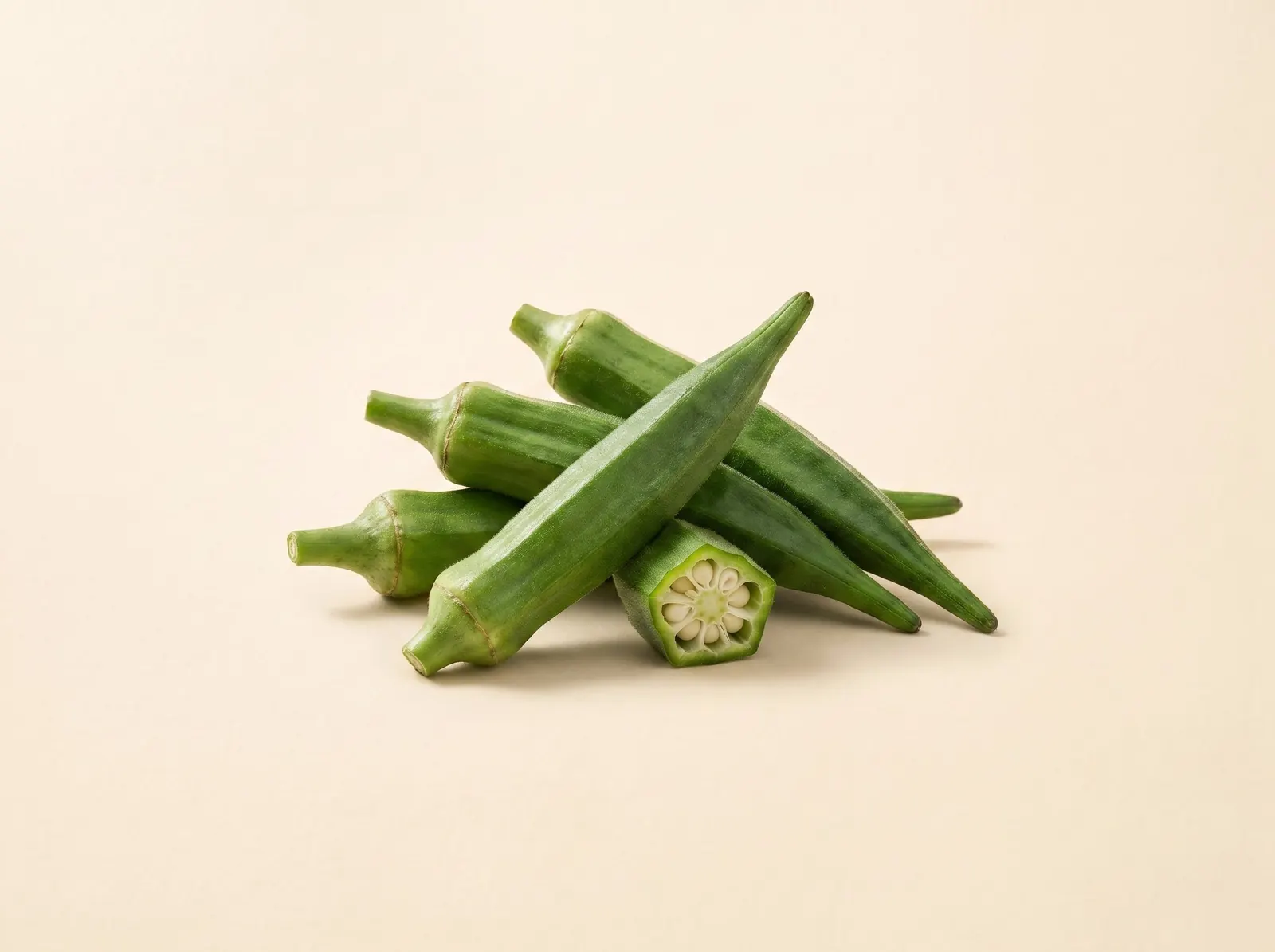
About this crop
Okra is far more than a vegetable; it is a living thread that connects African, Caribbean, and African American communities through history, culture, and resilience. Its journey from West and East Africa to the Caribbean and the American South tells a story of survival and adaptation. For many African peoples, okra is intertwined with the rhythms of the land and the seasons, signaling not only food but also cultural practices and rituals. When ancestors brought okra seeds across the Atlantic, they carried with them a piece of home, a symbol of identity and resistance.
In the Caribbean, okra became a foundation of cooking, thickening stews and soups that sustain both body and spirit. For African American communities, especially in the South and among the Gullah Geechee, okra is a touchstone of ancestry and a reminder of the strength found in cultural continuity. Gumbo's rich, slippery texture, powered by okra, is a metaphor for the blending of histories and communities.
Access to okra in urban American spaces like Providence is an act of cultural preservation and owning the harvest on our own block. It allows families to reclaim traditional diets through familiar foods. Growing and cooking okra not only feeds the body but also honors ancestors and fosters community bonds, strengthening identity in a world that often tries to erase it.
Health information for this food is under review. Reviewed claims will include their sources and limits.
Traditional uses
You can't eat okra with one finger.
West African: Okra's story begins in West Africa, where it is a beloved staple among many ethnic groups. In Nigeria, the Yoruba prepare "Ila Alasepo," a thick, comforting okra soup that brings family and community together at the table. The Igbo, Bini, and Urhobo peoples also have rich traditions of cooking okra as a hearty stew. In Ghana and Togo, okra is often stewed with palm oil and served with fufu or banku, while the Wolof people of Senegal cherish it in their classic soups.
East African: Traveling eastward, okra holds special meaning in Ethiopian communities like the Berta and Gumuz. Known locally as "Kenkase," okra is dried and ground into powder, then used in "wot," a thick stew, or mixed into porridge. Across Rwanda, Burundi, Congo, Kenya, and Tanzania, okra is valued for its flavor.
Caribbean: In the Caribbean, okra's journey is inseparable from the history of the African diaspora. In Jamaica and Haiti, okra stews like Haitian Kalalou are soul-warming dishes that connect the present to ancestral roots. Trinidad's Cou-Cou, a dish combining okra and cornmeal, is a festive favorite. Guyanese families enjoy fried okra as a crispy treat.
African American: Okra's significance continues in African American foodways, especially in the Southern United States and among the Gullah Geechee people. Enslaved Africans brought okra seeds with them, making the plant a symbol of resilience and home. In Southern kitchens, okra is a cornerstone of gumbo, a dish whose name traces back to the West African word "ki ngombo." Gumbo's rich, thick texture depends on okra's unique mucilage.
How to prepare
Sauteed Okra with Garlic and Tomatoes: Quick skillet preparation with olive oil, garlic, tomatoes, and lemon. Nigerian Okra Soup: Finely chopped okra cooked with assorted meats, palm oil, crayfish, and bitterleaf. Okra and Corn Salad: Blanched okra with charred corn, red bell pepper, cilantro, and chipotle-lime dressing.
How to use it
Share how you use OkraGrowing in Rhode Island
- Season
- Warm season; start indoors in March, transplant late April/May
- Garden suitability
- Yes, raised beds or containers with good drainage
- Companion crops
- Peppers, eggplants
- Special considerations
- Needs soil temps at least 68°F. A tropical crop that appreciates high tunnels or row covers early in the season. Harvest tender pods at their peak.
- Market availability
- Providence farmers markets mid to late summer, July through early September