
Cassava Leaf
West Africa's Daily Green
Manihot esculenta
Leafy Green
Also known as: Saka Saka (Congo), Pondu (Lingala), Ravitoto (Malagasy), Ewe Paki (Yoruba), Feuilles de Manioc (French)
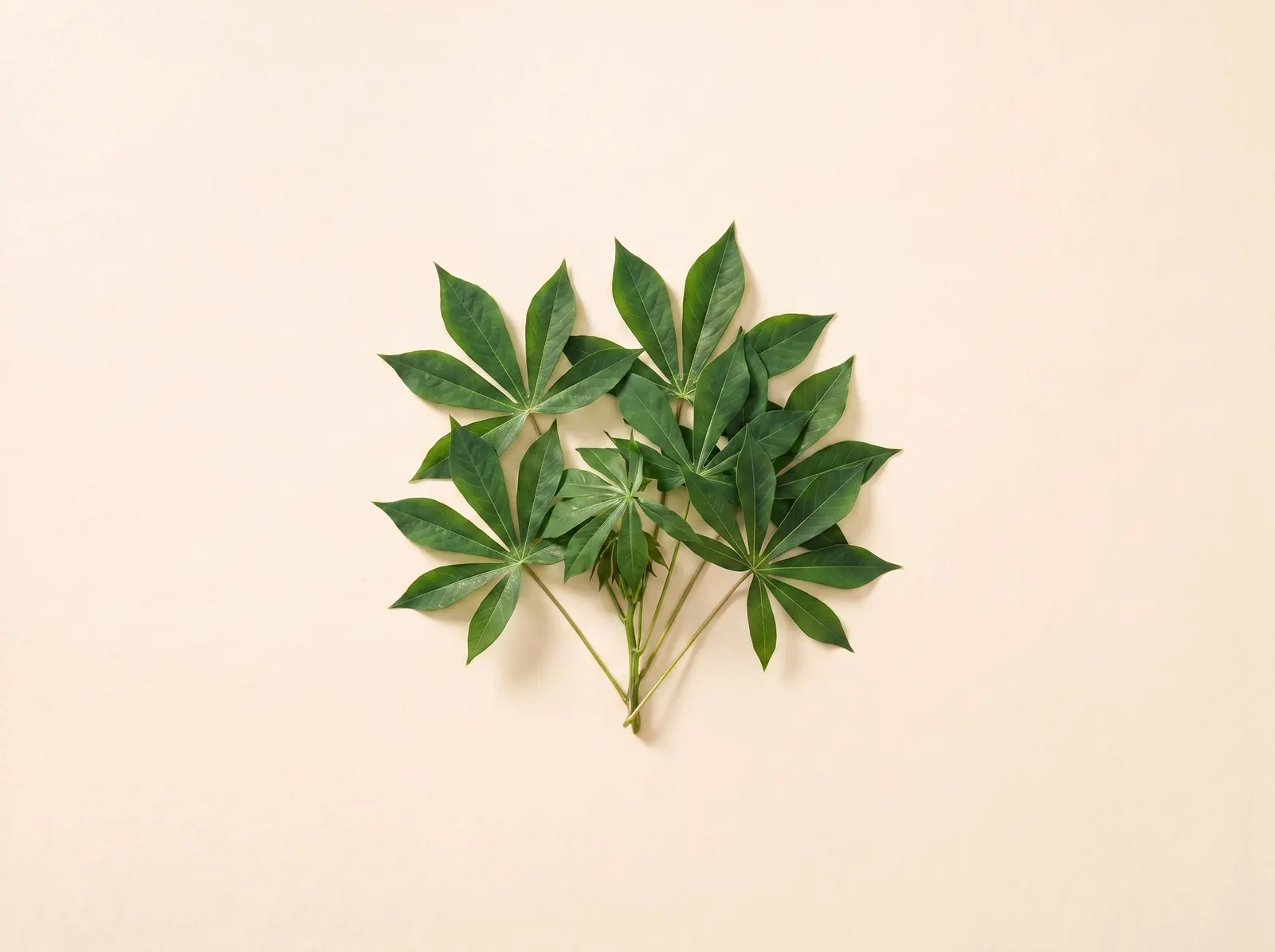
About this crop
Cassava leaf carries profound meaning beyond its role at the dinner table. In many African cultures, it is seen as a symbol of resilience and survival, a "blessed plant" that sustains families through difficult seasons. Its cultivation and use speak to owning the harvest on our own block - the power of communities to grow and prepare their own food according to ancestral knowledge. For the African diaspora, especially in urban American settings like Providence, access to cassava leaf reconnects families to heritage and identity. Growing and cooking cassava leaf is an act of cultural preservation that honors ancestors and fosters community ties.
On the blocks where the dishes you grew up with are harder to find than they should be, cassava leaf serves as a bridge to tradition and self-determination. Preparing dishes that have been passed down for generations strengthens intergenerational bonds and nurtures pride in heritage. Whether simmered in a Liberian stew or stirred into a modern curry, cassava leaf embodies the spirit of community resilience and the ongoing effort to reclaim and celebrate foodways often threatened by displacement and marginalization.
Safety
Never eat cassava leaves raw. They contain natural compounds that release cyanide, at higher levels than the root. Pound or finely crush the leaves, soak or wash them in plenty of water and pour that water away, then cook them thoroughly in boiling water.
Applies to: Cassava (Manihot esculenta) leaves, for everyone.
Health information for this food is under review. Reviewed claims will include their sources and limits.
Traditional uses
All cassava have the same skin but not all taste the same.
West African: Cassava leaf is woven into the daily lives and meals of many West African peoples. In Liberia and Sierra Leone, it is the star of national dishes where it is pounded and cooked into thick stews flavored with palm oil, onions, and peppers. Among ethnic groups such as the Yoruba, Igbo, Akan, Wolof, Mandinka, and Fulani, cassava leaf is a cherished green, often paired with staples like rice or fufu. In the DRC, Pondu or Saka-saka features cassava leaves simmered with meat or fish.
East African: Moving eastward, countries like Rwanda and Burundi prepare Isombe, where cassava leaves are pounded and cooked with palm oil, onions, tomatoes, and sometimes meat or fish. Similar preparations appear in Kenya and Tanzania, where leafy greens are central to everyday meals. The consistent theme is the transformation of cassava leaves through pounding and slow cooking.
Caribbean: In the Caribbean, where cassava root has long been a staple, the use of cassava leaves carries the imprint of West African culinary heritage. Haiti's Lalo or Fey Manyok stew combines cassava leaves with meat and other greens in a rich sauce. In Jamaica, Trinidad, and Guyana, cassava leaves appear in some communities, often in dishes that honor African ancestry.
African American: African American food traditions in the Southern United States and among Gullah Geechee communities have primarily focused on cassava root rather than leaves. However, the cooking methods for greens and stews in these cultures show clear influence from West African ancestors who prized leafy greens like cassava leaf.
How to prepare
Prepare cassava leaves first (never raw): pound or finely crush them, wash or soak them in plenty of water, pour that water away, then boil until thoroughly cooked. Stir-fried Cassava Leaves: Cook the prepared leaves with garlic, onion, chili, and soy sauce. Liberian Cassava Leaf Stew: Pound or finely crush the leaves and wash them in plenty of water, pouring that water away, then cook with meats, palm oil, habanero, ginger, and optional peanut butter for 1.5 hours. Cassava Leaf and Coconut Curry: Simmer the prepared, cooked leaves with onion, garlic, ginger, curry paste, coconut milk, and lime.
How to use it
Share how you use Cassava LeafGrowing in Rhode Island
- Season
- Tropical plant; start cuttings indoors in early spring
- Garden suitability
- Yes, in raised beds or containers with well-drained loamy to sandy soil (pH 5-7)
- Companion crops
- Peppers, tomatoes (sun-loving vegetables for supportive microclimates)
- Special considerations
- Requires 8-9 frost-free months and warmth (77-84°F). Use raised beds or black plastic mulch to warm soil. Overwinter stem cuttings indoors or in a heated greenhouse. Sensitive to cold.
- Market availability
- Providence farmers markets late summer or early fall